Introduction
Running a fast-growing DTC eCommerce brand means customer service can quickly get overwhelming. One product drop or seasonal peak and your inbox and chats are flooded. Minimal AI is a good starting point, but growing brands often need deeper automation, tighter integrations, and more control. This article explores the top Minimal AI alternatives for 2026 and why many electronics, beauty, and fashion teams turn to Engaige.
Why more brands are looking for Minimal AI alternatives
Customer service teams in eCommerce are under pressure. Volumes keep rising, while teams stay lean. Most brands start with a simple AI that handles FAQs and deflects a few tickets, which works until it does not.
Before long, customers start asking more than just opening hours or shipping times. They want to change orders, cancel deliveries, request refunds, or check stock across multiple systems. Basic customer service AI tools struggle here, often replying vaguely or escalating too soon.
That is usually when teams start looking beyond lightweight tools like Minimal AI. Not because they are bad, but because they hit their limits once support gets truly operational and complex.
What is Minimal AI and who uses it?
Minimal AI positions itself as a lightweight AI for customer service: ideal if you want to get started fast without complex setups or heavy integrations. It plugs into your existing helpdesk and automates common customer questions, which is perfect if your team is early in its automation journey and dealing with predictable queries.
Pros of Minimal AI
- You can get started quickly; little technical setup is required
- Works across core channels like email, chat, WhatsApp, social and review platforms
- Handles repetitive questions well, like shipping policies or opening hours
Cons of Minimal AI
- Relies mainly on predefined content and training examples
- Cannot handle tickets that need order checks or actions (think refunds or changes)
- Escalations often land with agents lacking full context
When ticket volumes grow and questions start depending on live order data or operational actions, it is worth exploring more capable alternatives.
Top 7 Minimal AI alternatives for customer service automation
1. Engaige: best if you want to turn support tickets into faster resolutions and sell more
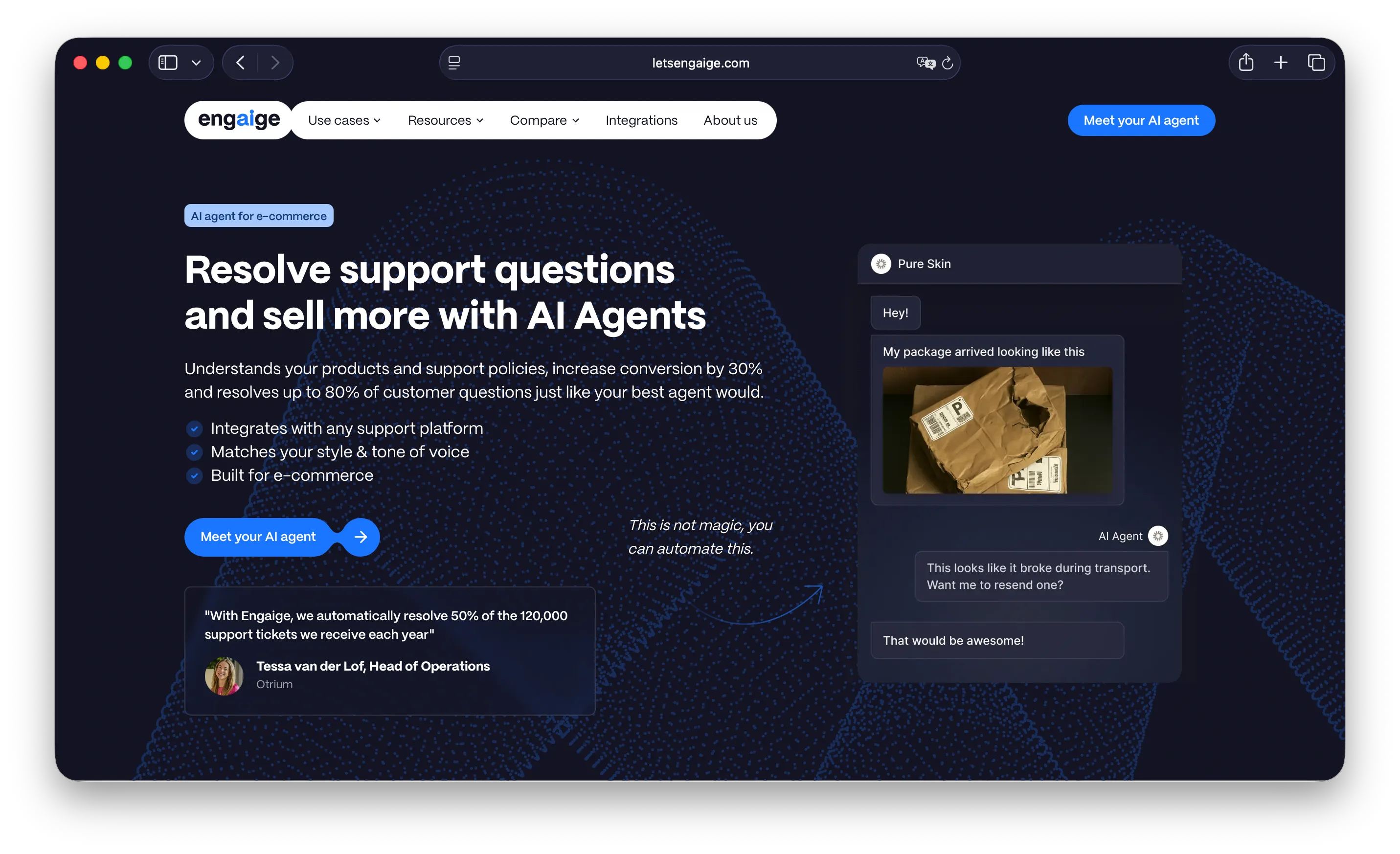
If your support team spends most of its time on order-related questions, Engaige is built for that: order status, delivery delays, address changes, refunds and exchanges. This is where growing eCommerce teams lose most of their time.
Instead of wasting your team’s time on routine order checks and standard queries, Engaige automates this process. The AI agent plugs directly into your systems, so it can check orders, validate customer details, follow your business rules and even suggest relevant products while helping your customers.
When a customer asks “Where is my order?” (WISMO), the AI does not guess or redirect. It gives a clear, factual answer. And if something is off, it escalates with full context so a support agent can step in immediately. This means your team not only resolves tickets faster but can also increase sales through smart product recommendations.
Engaige fits you if:
- A large part of your tickets are about orders, refunds, or delivery
- Your agents spend a lot of time repeating the same checks and tasks
- You want automation, but still want to stay in control
With Engaige, your support team gets:
- Access to live order and customer data
- Control over logic, tone and safeguards
- Structured, clean handover to agents
- A setup designed for fashion, beauty and other complex product catalogues
- Automated product recommendations to increase revenue
Good to know: Engaige does require more setup than Minimal AI. But for growing eCommerce teams, that upfront work is what makes support run more smoothly later and stops your team from getting stuck in repetitive tasks.
Engaige has had significant impact for growing eCommerce brands, like MR MARVIS. This slow fashion brand uses Engaige to handle routine questions, with the AI resolving over 50% of support conversations without human intervention. At the same time, the AI provides personal product guidance, helping customers quickly find the right items while freeing up agents to focus on more complex cases.
2. Zendesk AI: best if your entire support stack already runs on Zendesk
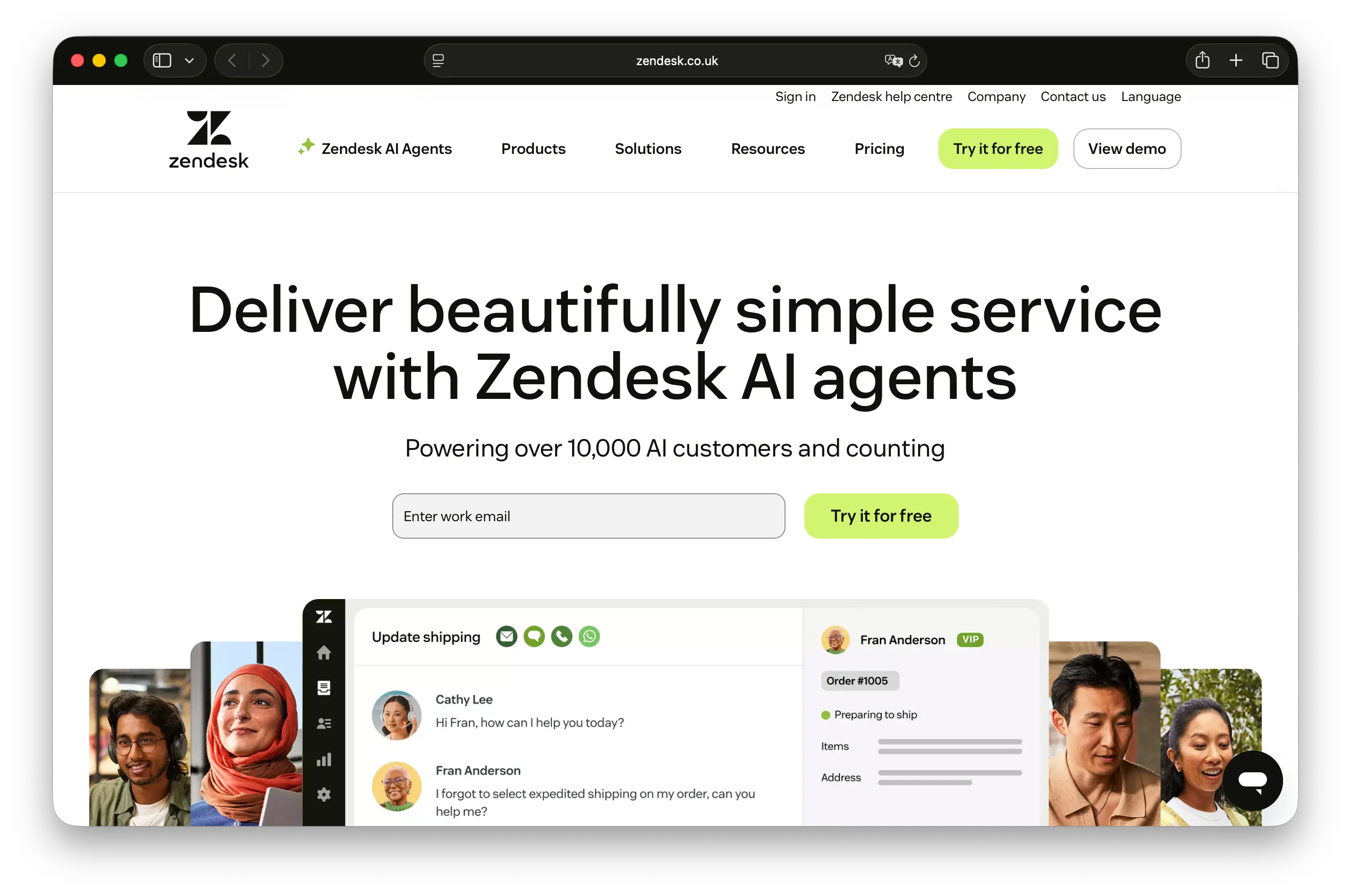
Is Zendesk the backbone of your support operations? Then Zendesk AI, the platform’s built-in AI agent, can be an easy way to add automation without changing your workflow. It works right inside the tickets and chats your team already uses, so agents spend less time switching between tools. Zendesk AI can handle routine questions like tracking a delayed order, checking return policies, or confirming sizing info.
Unlike fully autonomous AI agents, Zendesk AI is built to assist your team rather than completely resolve tickets. It is great for speeding up answers to routine questions without changing your workflow, though anything involving complex orders or system data still needs a human agent.
Pros
- Fully integrated with Zendesk, so no extra setup hassle
- Helps agents work more efficiently by suggesting responses and automating repetitive tasks
- Easy adoption for teams already using Zendesk
Cons
- Limited capability for full end-to-end automation
- Complex tickets still require manual handling
- Less suited for fully resolving order-related issues without agent intervention
3. Intercom Fin AI: best if chat is your main support channel
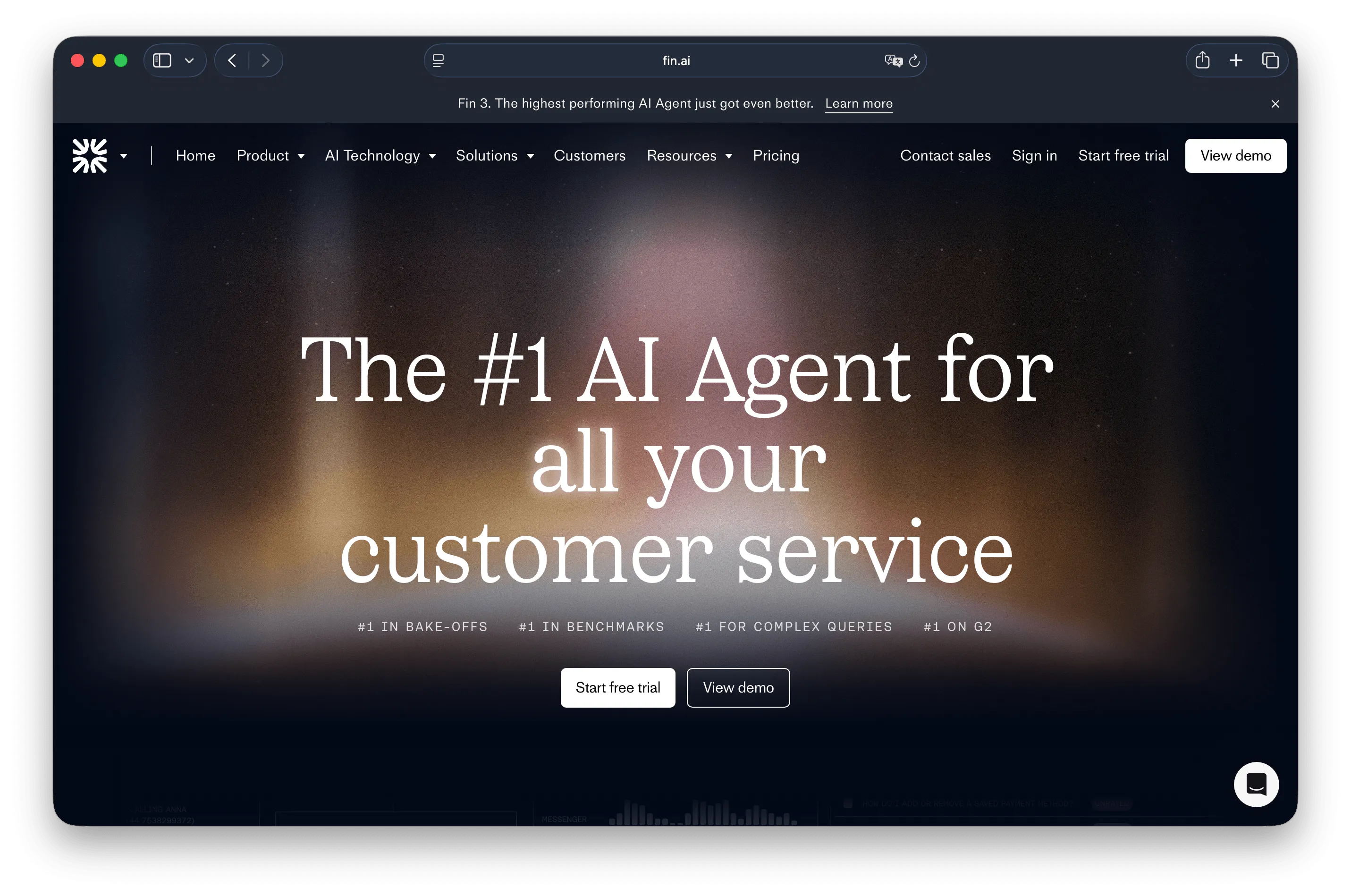
Intercom’s Fin AI works best for teams where most support happens through live chat. It integrates directly with your messaging workflows, suggests answers, pulls information from your help centre and escalates when needed. For example, if a customer asks about jeans sizes, shipping times for their new electrical toothbrush, or return policies, Fin AI can respond instantly and guide them to the right content, keeping the chat smooth and natural.
Similar to Zendesk AI, Fin AI supports agents rather than resolving tickets independently. It is ideal for chat-focused teams looking for fast, helpful replies without changing workflows, though any ticket involving live orders, refunds, or system data still needs a human agent.
Pros
- Creates a smooth, conversational experience for customers
- Good for chat-led support teams
- Easy to deploy within Intercom
Cons
- Limited support for order level actions
- Complex eCommerce cases still escalate
- Less suitable for deep workflow automation
4. Ada CX: best if your tickets follow clear, repeatable patterns
Ada CX is most effective when customer questions are highly structured and predictable. For instance, if your store often gets queries like “How do I return an item?” or “What are your shipping options?”, Ada lets you create clear flows that the AI follows consistently. This gives your support team control across different markets and languages while ensuring answers are reliable and uniform.
While it is great for handling repetitive cases with consistency, Ada struggles when tickets require live order data or complex decisions. As your product catalogue or processes expand, managing more detailed support flows can take extra effort.
Pros
- Strong control over predefined flows
- Scales well for repetitive questions
- Reliable and consistent behaviour across markets
Cons
- Less flexible when exceptions occur
- Limited ability to use live eCommerce data
- More maintenance needed for complex flows
5. Gorgias: best if you want a helpdesk built for Shopify and DTC
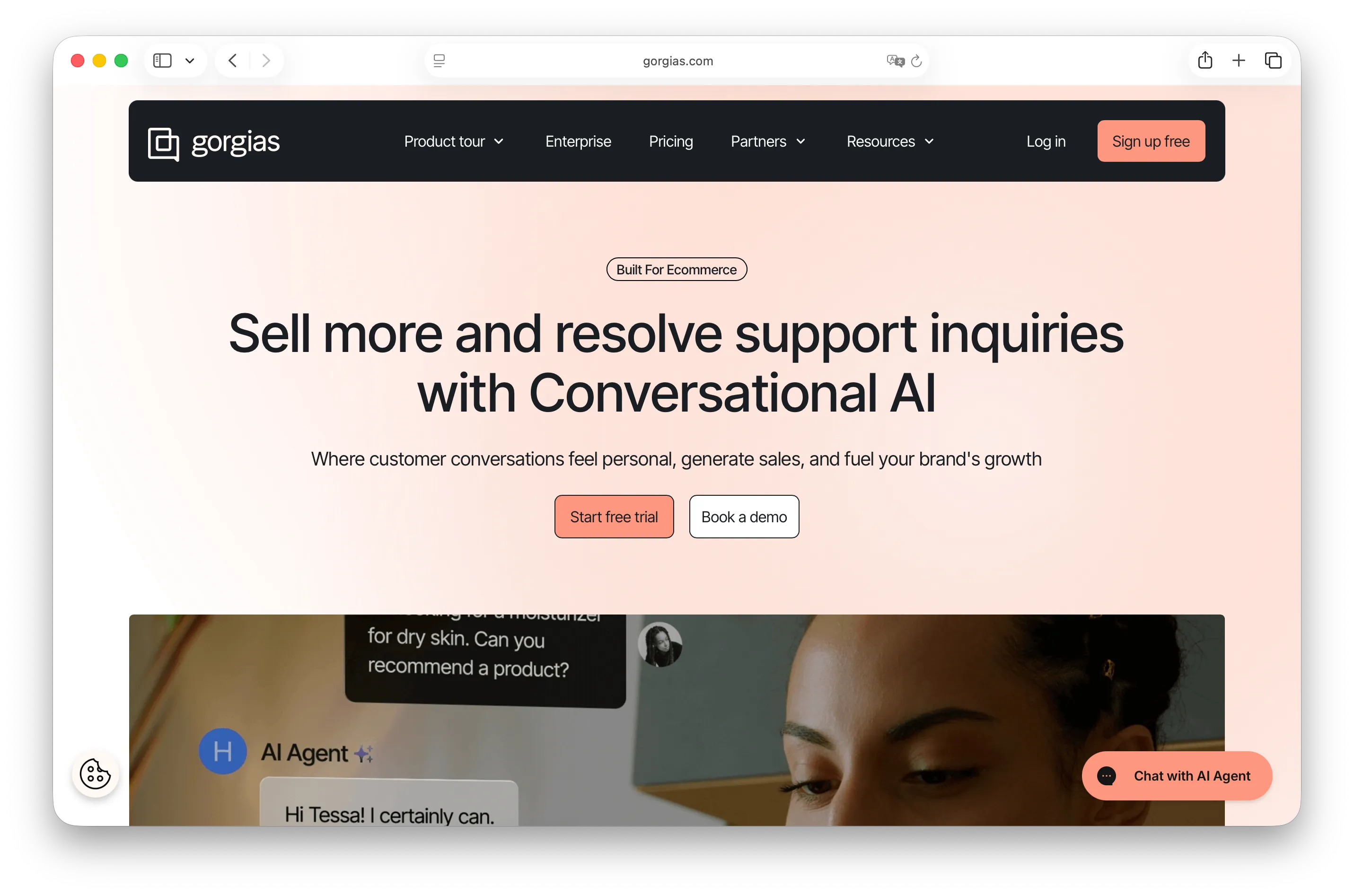
Gorgias is a helpdesk built specifically for eCommerce, with strong automation features for Shopify stores. Agents get a full view of all orders and customer data in one interface, which makes answering questions like “Has my order been shipped?”, “Can I exchange this item?”, or “Is this product returnable?” much faster. Basic automations can handle these routine queries, cutting down repetitive work for your team.
That said, Gorgias relies primarily on rule-based automations and macros for complex tickets, though its AI can handle many routine queries. It is ideal if you want to give your agents better tools and a centralised workflow, but it is not designed for full end-to-end automation.
Pros
- Built specifically for eCommerce and Shopify
- Agents get full context with order and customer data in one inbox
- Centralised view of all support channels
Cons
- Automation is mostly rule-based
- AI capabilities are limited compared to specialised AI agents
- Complex workflows still require human intervention
6. Tidio: best if you run a smaller eCommerce store
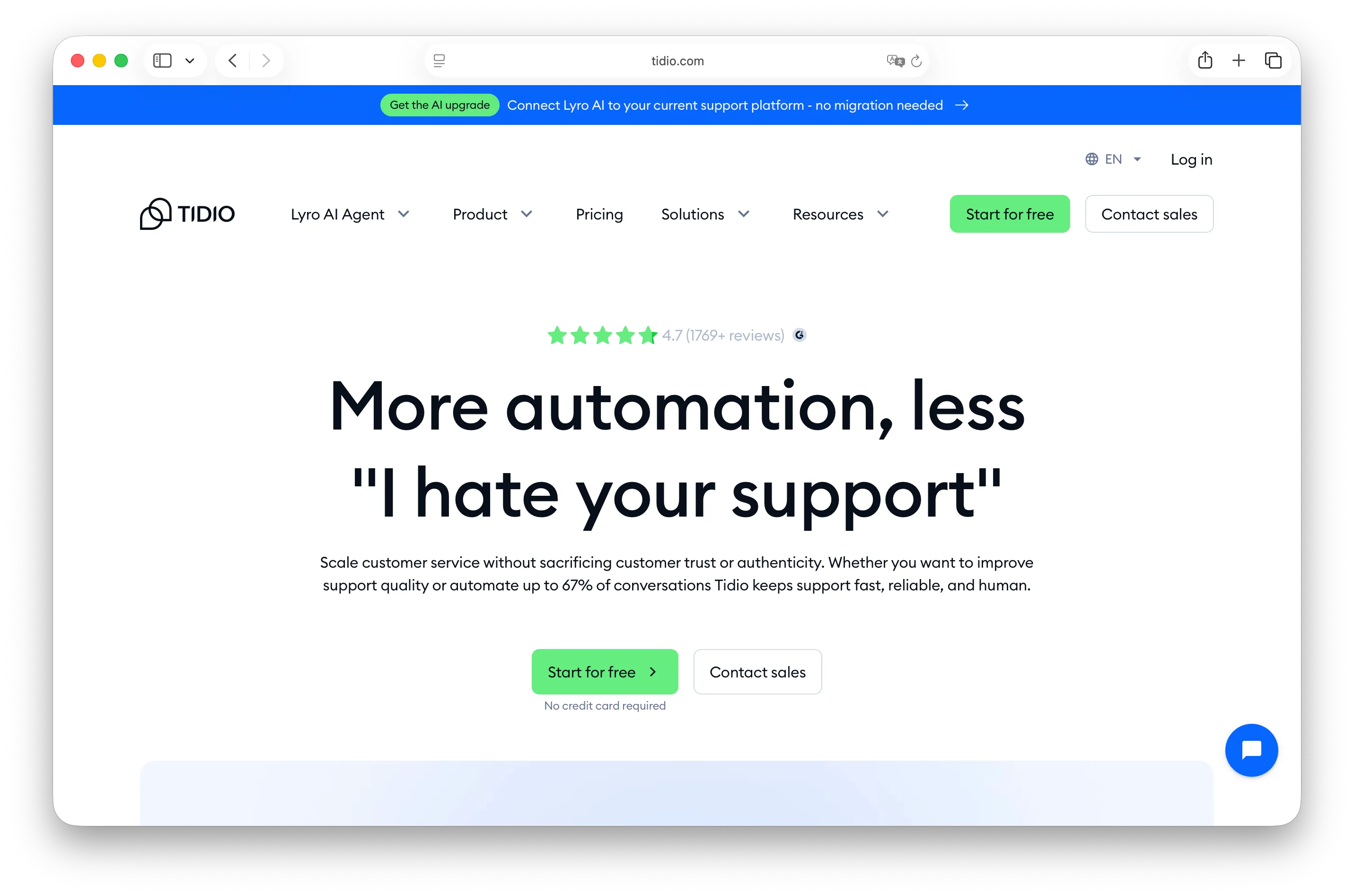
If your eCommerce store is still growing and you want a simple way to add chat with basic automation, Tidio is a common starting point. It combines live chat with straightforward automations, so small teams can quickly handle routine questions. It can answer queries about shipping times, return policies, or sizing info, helping you guide your customers without needing to rely on a support agent for every interaction.
Tidio is fast to launch and cost-effective, making it popular for smaller stores. However, if your support team faces high ticket volumes or complex order-related issues, manual handling is still required, so it is less suitable for scaling eCommerce operations.
Pros
- Quick and easy to get started
- Affordable for smaller teams
- Provides basic automation for frequently asked questions
Cons
- Limited depth of automation
- Not suitable for large volumes of tickets
- Complex tickets still require agents to step in
7. Neople: best if you want to experiment with AI-driven support
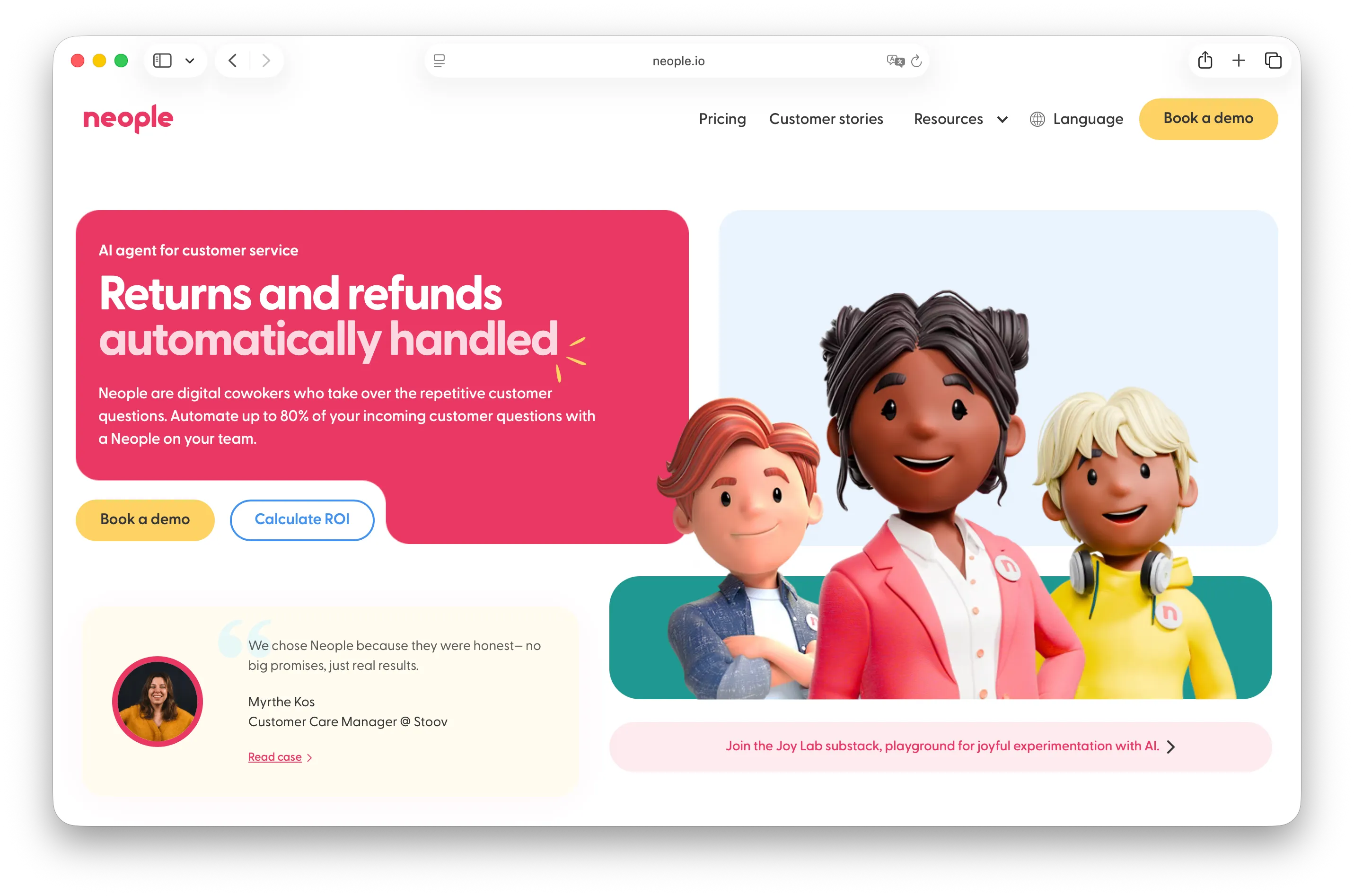
Neople is built for teams that want flexibility and enjoy experimenting with AI-driven support. You could, for example, test different ways to automate responses to order questions, returns, or product inquiries, and adjust workflows as you see what works best. It is a powerful tool, but it demands more hands-on setup and technical ownership than simpler alternatives.
This makes Neople a strong fit for teams with internal AI or technical expertise who want to explore new automation strategies, rather than simple, pre-configured tools.
Pros
- Highly flexible and configurable
- Great for experimentation and testing new AI approaches
- Designed with a modern AI-first mindset
Cons
- Requires technical or AI expertise within your team
- Does not come with ready-made workflows for eCommerce
- More effort to maintain over time
Comparison table: Minimal AI vs alternatives
| Platform | Primary focus | Access to live order/customer data | Ability to resolve tickets automatically | Agent handover | Ideal for |
|---|---|---|---|---|---|
| Minimal AI | Basic automation | Limited (mostly static FAQs) | Handles only simple, routine queries | Basic context | Early-stage teams with low ticket volume |
| Engaige | Full automation | Strong (connects to live orders and customer accounts) | Resolves complex tickets end-to-end | Structured and full context | Scaled DTC eCommerce support teams |
| Zendesk AI | Agent assistance | Limited (basic customer info only) | Handles routine questions, suggests responses | Full context provided | Teams using Zendesk daily |
| Intercom Fin AI | Chat automation | Limited (pulls from help centre) | Resolves simple chat queries | Medium context | Chat-led support teams |
| Ada CX | Structured flows | Limited (predefined content only) | Handles predictable, repetitive questions | Medium context | Teams with predictable ticket types |
| Gorgias | eCommerce helpdesk | Strong (full Shopify integration) | Resolves medium complexity tickets | Full context | Shopify DTC stores wanting centralised workflows |
| Tidio | SMB automation | Limited (basic info only) | Handles simple FAQs | Basic | Small stores starting with chat and automation |
| Neople | Flexible AI | Varies (depends on setup and integrations) | Medium (requires setup for full resolution) | Varies (depends on configured flows) | Teams experimenting with AI-driven support |
How to choose the right Minimal AI alternative
The best place to start is by looking at how your support actually works day to day. Ask yourself:
- How many tickets involve checking order status, processing refunds, or tracking deliveries?
- How often do your agents repeat the same steps for each customer, like verifying a product’s availability or confirming a shipping address?
- How much context or information is lost when tickets are handed over between agents?
If most of your tickets are simple, routine questions, a lightweight tool like Minimal AI might still handle them. But if your support depends on live order data, customer-specific actions, or more complex workflows, you will likely need a more capable solution to reduce repetitive work and keep your team running efficiently.
Engaige: the best Minimal AI alternative for automating eCommerce support
If your team handles thousands of tickets per month across multiple markets, lightweight automation can hit its limits fast. That is where Engaige comes in.
The AI agent handles repetitive tickets efficiently while keeping you in full control of tone of voice, business logic and escalation rules. It can manage order status checks, refunds, and shipping updates with live data, and even suggest relevant products during interactions, helping your team drive more sales while freeing agents to focus on trickier cases like custom requests, exchanges, or more complex returns.
For eCommerce teams that view great customer service as part of growing their business, Engaige goes further than Minimal AI, taking on more tasks without losing accuracy or control, and even creating opportunities to increase sales.
FAQs about Minimal AI alternatives
When should you move away from Minimal AI?
You should think about switching when your AI can reply, but your agents still have to fix most issues manually. If the tool cannot access order data, validate customer accounts, or follow your business rules, handling exceptions starts to outweigh the benefits. As ticket complexity and volume grow, deeper integrations and automated actions become essential to keep your team running efficiently.
What makes Engaige different from other Minimal AI alternatives?
Engaige goes beyond answering questions by helping resolve eCommerce tickets with live order and customer data. It connects directly to your systems, so replies are accurate, context-aware, and action-driven. During interactions, it can also suggest relevant products, giving your team opportunities to increase sales while reducing repetitive tasks. Plus, it provides structured escalation context and full control over business logic, cutting down guesswork for agents.
Is Minimal AI suitable for fashion and beauty eCommerce?
For early-stage fashion and beauty stores, Minimal AI can handle FAQs about sizing, delivery times, or return policies. But once customers start asking about specific orders, exchanges, stock levels, or delayed shipments, Minimal AI often lacks the live data access needed to give accurate answers. Growing stores usually end up with more escalations and manual follow-up.
Can Minimal AI handle order changes, cancellations and refunds?
Minimal AI can explain policies but cannot process order changes, cancellations, or refunds, because it lacks access to live order and payment systems. This means agents still need to step in for many operational tasks, which limits the impact of automation as order volumes grow.
How does Minimal AI compare to other AI agents in terms of control and reliability?
Minimal AI is designed for fast deployment and ease of use, which makes it accessible but also limits control over logic, exceptions, and edge cases. Tools like Engaige give teams full control over business rules, data validation, and escalation behaviour. That means more reliable outcomes, especially for complex eCommerce scenarios where accuracy and consistency really matter.