A return is not the end of a sale; it is the moment that decides whether the customer comes back. Returns management software runs the self-service portal, the exchange and store-credit logic, and the return labels that turn a refund request into a kept customer. It is one of the biggest levers on customer lifetime value, because an easy return both retains the order and lowers the risk of the next purchase.
This guide explains what returns software does, how to judge it, and which tools integrate with your platform. We make AI customer support software, so we see these tools from the support side, as the systems our AI reads and acts on, not products we sell. That is why none of them is ours, and we weigh each on its own merits.
What is returns management software for e-commerce?
Returns management software, also called returns or RMA (return merchandise authorisation) software, manages returns and exchanges for an online store. It gives shoppers a self-service portal to request a return, automates approval and return labels, and steers refunds towards exchanges or store credit. In short, it turns a refund request into a chance to keep the customer.
Most tools cover the same core: a branded return portal, automated rules, return shipping labels, and reporting. The differences are in how hard they push exchanges and store credit over cash refunds, whether they handle warehouse or in-person processing, and which platforms they run on. Some are built for one platform; others span many.
How do you choose returns software?
Judge returns software on how much value it keeps, not on its feature list. The questions that matter are whether it steers refunds towards exchanges and credit, automates the busywork, fits your platform without custom development, and keeps the resulting support load low. Price is the last filter, not the first.
The pain is real and specific. One Shopify merchant, after testing more than ten returns apps, put it bluntly:
January 2026 Reddit Dealing with returns is taking hours out of each of my day. I've downloaded over 10 apps to test, and all of them are complicated messes. · r/shopify View on RedditWhat they actually wanted was simple: a shopper enters an order number, gets a return label by email, and is refunded automatically once the item is delivered, with a keep-the-item partial refund as an option. That is the bar the criteria below test for.
| What to check | Why it matters |
|---|---|
| Exchange and store-credit flows | Steering a return towards an exchange or credit keeps the revenue instead of refunding it |
| Automation and rules | Auto-approval, routing and label generation cut the manual work on every return |
| Platform fit | A native app or extension for your platform beats a custom API build you maintain yourself |
| Processing model | A self-service portal, warehouse grading, or in-person drop-off suit different operations |
| Pricing model | A monthly fee, a per-return fee, or a transaction percentage changes the cost as volume grows |
| Support and self-service load | The more a tool deflects “where is my refund” and handles self-service returns, the fewer tickets your team handles |
The last row is easy to overlook and expensive to ignore. Every return generates a predictable stream of questions, and the tools that automate the process and let shoppers self-serve are the ones that keep that stream small.
What is the best returns management software for e-commerce?
There is no single best tool, because the right one depends on your platform, your volume, and whether you want a simple portal or a full returns operation. Below are the leading options with a short introduction each, and the platform each one runs on, so you can match them to your store.
1. Loop Returns: best for high-volume Shopify brands that want exchange-first retention
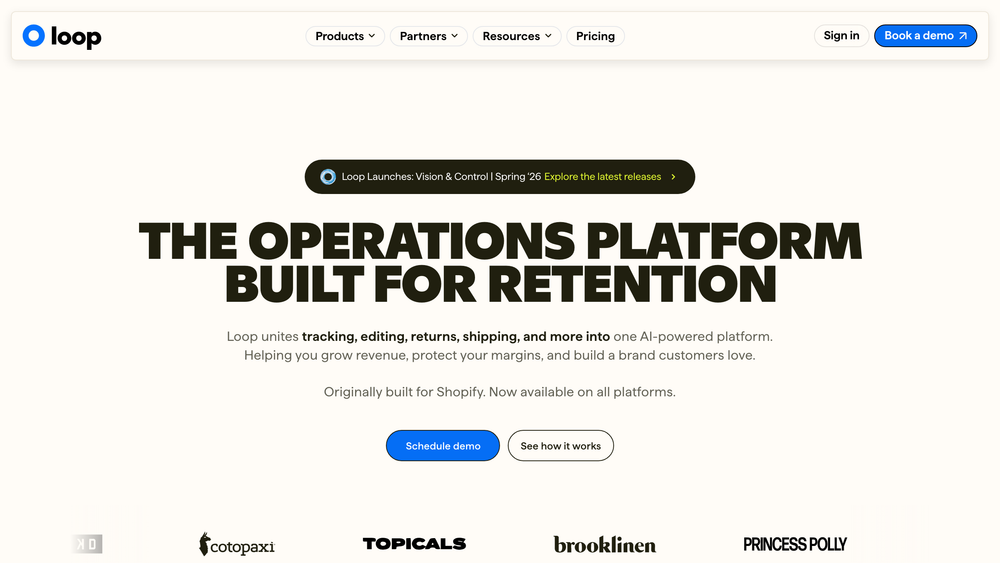
Loop Returns is the most established Shopify returns app, built around turning refunds into exchanges and store credit to retain revenue. It runs natively on Shopify, with other platforms handled by custom implementation, and starts at around $155 per month with no free tier.
Pros
- The most established Shopify returns app, with deep automation and analytics.
- Exchange-first flows, including Instant Exchange, that keep revenue instead of refunding it.
Cons
- Effectively Shopify-only; other platforms need a custom implementation.
- No free tier, with pricing from around $155 per month.
2. ClickPost: best for brands that want returns tied into multi-carrier shipping and tracking
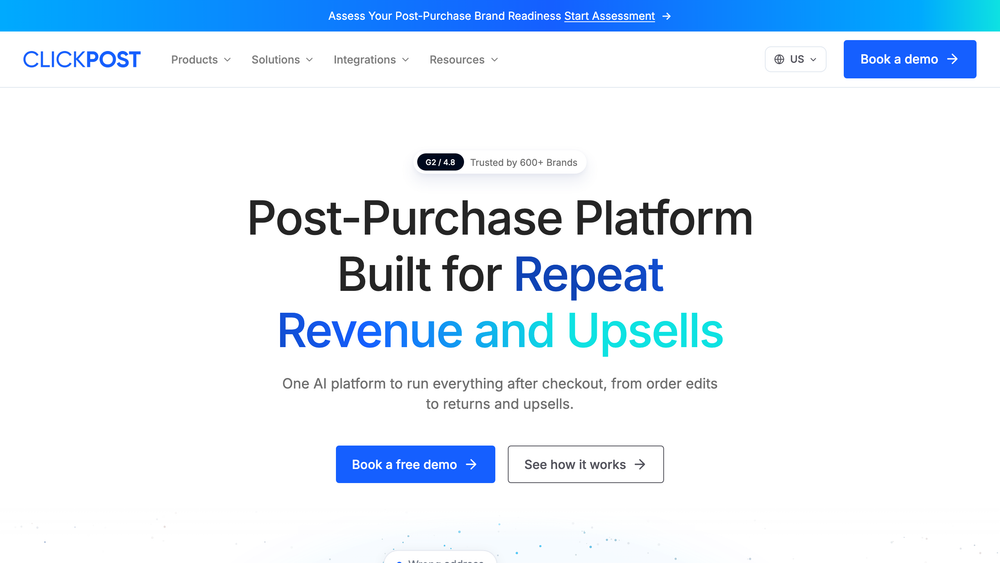
ClickPost is a multi-carrier logistics and post-purchase platform whose returns module offers a self-service portal alongside carrier selection, shipment tracking and NDR (non-delivery report) management. It integrates with Shopify, WooCommerce, Magento, BigCommerce and Wix, and also has a standalone Shopify returns app with a free tier of up to 25 returns a month. The core platform is quoted by volume, with a reported minimum of around $250 per month.
Pros
- Returns, shipping, tracking and NDR management sit in one multi-carrier platform.
- The Shopify returns app has a free tier of up to 25 returns a month, with paid plans from $15 per month.
Cons
- Core platform pricing is volume-based and quote-led, with no clear public tier.
- One Capterra reviewer notes that returns management lacks QC pickups for incorrectly delivered products, and cites occasional report inaccuracies.
3. AfterShip Returns: best for brands that want a low-cost portal across more than one platform
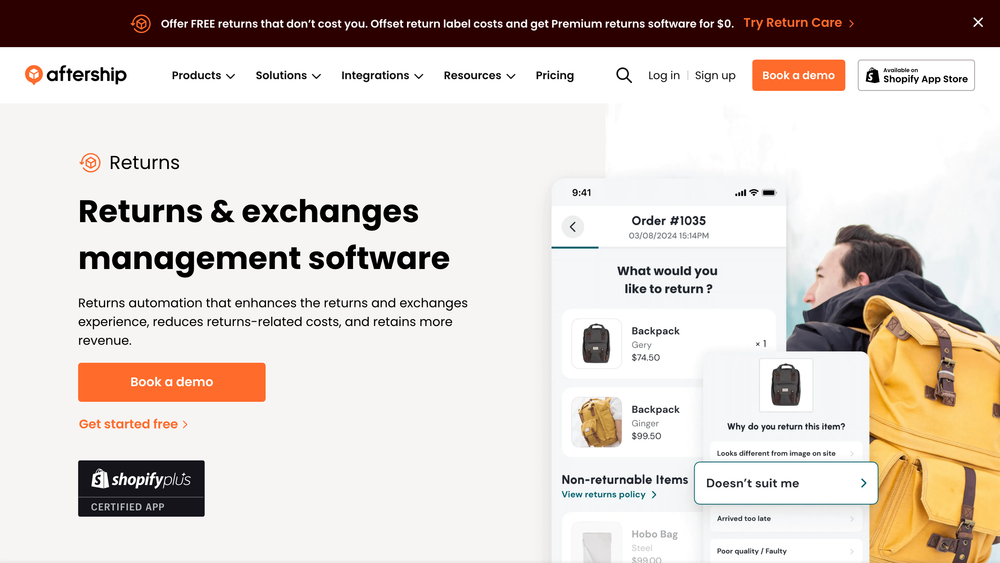
AfterShip Returns pairs a branded self-service returns centre with discounted return labels and automation rules. It integrates with Shopify, WooCommerce, Magento and BigCommerce per its own docs, has a free shopper-funded tier, and paid plans from around $19 per month.
Pros
- Genuinely multi-platform: Shopify, WooCommerce, Magento and BigCommerce.
- Free shopper-funded tier and a low $19 per month entry plan.
Cons
- The deepest features and support still skew towards Shopify.
- Per-return overage fees add up as volume grows.
4. ReturnGO: best for brands that are not on Shopify, or that run more than one platform
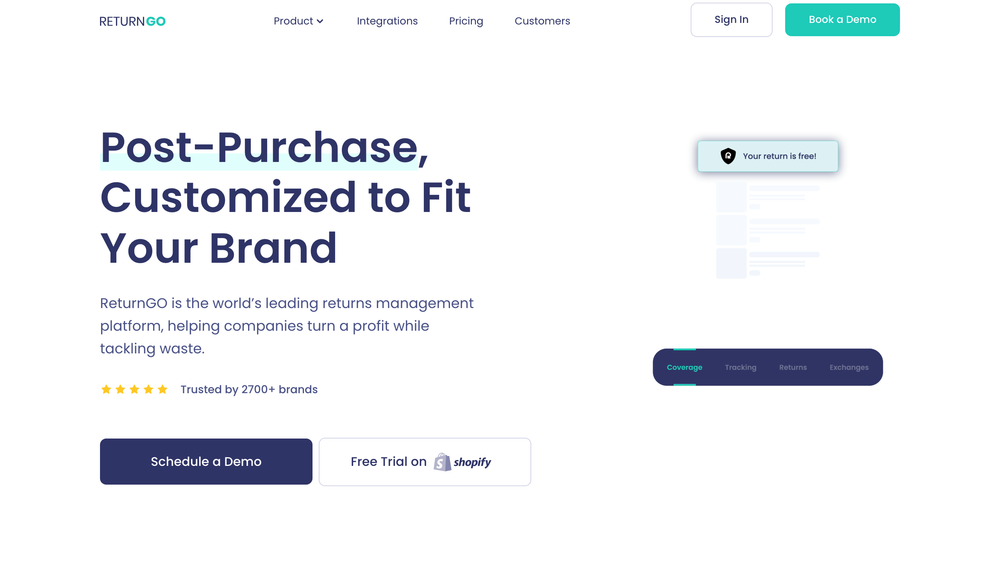
ReturnGO is a genuine multi-platform returns operations tool, with a self-service portal, exchanges, store credit and its own return-label shipping. Its integrations page names Shopify, WooCommerce, Magento 2, BigCommerce, Wix, Salesforce Commerce Cloud and more. Pricing starts at around $147 per month.
Pros
- True multi-platform reach: Shopify, WooCommerce, Magento, BigCommerce and more.
- Exchanges, store credit and its own return-label shipping built in.
Cons
- Entry pricing from around $147 per month.
- Self-service tiers are Shopify-oriented; other platforms need higher plans.
5. Rich Returns: best for small and mid-sized Shopify brands that want clear pricing without an enterprise contract
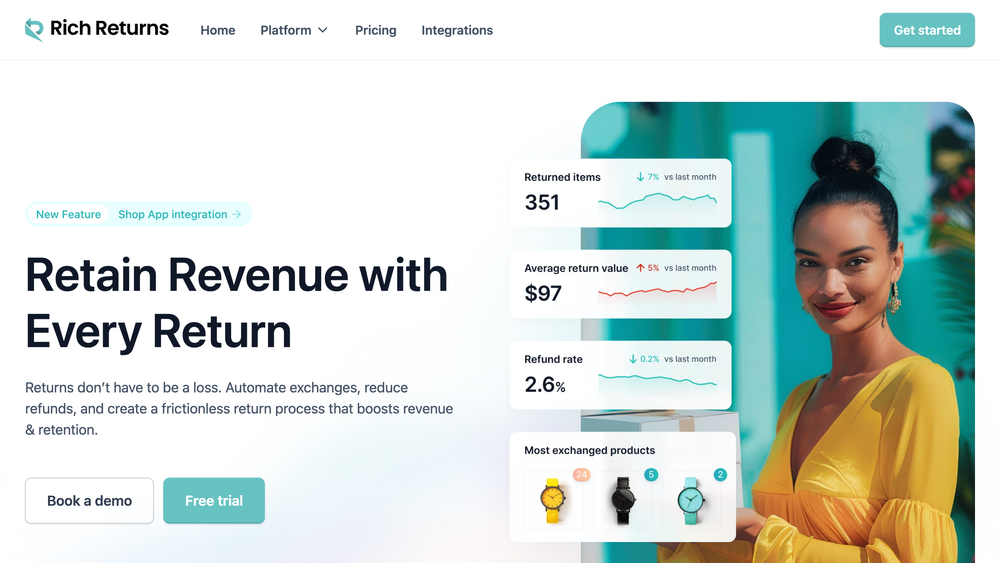
Rich Returns is a lower-cost Shopify returns portal with exchanges, store credit and one-click refund automation. It is Shopify-exclusive, with transparent tiers from $19 per month and a thirty-day trial.
Pros
- Transparent low-cost tiers from $19 per month with a thirty-day trial.
- Exchanges, store credit and one-click refund automation.
Cons
- Shopify-exclusive, so no help if you run another platform.
- Lighter on enterprise and warehouse-processing features.
6. Return Prime: best for newer Shopify brands that want to start without paying
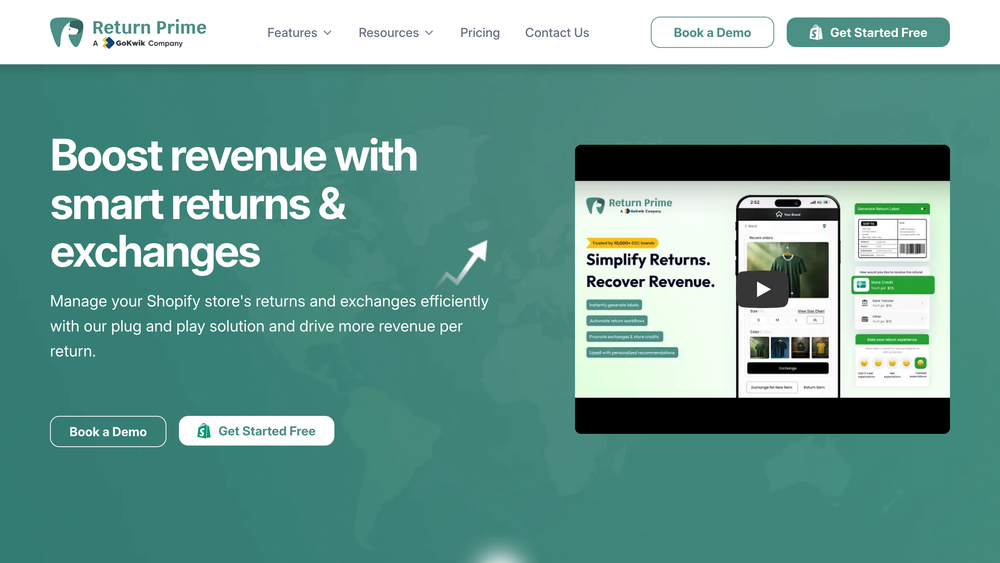
Return Prime is a Shopify returns app with a genuine free tier for low-volume stores, plus exchanges, store credit and upsells during the return. It is Shopify-only, free up to five returns a month, then around $100 per month.
Pros
- Genuine free tier for up to five returns a month.
- Exchanges, store credit and upsells offered during the return.
Cons
- Shopify-only, with per-return overage fees.
- Jumps to around $100 per month beyond the free tier.
7. Narvar: best for large retailers that want returns inside a broader post-purchase suite
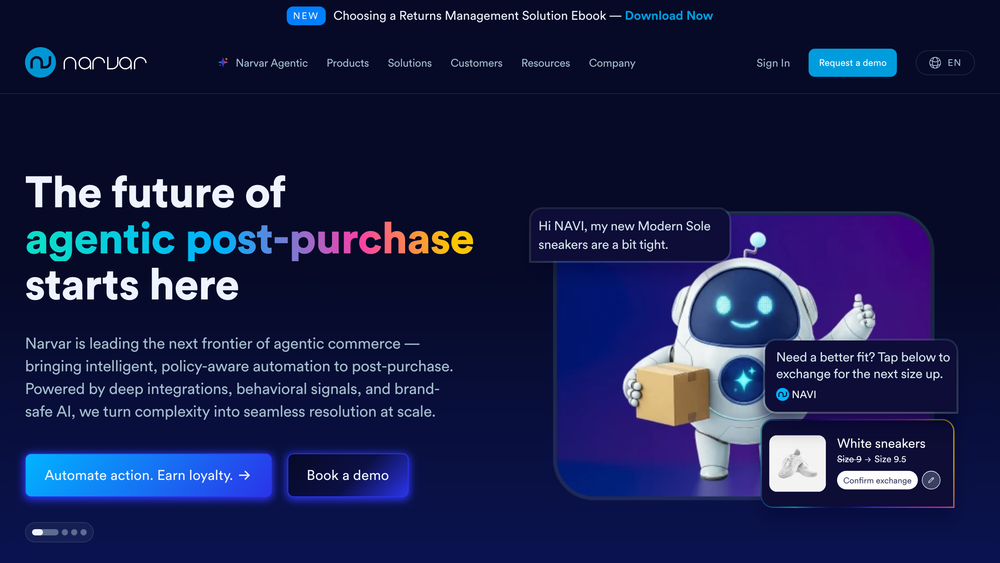
Narvar is an enterprise post-purchase platform whose returns module handles even and uneven exchanges, return-method rules and multi-location routing, and uses AI (its IRIS engine) to flag fraudulent returns and enforce eligibility rules. It integrates with Shopify and Salesforce Commerce Cloud, among others, and prices by quote rather than a public tier.
Pros
- Enterprise-grade returns inside a broader post-purchase suite.
- Even and uneven exchanges with multi-location routing rules.
Cons
- No public pricing; quote-only.
- Built for large retailers, so likely overkill for smaller stores.
8. parcelLab: best for EU brands that want returns and delivery tracking in one platform
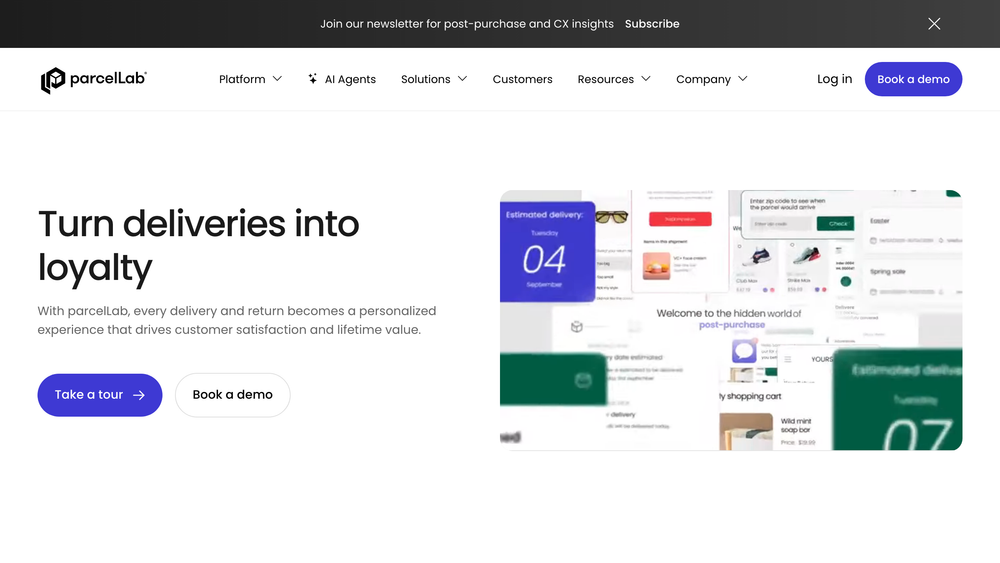
parcelLab is a European post-purchase and tracking suite with a returns portal built in, covering exchanges, store credit and split returns to multiple warehouses. It runs as a native Shopify app and integrates with Magento and Shopware, with pricing by quote.
Pros
- Returns and delivery tracking in one EU-focused post-purchase suite.
- Split returns to multiple warehouses.
Cons
- No public pricing; quote-only.
- Returns is part of a larger platform, not a standalone portal.
9. yayloh: best for European fashion brands that want returns insight, not just processing
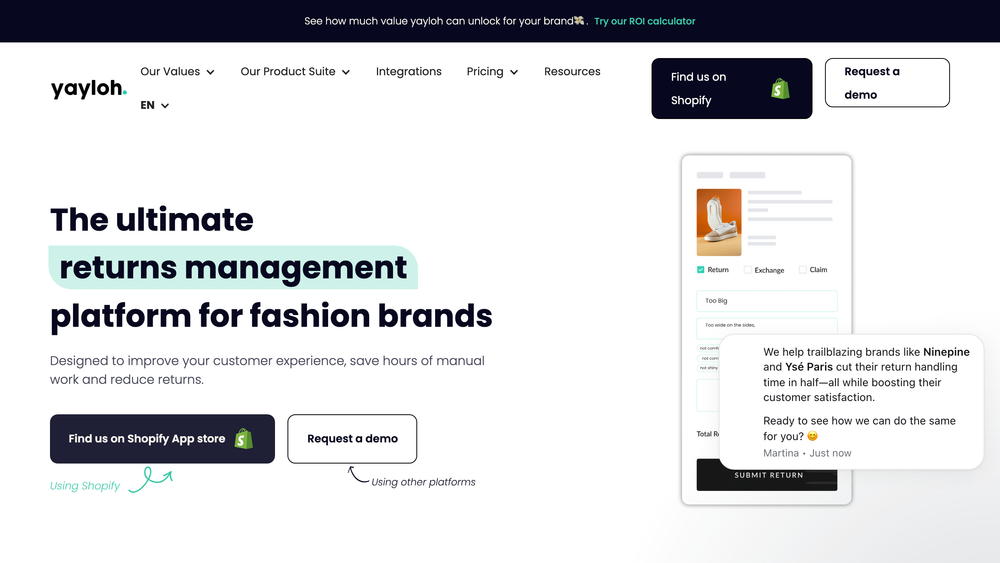
yayloh is a European returns platform aimed at fashion and apparel, with a digital returns portal, exchanges, store credit and returns analytics. It integrates with Shopify and Centra, with WooCommerce and Magento available on request, and pricing from around $190 per month.
Pros
- Returns analytics and customer feedback tuned for fashion and apparel.
- Exchanges and store credit in a clean, design-led portal.
Cons
- Pricing from around $190 per month, with no free tier.
- Native integrations centre on Shopify and Centra; Woo and Magento on request.
10. ReverseLogix: best for brands whose returns are a warehouse operation, not just a portal
ReverseLogix is a full returns management system for enterprise and omnichannel, covering self-service initiation, warehouse grading, repair and RMA. It integrates with Shopify, WooCommerce and Magento, plus major ERPs, and prices by quote.
Pros
- A full returns management system: warehouse grading, repair and RMA.
- Broad integrations across commerce platforms and major ERPs.
Cons
- No public pricing; quote-only.
- Enterprise-weight, more than a portal-only brand needs.
11. Returnless: best for European brands that want deep, rule-based returns at a transparent price
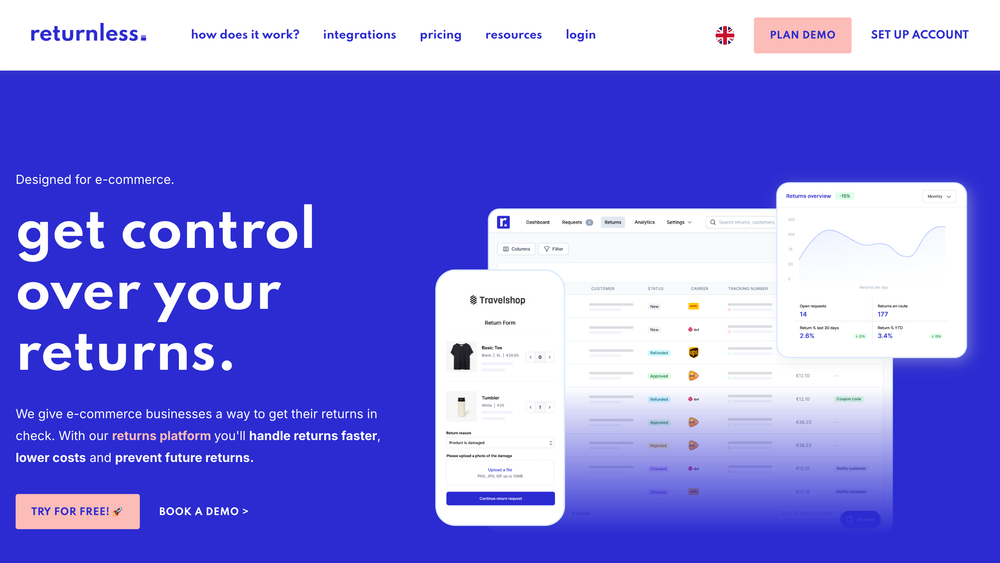
Returnless is a European returns platform, used by 1,500+ brands across Europe and run from the Netherlands. It offers a customisable returns portal, return rules with 50+ conditions, exchanges, store credit and carrier integration, through 35+ integrations across platforms, warehouses and carriers. Pricing is volume-based: Integrate at €105 a month, Automate at €260, and Accelerate at €599.
Pros
- Deep, rule-based automation (50+ conditions) and 35+ integrations.
- Transparent European pricing from €105 a month, with English, German and Dutch support.
Cons
- Built for the European market, so less relevant for US-only brands.
- Volume-based pricing climbs as return volume grows.
12. Returnista: best for Northern European and DACH brands wanting exchanges and insight
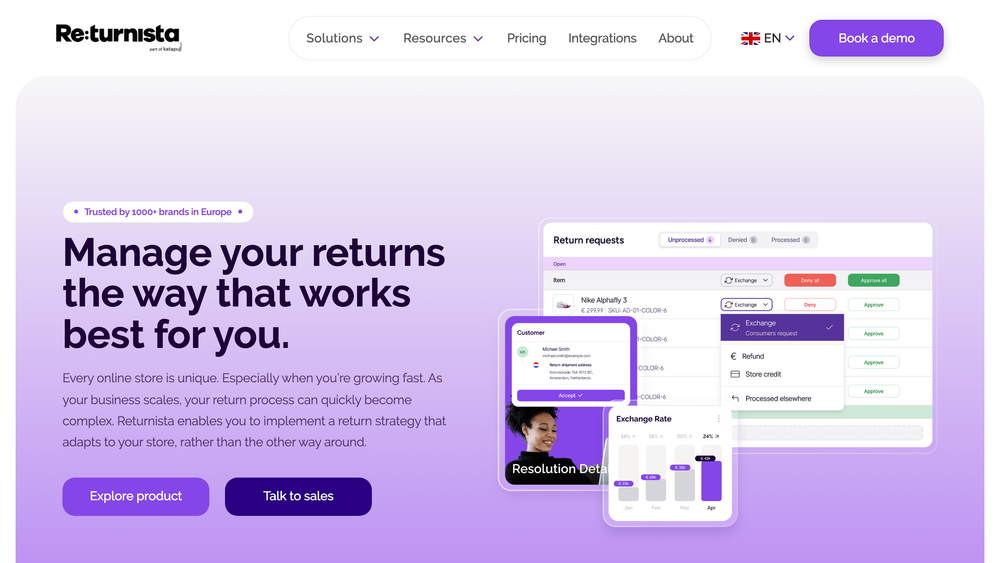
Returnista is a European returns platform run from Amsterdam and Munich, used by 1,000+ brands. It integrates with Shopify, Magento, Shopware, WooCommerce and Lightspeed, and covers exchanges, store credit, return rules, warranty handling and track-and-trace. Pricing is public: Essential at €179 a month and Professional at €279, with custom Enterprise pricing and a discount paid yearly.
Pros
- Native integrations across Shopify, Magento, Shopware, WooCommerce and Lightspeed.
- Exchanges, store credit, warranty handling and clear public pricing.
Cons
- Focused on the Northern European and DACH markets.
- Mid-market pricing, with the lowest tier at €179 a month.
13. iF Returns: best for brands selling into Spain and Southern Europe
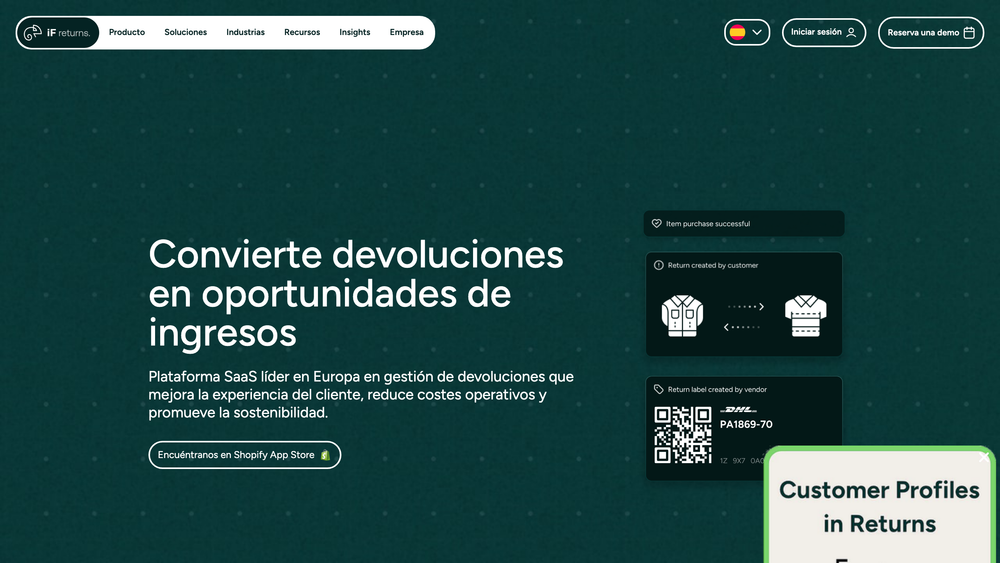
iF Returns is a European returns-management platform, headquartered in Spain and strongest across Southern Europe, that frames returns as a chance to drive exchanges and new sales. It is listed on the Shopify App Store, with a returns portal, exchanges and sustainability reporting. Its site is Spanish-first and does not publish pricing or its full platform list, so confirm both with the vendor.
Pros
- A strong local presence for Spain and Southern Europe, listed on the Shopify App Store.
- A returns-to-revenue focus, with exchanges and sustainability reporting.
Cons
- Spanish-first, with pricing and the full platform list not published in English.
- Less established outside Southern Europe than the global leaders.
How do the leading tools compare at a glance?
The table below covers the leading tools on the points that differentiate them, including the platforms each one runs on. Where a vendor does not publish pricing, it is shown as “by quote” rather than guessed.
| Tool | Built for | Works with | Exchanges and credit | Pricing |
|---|---|---|---|---|
| Loop Returns | High-volume Shopify exchanges | Shopify (others via custom) | Yes, exchange-first | From around $155/mo |
| ClickPost | Returns with multi-carrier shipping | Shopify, WooCommerce, Magento, BigCommerce, Wix | Yes | Shopify app free tier, then from $15/mo; platform by quote |
| AfterShip Returns | Low-cost multi-platform portal | Shopify, WooCommerce, Magento, BigCommerce | Yes | Free tier, then from $19/mo |
| ReturnGO | Multi-platform returns operations | Shopify, WooCommerce, Magento, BigCommerce and more | Yes | From around $147/mo |
| Rich Returns | Low-cost Shopify portal | Shopify | Yes | From $19/mo |
| Return Prime | Free-tier Shopify portal | Shopify | Yes | Free tier, then around $100/mo |
| Narvar | Enterprise post-purchase | Shopify, Salesforce Commerce Cloud and others | Yes | By quote |
| parcelLab | EU post-purchase suite | Shopify, Magento, Shopware | Yes | By quote |
| yayloh | EU fashion and apparel | Shopify, Centra (Woo/Magento on request) | Yes | From around $190/mo |
| ReverseLogix | Enterprise returns operation | Shopify, WooCommerce, Magento, major ERPs | Yes | By quote |
| Returnless | European rule-based returns | Major platforms, warehouses, carriers (35+) | Yes | From €105/mo |
| Returnista | Northern European and DACH brands | Shopify, Magento, Shopware, Woo, Lightspeed | Yes | From €179/mo |
| iF Returns | Spain and Southern Europe | Shopify (others not stated) | Yes | By quote |
Which returns tool fits your store?
Start from your platform, because that decides which tools are even available to you. Shopify has the deepest field, WooCommerce leans on a first-party add-on and plugins, and Magento splits between paid-edition RMA and extensions.
| Your store | Native option | Returns tools that fit |
|---|---|---|
| Shopify | Basic native Returns | Loop, ClickPost, AfterShip, ReturnGO, Rich Returns, Return Prime, Narvar, parcelLab, yayloh, ReverseLogix, Returnista, iF Returns |
| WooCommerce | First-party Returns and Warranty add-on | ClickPost, AfterShip, ReturnGO, ReverseLogix, Returnista |
| Magento / Adobe Commerce | Native RMA (Adobe Commerce only) | ClickPost, AfterShip, ReturnGO, Narvar, parcelLab, ReverseLogix, Returnista |
| BigCommerce | None native | ClickPost, AfterShip, ReturnGO, Narvar |
Beyond the platform, match the tool to your model. Lowest cost to start favours Rich Returns or Return Prime; exchange-first retention favours Loop; multi-platform favours ReturnGO; returns run alongside multi-carrier shipping favour ClickPost; enterprise warehouse operations point to ReverseLogix or Narvar; and European brands have strong regional options in Returnless, Returnista and iF Returns.
Where does customer support fit?
Every return generates the same support load, and the questions are predictable: “where is my refund”, “how do I send this back”, “can I exchange instead”. They are repetitive and rules-based, which is exactly what an AI support agent resolves well.
Engaige is the AI support layer that sits on top of your returns stack. It integrates with the returns tools you already run, including Loop Returns, AfterShip, ReturnGO, Returnless, Returnista and iF Returns, reads the order and policy behind each ticket, and turns each question into an action rather than a reply.
So “how do I send this back” becomes a return it starts and a label it sends; “can I exchange instead” becomes an exchange it sets up; and “where is my refund” becomes a status it reads back from the returns tool. It can also redirect a return mid-way or cancel one cleanly, all in your customer’s language.
You shape all of this through Engaige AI, where you instruct the agent in plain language, like onboarding a teammate. It goes live in Agent Assist within hours. There, the gap between what your team sends and what the agent suggested is one of its training signals, and Engaige AI proposes improvements you approve.
Most brands switch to autonomous in about a week, and Engaige automates up to 90% of supported tickets. The aim is genuine resolution, completing the return rather than deflecting the question to a human.
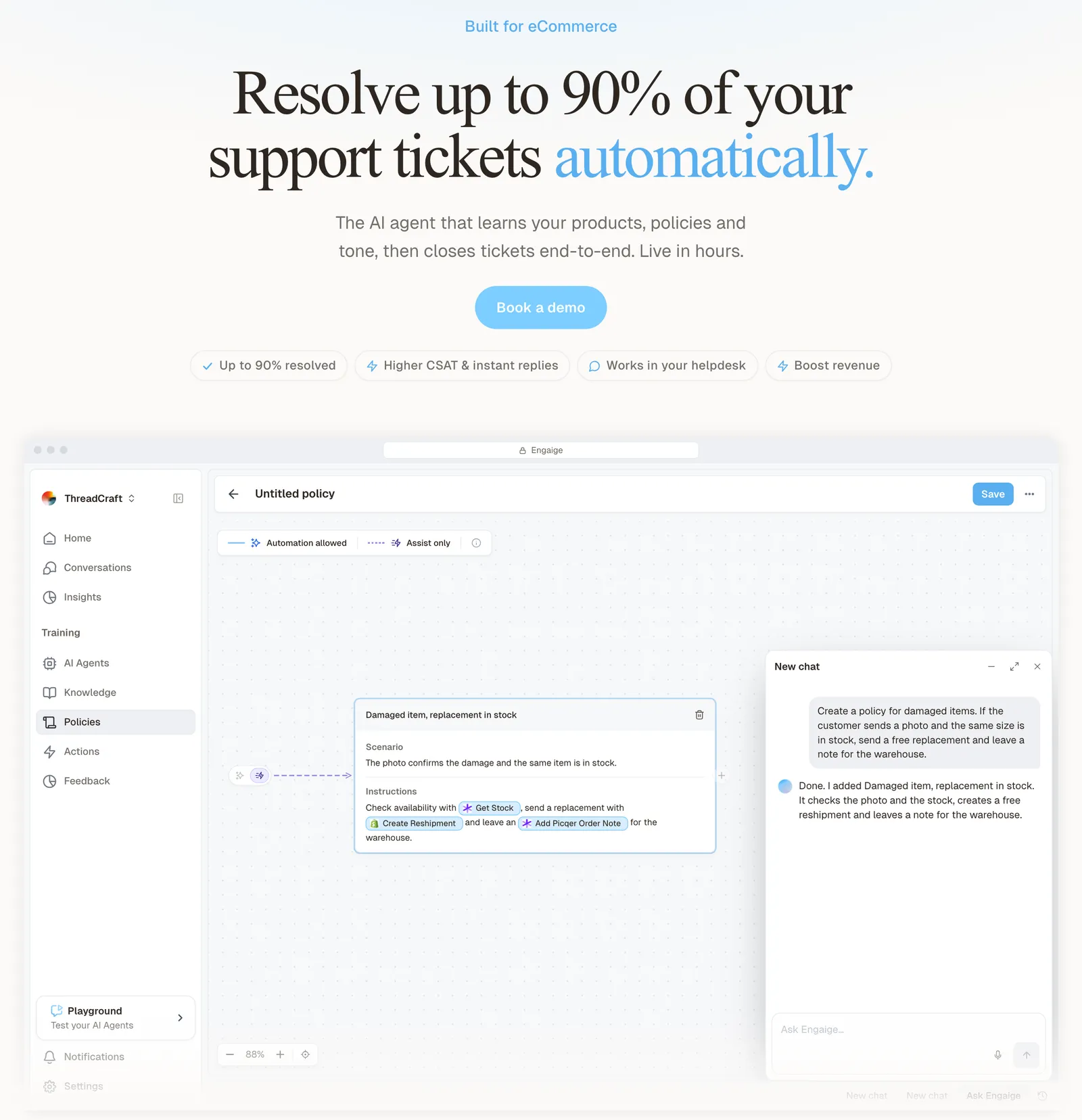
This is the returns use case Engaige is built for: the same stack that keeps the revenue is where support either protects it or leaks it, and that is the layer we strengthen. Returns sit inside a wider post-purchase stack, so it pays to read them alongside our guides to order-tracking software and subscription software.
Frequently asked questions
What is returns management software for e-commerce?
Returns management software manages returns and exchanges for an online store. It gives shoppers a self-service portal to request a return, automates approval and return labels, and steers refunds towards exchanges or store credit. It runs on top of your commerce platform as an app, a native feature, or an extension.
How much does returns software cost?
It varies by model. Self-service portals start around $19 per month, often with a free or shopper-funded tier, and scale with return volume or a per-return fee. Enterprise returns platforms price by quote. Add return shipping and label costs, which are usually charged separately from the software fee.
Does Shopify have native returns?
Yes, Shopify has a basic built-in Returns feature that handles return requests and refunds. It is enough for simple needs, but specialist apps add exchanges, store credit, automated rules and branded portals. Most scaling Shopify brands move to a dedicated returns app for the retention features.
Does WooCommerce or Magento have native returns?
WooCommerce has no native returns; it relies on a first-party Returns and Warranty Requests add-on and third-party plugins. Magento Open Source has none either, while Adobe Commerce includes built-in RMA. Cross-platform tools such as AfterShip and ReturnGO integrate with both.
What should I look for in returns software?
Check exchange and store-credit flows, automation and rules, platform fit, the processing model, and the pricing model. The tools that steer returns towards exchanges and let shoppers serve themselves are the ones that keep revenue and keep your support volume low.
Can AI automate returns?
Partly, and it depends what you mean. Returns management software already automates the mechanics: rule-based approvals, label generation and refund triggers, and some tools add AI to flag fraud or enforce eligibility. What it does not do is answer the customer.
An AI support agent sits on top of the returns tool, reads the order and policy behind the ticket, and resolves the request in the conversation: it starts the return, sends the label and reads back the refund status, instead of pointing the customer at a portal.