Winning a customer once is expensive; getting them to come back is where the margin is. Loyalty software runs the points, rewards, referrals and VIP tiers that turn a first purchase into a habit. It is the “expand” lever on customer lifetime value, the motivator that lifts how often and how much loyal customers buy, as long as it rewards purchases they would not otherwise have made.
This guide explains what loyalty software does, how to judge it, and which tools fit your platform. We make AI customer support software, so we see these tools from the support side, not as products we sell. That is why none of them is ours, and we weigh each on its own merits.
What is loyalty software for e-commerce?
Loyalty software, also called a loyalty programme or rewards platform, runs the schemes that encourage customers to buy again. It sits on top of your commerce platform as an app or extension, tracks how customers earn and redeem points, and powers referrals, VIP tiers and store credit. In short, it turns repeat purchases into a structured, rewardable habit.
Most tools cover the same core: points, referrals, tiers and a customer-facing rewards page. The differences are in how flexible the rewards are, how deep the analytics go, whether it spans online and in-store, and which platforms it runs on. Some are built for one platform; others span many or target the enterprise.
How do you choose loyalty software?
Judge loyalty software on the repeat revenue it generates, not on its feature list. The questions that matter are whether it fits your platform, supports the rewards your customers actually want, integrates with your email and SMS, and earns more than it costs to run. The trap is paying to reward purchases customers would have made anyway.
| What to check | Why it matters |
|---|---|
| Reward types | Points, referrals, VIP tiers and store credit each drive different behaviour, so match them to your goal |
| Platform fit | A native app or extension for your platform beats a custom build you have to maintain |
| Incremental revenue | The programme should reward purchases customers would not otherwise make, not subsidise existing ones |
| Email and SMS integration | Loyalty works when it is promoted, so check it connects to your marketing tools |
| Online and in-store | If you sell in both, a programme that spans POS and web keeps one balance per customer |
| Pricing model | A monthly fee, order-based tiers, or a quote changes the cost as you grow |
| Support and self-service load | Every programme generates points, reward and tier questions, so the clearer it is, the fewer tickets it creates |
The last row is easy to overlook. A loyalty programme adds a predictable stream of “how many points do I have” and “where is my reward” questions, and the clearer the programme and its messaging, the smaller that stream stays.
What is the best loyalty software for e-commerce?
There is no single best tool, because the right one depends on your platform, your size, and whether you want a simple points app or an enterprise loyalty engine. Below are the leading options with a short introduction each, and the platform and region each one fits, so you can match them to your store.
1. Smile.io: best for Shopify brands that want the easiest start
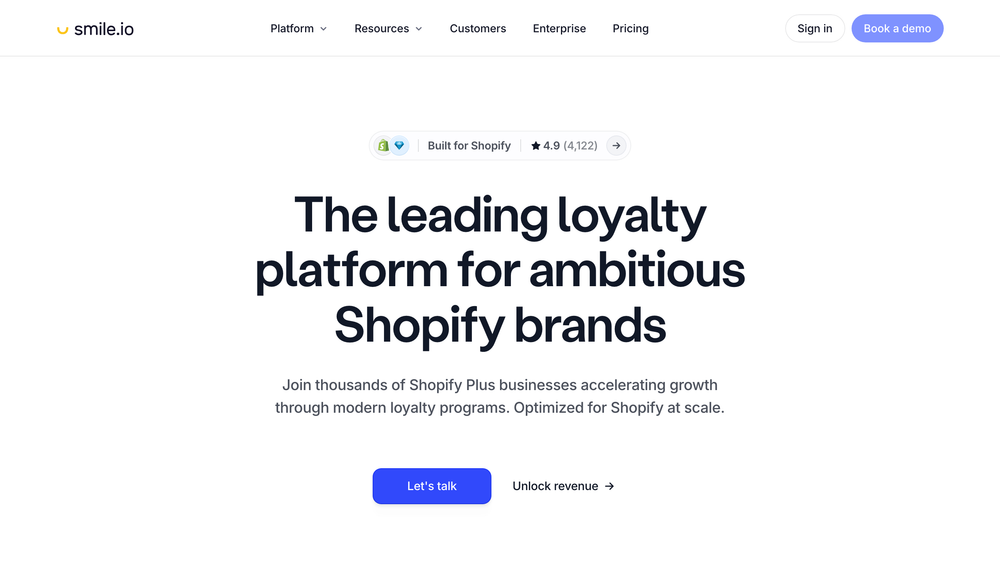
Smile.io is the most widely used loyalty app, built for Shopify, with points, referrals and VIP tiers in a setup most brands can launch in an afternoon. It is Shopify-only. Pricing is free up to 200 orders a month, then $15, $79, $199 and $999 a month as you scale, with an enterprise tier above.
Pros
- The easiest loyalty programme to launch, with a genuine free tier.
- A large app ecosystem, including Klaviyo and review tools.
Cons
- Shopify-only.
- Advanced features sit on the higher monthly tiers.
2. LoyaltyLion: best for Shopify Plus brands wanting data-driven retention
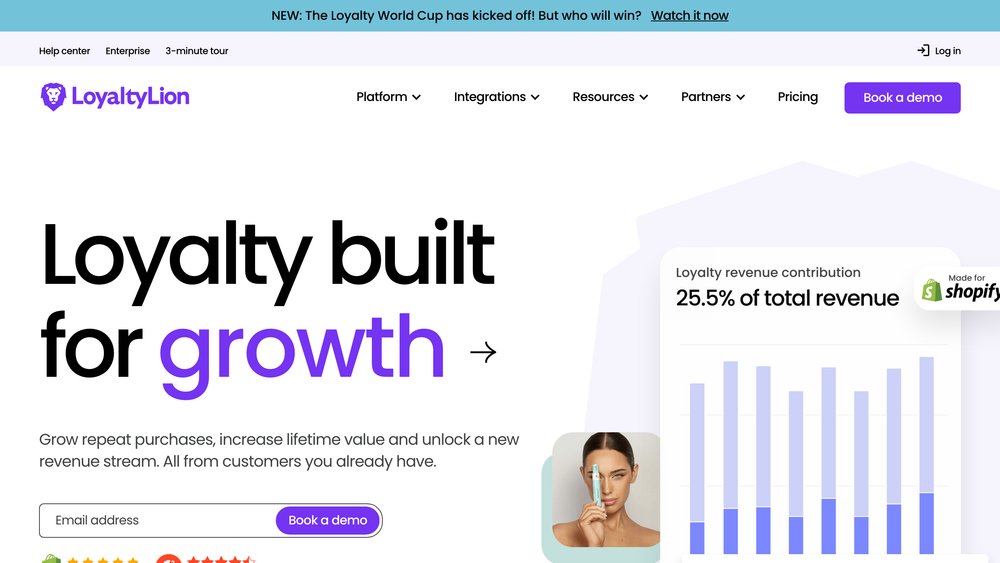
LoyaltyLion is a retention platform for Shopify and Shopify Plus, with points, VIP tiers, referrals, store-credit rewards and branded loyalty pages, plus 100+ integrations and a headless API. Pricing is free up to 400 orders a month, then Classic at $199 a month, with Advanced and Plus by quote.
Pros
- Deep retention tooling, analytics and 100+ integrations.
- Free tier to 400 orders, plus a headless API.
Cons
- Shopify-only.
- Jumps to $199 a month, then quote-based above that.
3. Yotpo Loyalty & Referrals: best for multi-platform brands wanting loyalty plus reviews and SMS
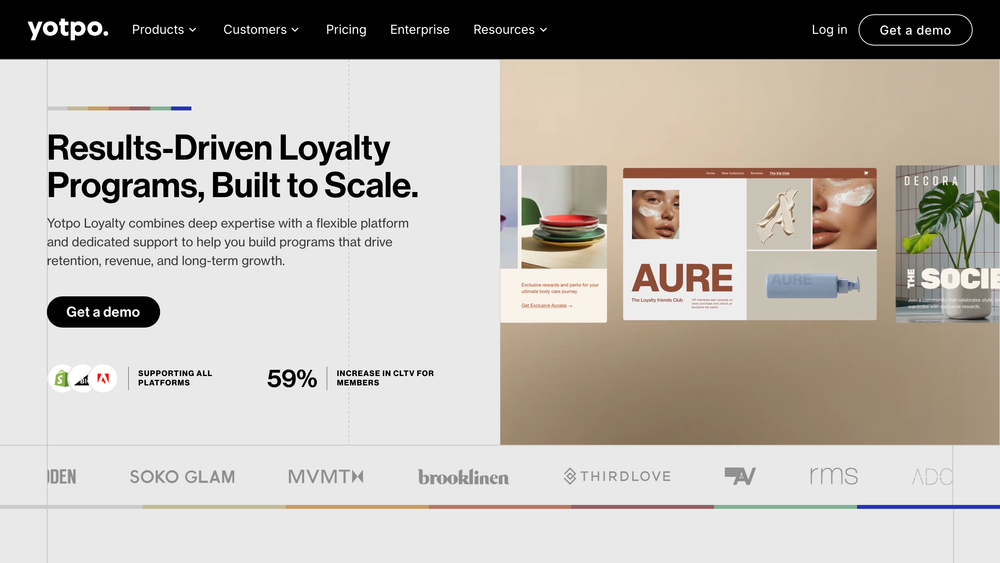
Yotpo Loyalty & Referrals runs points, referrals and VIP tiers as part of Yotpo’s wider reviews and SMS suite. It has the broadest verified platform support here: Shopify, BigCommerce, WooCommerce, Adobe Commerce, Salesforce Commerce Cloud and more. Pricing is not published, so it is quote-only.
Pros
- Genuinely multi-platform, including BigCommerce and Salesforce Commerce Cloud.
- Loyalty sits inside a reviews, SMS and email suite.
Cons
- No public pricing; quote-only.
- Loyalty is one module of a larger platform.
4. Rivo: best for Shopify brands wanting low-cost, modern retention
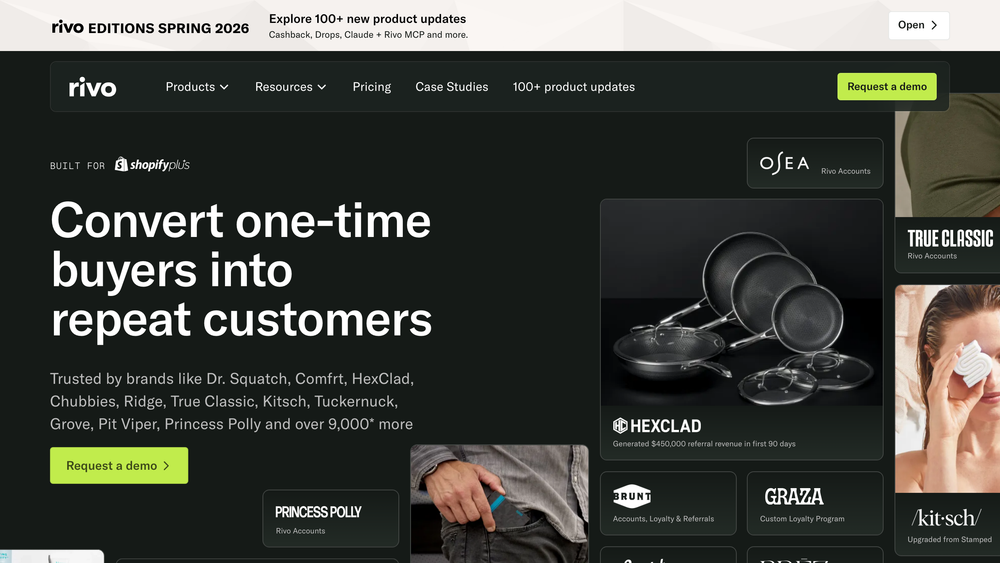
Rivo is a Shopify-native retention app with points, referrals, VIP tiers, paid memberships and store credit, plus 50+ app integrations. It is Shopify-only. Pricing starts at $49 a month on Scale, with a customer-accounts tier at $499 and custom enterprise pricing.
Pros
- Low $49 entry, with a modern, Shopify-native build.
- Memberships and store credit included.
Cons
- Shopify-only.
- The advanced accounts tier jumps to $499 a month.
5. Marsello: best for omnichannel retailers running POS and online
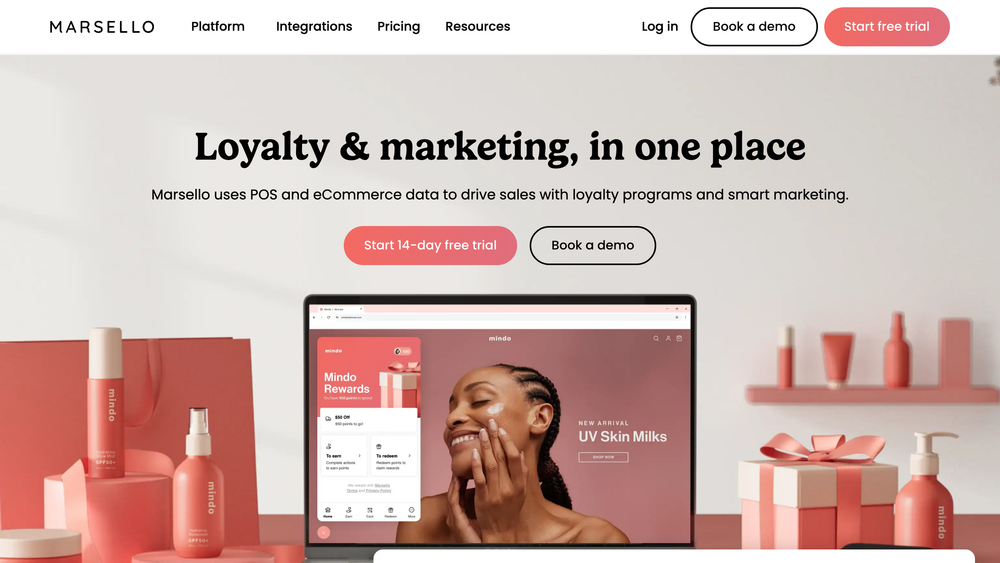
Marsello is an omnichannel loyalty and marketing platform that spans online and physical retail, with points, referrals, VIP tiers, RFM segmentation and built-in email and SMS. It integrates with Shopify, BigCommerce, WooCommerce and Ecwid, plus POS systems like Lightspeed. Pricing starts at around $100 a month per site (priced in NZD), with email and SMS as add-ons.
Pros
- True omnichannel loyalty across e-commerce and POS.
- Built-in email, SMS and RFM segmentation.
Cons
- Add-on fees for email and SMS volume.
- Rooted in retail and hospitality, less DTC-specialised.
6. Antavo: best for enterprise brands wanting a flexible loyalty engine
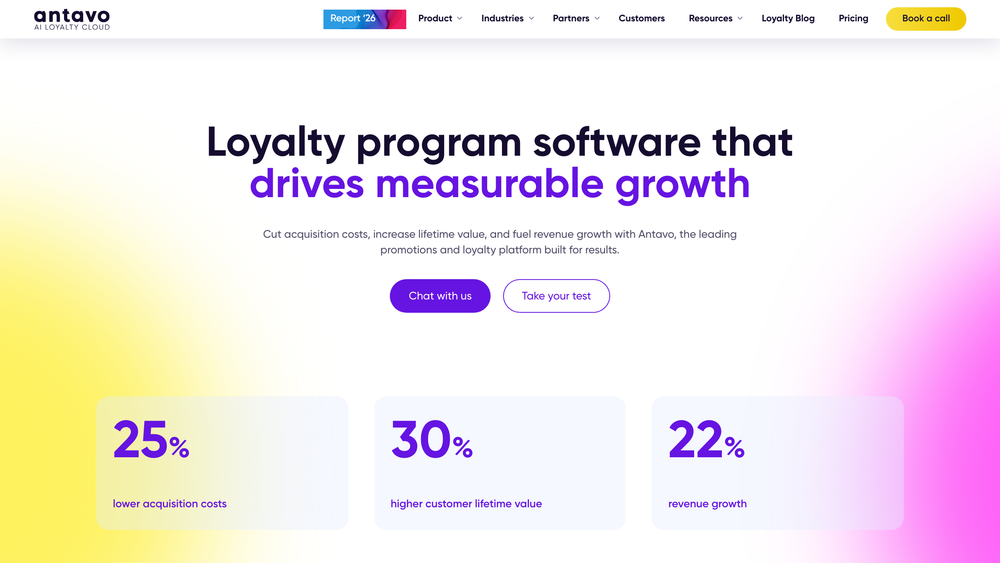
Antavo is an enterprise, API-first loyalty platform, founded in Europe and selling globally, with a points economy, advanced tiers, gamification, reward catalogues and wallet support. It connects through an API and a Shopify app, alongside CDP and martech integrations. Pricing is activity-based and not published, so it is quote-only.
Pros
- A flexible, API-first engine with gamification and advanced tiers.
- Built for enterprise, omnichannel programmes.
Cons
- No public pricing; quote-only.
- Enterprise-weight, more than an SMB needs.
7. Annex Cloud: best for large brands on complex commerce stacks
Annex Cloud is an enterprise loyalty platform with the broadest enterprise integration list here, including Salesforce Commerce Cloud, SAP Commerce Cloud, Adobe Commerce and Shopify. It covers points, tiers, referrals and engagement modules. Pricing is not published, so it is quote-only.
Pros
- Deep enterprise integrations (Salesforce, SAP, Adobe Commerce).
- A full loyalty and engagement suite.
Cons
- No public pricing; quote-only.
- Built for large, complex stacks, not small stores.
8. Piggy: best for European brands wanting loyalty across online and in-store
Piggy is a European loyalty and engagement platform, based in the Netherlands, with points, rewards, gift cards, vouchers and CRM across online and physical stores. It has a full Shopify integration and 100+ others. Pricing is usage-based, with a free tier up to 100 orders a month, then per-order tiers above it.
Pros
- European-focused, with online and in-store loyalty and a free tier.
- Dutch, German and English interface for EU teams.
Cons
- Less DTC-app-specialised than the Shopify-native leaders.
- Usage-based pricing scales with order volume.
How do the leading tools compare at a glance?
The table below covers the leading tools on the points that differentiate them, including the platforms each one runs on and the region it fits best. Where a vendor does not publish pricing, it is shown as “by quote” rather than guessed.
| Tool | Built for | Works with | Region | Pricing |
|---|---|---|---|---|
| Smile.io | Easiest Shopify start | Shopify | Global | Free, then from $15/mo |
| LoyaltyLion | Shopify Plus retention | Shopify | Global | Free, then $199/mo |
| Yotpo Loyalty | Multi-platform, plus reviews and SMS | Shopify, BigCommerce, Woo, Magento, SFCC | Global | By quote |
| Rivo | Low-cost Shopify retention | Shopify | Global | From $49/mo |
| Marsello | Omnichannel POS and online | Shopify, BigCommerce, Woo, Ecwid | Global | From around $100/mo (NZD) |
| Antavo | Enterprise loyalty engine | API-first, plus Shopify | EU-founded, global | By quote |
| Annex Cloud | Enterprise, complex stacks | SFCC, SAP, Adobe Commerce, Shopify | Global | By quote |
| Piggy | European online and in-store | Shopify and 100+ | Europe | Usage-based, free tier |
Which loyalty tool fits your store?
Start from your platform and your size, because together they decide your options. Shopify has by far the deepest loyalty-app field, WooCommerce and Magento mix native or first-party features with plugins, and enterprise brands look to dedicated platforms.
| Your store | Native option | Loyalty tools that fit |
|---|---|---|
| Shopify | None (app-based) | Smile.io, LoyaltyLion, Yotpo, Rivo, Marsello, Antavo, Annex Cloud, Piggy |
| WooCommerce | First-party Points and Rewards extension | Yotpo, Marsello |
| Magento / Adobe Commerce | Native Reward Points (Adobe Commerce only) | Yotpo, Annex Cloud |
| BigCommerce | None native | Yotpo, Marsello |
Beyond the platform, match the tool to your model. Easiest start favours Smile.io; data-driven Shopify retention favours LoyaltyLion or Rivo; omnichannel retail favours Marsello; enterprise scale points to Antavo or Annex Cloud; and European brands have a regional option in Piggy.
Where does customer support fit?
Loyalty programmes generate their own support load: “how many points do I have”, “where is my reward”, “why didn’t my discount apply”, “what tier am I on”. These questions are repetitive and rules-based, which is exactly what an AI support agent handles well.
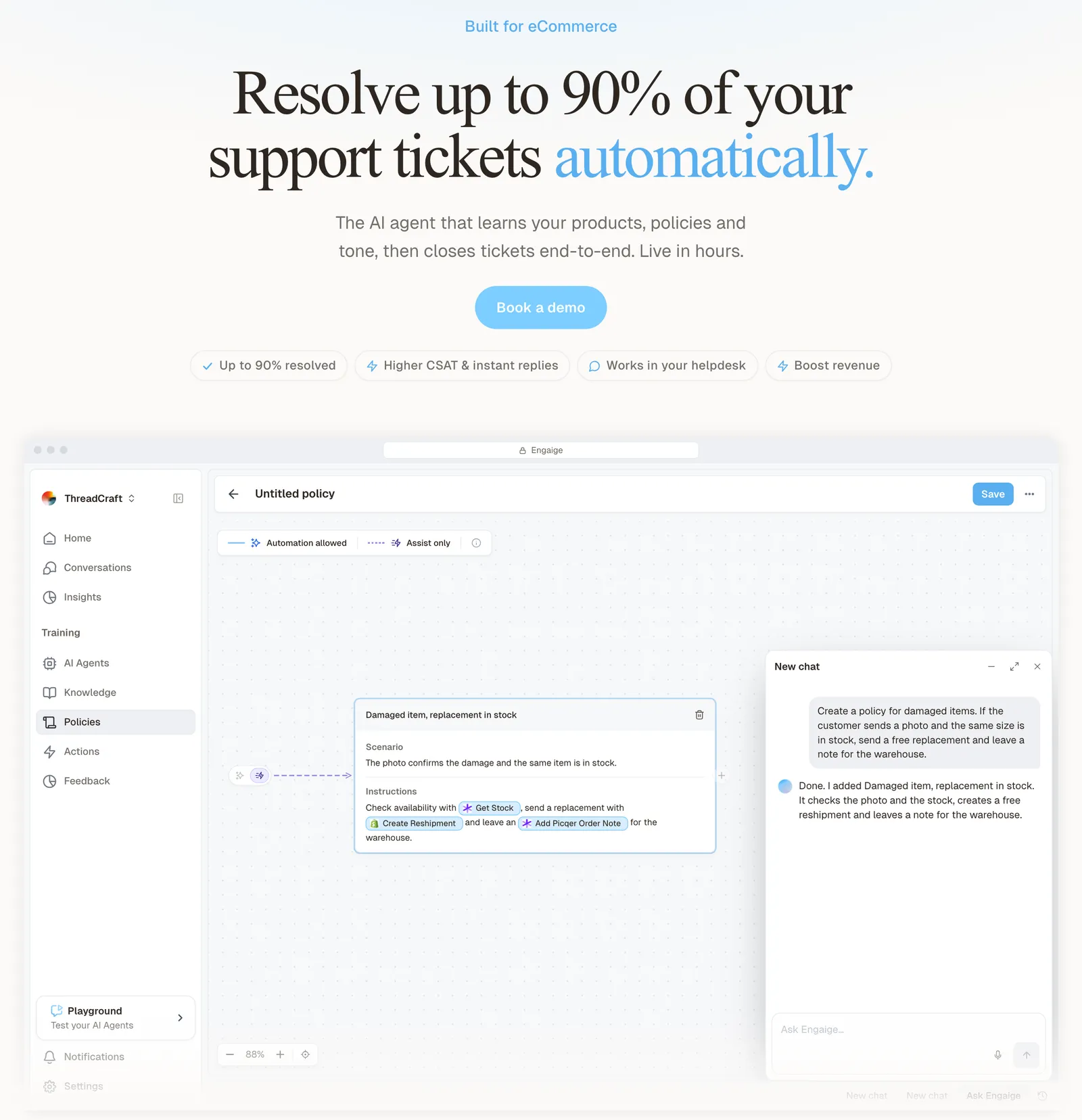
Engaige is the AI support layer that sits across your post-purchase stack. It integrates with loyalty tools like Smile.io and LoyaltyLion, reads the points, tier and order data behind each ticket, and turns each of those questions into an action: it reads back a points balance, applies a reward or discount, and confirms a tier, all in your customer’s language.
You shape this through Engaige AI, where you instruct the agent in plain language, like onboarding a teammate. It goes live in Agent Assist within hours. There, the gap between what your team sends and what the agent suggested is one of its training signals, and Engaige AI proposes improvements you approve.
Most brands switch to autonomous in about a week, and Engaige automates up to 90% of supported tickets. The aim is genuine resolution, not deflection.
A loyalty programme only pays off if the experience around it holds together, and support is where that experience is won or lost. The same programme that drives repeat purchases is where support either protects the relationship or leaks it, and that is the layer we strengthen. Loyalty works hardest beside the other retention levers, so read it next to our guides to subscription software and returns software.
Frequently asked questions
What is loyalty software for e-commerce?
Loyalty software, also called a loyalty programme or rewards platform, runs the points, rewards, referrals and VIP tiers that encourage customers to buy again. It sits on top of your commerce platform as an app or extension, tracks earning and redemption, and gives customers a place to see and spend their rewards.
How much does loyalty software cost?
It varies widely. Shopify apps start free for low order volumes, then run from $15 to a few hundred dollars a month as you scale. Enterprise loyalty platforms price by quote. The total usually scales with your monthly orders or active members.
Does Shopify have a native loyalty programme?
No. Shopify has native gift cards and store credit, but not a points or rewards programme, so loyalty is delivered by apps from the Shopify App Store. Smile.io, LoyaltyLion and Rivo are among the most widely used.
Does WooCommerce or Magento have native loyalty?
WooCommerce has no native loyalty, but offers a first-party Points and Rewards extension plus third-party plugins. Adobe Commerce includes a native Reward Points feature, though Magento Open Source does not, so it relies on extensions.
What should I look for in loyalty software?
Check how well it fits your platform, whether it supports the rewards you want (points, tiers, referrals, store credit), how it integrates with your email and SMS, and the pricing model. The right fit depends on your size: an app for a Shopify SMB, an enterprise platform for a complex stack.