Recurring revenue is the most predictable revenue an online store can have, and subscriptions are one of the biggest levers on customer lifetime value, but only if the software underneath it works. Subscription tools handle the repeat billing, the renewal logic, and the portal where customers manage their own plans. Choose the wrong one and you inherit failed payments, silent churn, and a support inbox full of pause and cancel requests.
This guide explains what subscription software does, how to judge it, and which tools fit which platform. We make AI customer support software, so we see these tools from the support side, as the systems our AI reads and acts on, not products we sell. That is why none of them is ours, and we weigh each on its own merits.
What is subscription software for e-commerce?
Subscription software, also called a subscription platform, manages recurring orders and payments for an online store. It sits on top of your commerce platform as an app or extension, charges customers on a schedule, retries or chases failed payments, and gives subscribers a portal to pause, skip, swap or cancel. In short, it turns a one-off checkout into repeat revenue.
There are three broad shapes. Hosted apps like Recharge run on platforms such as Shopify and bill monthly plus a transaction percentage. Platform-native features, like Shopify Subscriptions or WooCommerce Subscriptions, are built in or first-party. Self-hosted extensions, common on WooCommerce and Magento, are usually a one-time licence you install and maintain yourself.
How do you choose subscription software?
Judge subscription software on how well it bills, recovers and retains, not on its feature list alone. The questions that matter are whether it supports your business model, recovers failed payments automatically, lets customers serve themselves, and fits your platform without custom development. Price is the last filter, not the first.
The trade-offs are real, and they often come down to renewal pricing and gateway support. One WooCommerce merchant explained why they moved off the first-party extension:
June 2026 Reddit Used the official Woo Subscriptions plugin for a while but it got pricey fast with renewals. Switched to SUMO Subscriptions... their docs are decent and the price is way more reasonable. · r/woocommerce View on RedditThat is the platform-fit and pricing-model test in practice: the official extension grew expensive on renewals, while an independent plugin covered their payment gateways without paid add-ons. Run the same checks below against your own stack.
| What to check | Why it matters |
|---|---|
| Billing flexibility | Fixed intervals, prepaid, build-a-box, gifting and trials decide which subscription models you can actually run |
| Failed-payment recovery | Automatic retries and dunning recover revenue that would otherwise churn silently |
| Self-service portal | Letting customers pause, skip, swap and cancel themselves keeps routine requests out of support |
| Churn and retention tools | Cancel-flow saves and pause-instead-of-cancel options protect recurring revenue |
| Platform fit | A native app or extension for your platform beats a custom API build you have to maintain |
| Pricing model | A monthly fee plus a transaction percentage, or a one-time licence, changes the total cost as you grow |
| Support and self-service load | The more a tool recovers payments and deflects routine requests, the fewer subscription tickets your team handles |
The last row is easy to overlook and expensive to ignore. Every subscription generates a predictable stream of questions, and the tools that recover payments and let customers self-serve are the ones that keep that stream small.
What is the best subscription software for e-commerce?
There is no single best tool, because the field is shaped by platform. The most mature, feature-rich subscription apps are Shopify-first, while WooCommerce and Magento run on their own plugins and extensions. Below are the leading apps with a short introduction each; your full, platform-specific shortlist is in the guides further down.
1. Recharge: best for brands that want the most proven option
Recharge is the most established subscription platform and the default for scaling DTC brands, running natively on Shopify and BigCommerce. It manages recurring billing, a no-code customer portal for pause, skip and swap, failed-payment recovery, plus bundles and analytics. There is no free tier: pricing starts at $99 a month on Starter plus 1.49% and 19 cents per transaction, rising to $499 a month on Plus, with a 60-day trial.
Pros
- The most established subscription platform; native on Shopify and BigCommerce.
- Recurring billing, a no-code portal and failed-payment recovery, proven at scale.
Cons
- No free tier; pricing starts at $99 a month plus a transaction percentage that scales.
- More breadth than a simple replenishment brand needs.
2. Skio: best for brands that prioritise a frictionless portal and retention saves
Skio is built around a passwordless customer portal and multi-step cancel flows that turn cancellations into pauses, swaps and discounts, with smart payment recovery behind them. It is Shopify-only and now a Recharge company rather than a fully independent challenger. Pricing sits at a single point: $599 a month, or $499 a month billed annually, plus 1% and 20 cents per transaction.
Pros
- Passwordless portal and multi-step cancel flows that turn cancels into pauses, swaps and saves.
- Smart payment recovery and strong retention tooling out of the box.
Cons
- Shopify-only, at a single higher price point ($599 a month, or $499 annually).
- Now a Recharge company rather than a fully independent challenger.
3. Bold Subscriptions: best for brands that want managed dunning without a premium price
Bold Subscriptions handles recurring billing on Shopify with automatic dunning out of the box, a full customer portal, and bulk swaps and cancel flows. Its draw is the lowest entry price of the major apps, a practical pick for managed failed-payment recovery on a budget. Its listing prices the entry Launch tier from around $25 a month plus a transaction percentage, scaling on higher tiers.
Pros
- The lowest monthly entry price of the major apps, from around $25 a month.
- Automatic dunning and a full customer portal out of the box.
Cons
- Shopify-only.
- Lighter on advanced retention and portal features than Skio or Stay AI.
4. Loop Subscriptions: best for brands that want retention tooling at a transparent, scaling rate

Loop Subscriptions pairs recurring billing with smart dunning of up to 15 retries, a mobile-friendly portal, and personalised cancellation flows that save churn. It is Shopify-only, and a different company from Loop Returns. There is no free tier: the Starter plan is $99 a month plus 1%, and Pro is $399 a month plus 0.75%, with enterprise pricing on request.
Pros
- Smart dunning with up to 15 retries, plus personalised cancellation flows that save churn.
- Transparent per-transaction rates that fall as you scale, from 1% to 0.75%.
Cons
- Shopify-only, with no free tier (Starter starts at $99 a month).
- Easy to confuse with the unrelated Loop Returns.
5. Stay AI: best for brands whose priority is reducing churn rather than the lowest fees
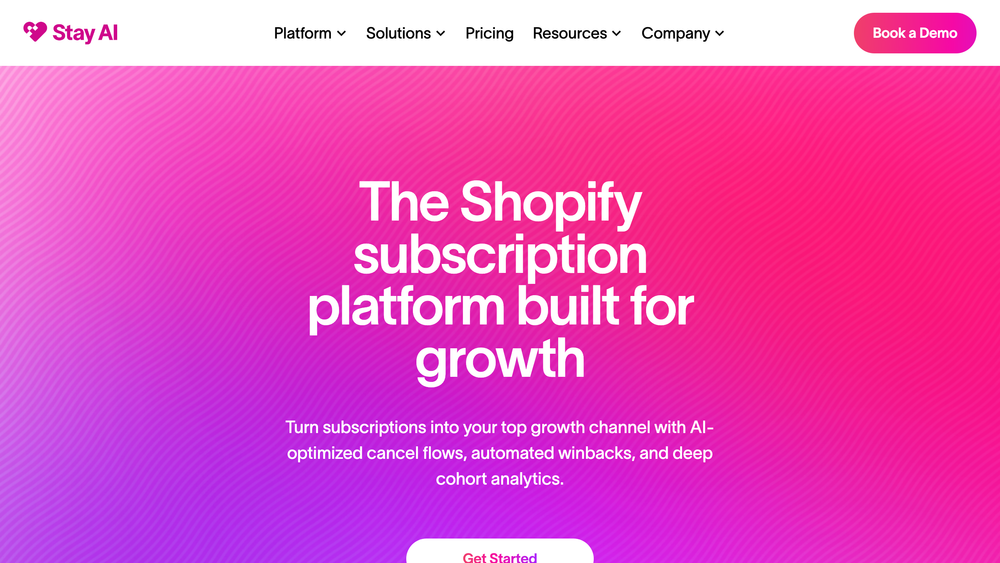
Stay AI is a retention-first platform with A/B testing, churn-prevention experiments and proactive smart dunning to recover failed payments, built for brands that treat subscriptions as a growth channel. It runs on Shopify. Pricing is a single Pro plan at $499 a month plus 1% and 19 cents per transaction, with custom enterprise pricing above it.
Pros
- Retention-first, with A/B testing and churn-prevention experiments built in.
- Proactive smart dunning to recover failed payments.
Cons
- Shopify-only, at a single premium $499-a-month price point.
- A retention-first price, so not the cheapest way to start.
6. Ordergroove: best for large brands that can absorb an enterprise floor
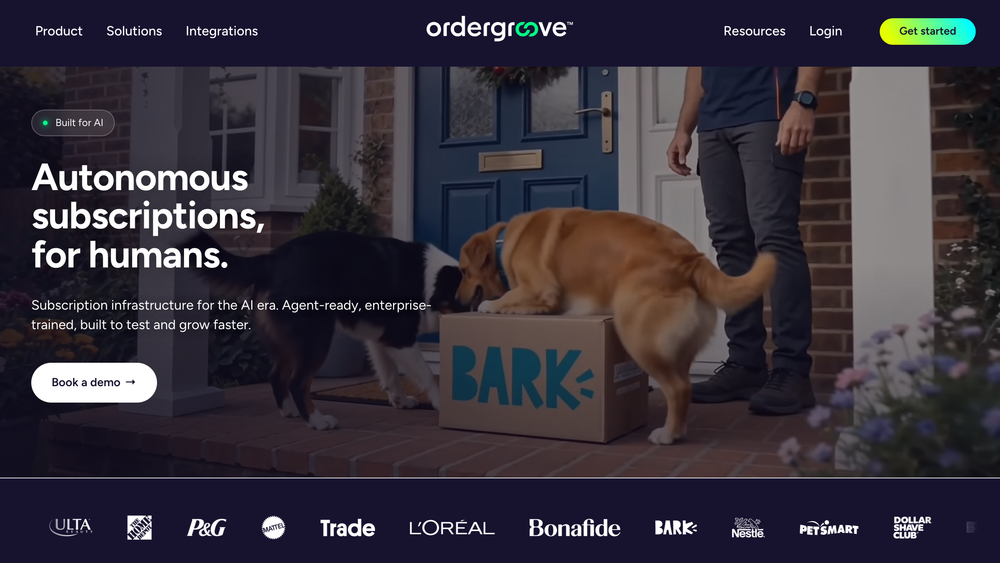
Ordergroove is the enterprise option, with card-refresh retries, an involuntary-churn suite, and predictive tools to lift subscriber lifetime value across large catalogues. It integrates with Shopify, BigCommerce, commercetools, Adobe Commerce, Magento and Salesforce. Pricing is quote-based and enterprise-grade, historically with a published minimum around $2,917 a month, so it suits brands that can absorb that floor.
Pros
- Enterprise-grade, with card-refresh retries and an involuntary-churn suite.
- Integrates across Shopify, BigCommerce, commercetools, Adobe Commerce, Magento and Salesforce.
Cons
- Quote-based, with an enterprise floor historically around $2,917 a month.
- Overkill for small and mid-sized brands.
7. Awtomic: best for bundle and curated-box models
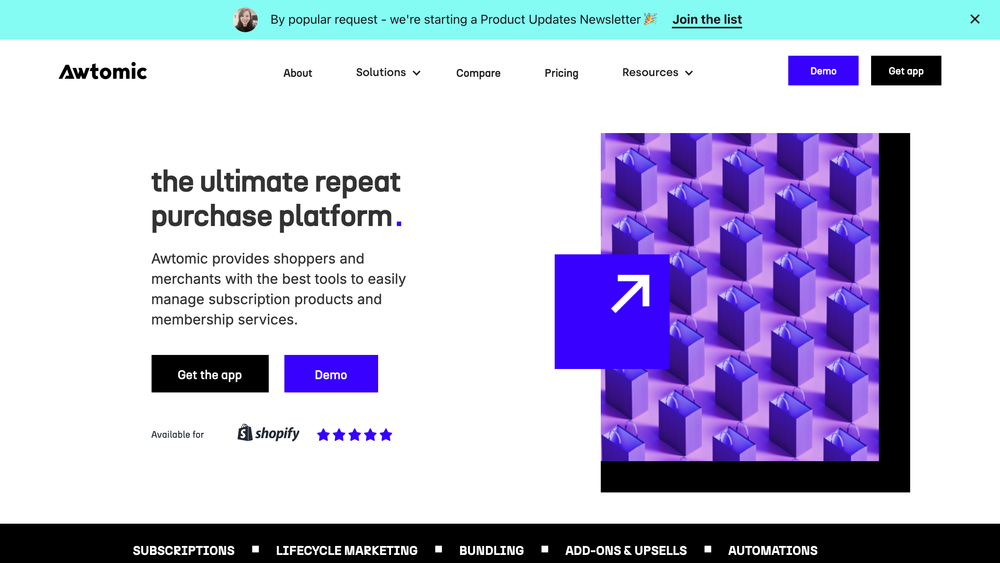
Awtomic specialises in build-a-box, clubs and memberships, with a passwordless portal, bundling tools and failed-payment recovery, so it suits curated boxes rather than simple replenishment. It runs on Shopify. Pricing is a single Professional plan at $299 a month plus 1% per order, or $249 a month billed annually, with custom enterprise pricing above it.
Pros
- Specialises in build-a-box, clubs and memberships, with strong bundling.
- Passwordless portal and failed-payment recovery.
Cons
- Shopify-only.
- Less suited to simple replenishment than the generalists.
8. Juo: best for brands wanting a modern, design-led subscription experience
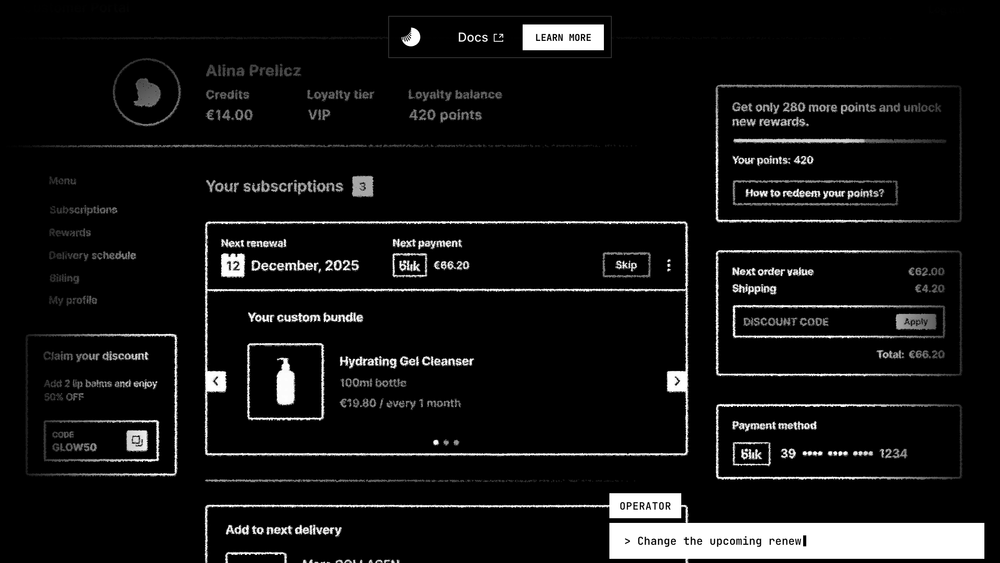
Juo is a newer, EU-built subscription app for Shopify, focused on curated boxes, replenishment and retention-oriented renewal flows with a modern, design-led portal. Its listing and docs do not spell out automatic dunning, so confirm that with the vendor. Its listing prices the Standard plan from around $99 a month plus a transaction fee, with a $399 Pro tier above it.
Pros
- Modern, design-led, EU-built subscription experience.
- Focused on curated boxes, replenishment and retention-oriented renewals.
Cons
- Shopify-only, and automatic dunning is not stated, so confirm with the vendor.
- A newer, smaller player than the established platforms.
How do the leading tools compare at a glance?
The table below covers the most significant tools on the points that actually differentiate them: platform fit, pricing model, automatic dunning and the self-service portal. Where a vendor’s listing did not state automatic dunning, it is shown as “not stated” rather than assumed.
| Tool | Works with | Pricing model | Automatic dunning | Self-service portal |
|---|---|---|---|---|
| Recharge | Shopify, BigCommerce | $99/mo + 1.49%+19¢ (no free tier) | Yes | Yes |
| Skio | Shopify | $599/mo (or $499 annual) + 1%+20¢ | Yes | Yes |
| Bold Subscriptions | Shopify | From around $25/mo + transaction % | Yes | Yes |
| Loop Subscriptions | Shopify | $99/mo + 1%; Pro $399 + 0.75% | Yes (smart dunning) | Yes |
| Stay AI | Shopify | $499/mo + 1%+19¢ | Yes (smart dunning) | Yes |
| Ordergroove | Enterprise (Shopify and others) | Quote-based (enterprise) | Yes | Yes |
| Awtomic | Shopify | $299/mo + 1% (or $249 annual) | Yes | Yes |
| Juo | Shopify | Standard from $99/mo; Pro $399 | Not stated | Yes |
Which subscription tool fits your store?
Start from your platform, because that decides which tools are even available to you. The Shopify field is the deepest, WooCommerce splits between a first-party extension and independent plugins, and Magento is an extension-only ecosystem.
| Your store | Native option | Subscription tools that fit |
|---|---|---|
| Shopify | Shopify Subscriptions (free, basic) | Recharge, Skio, Bold, Loop, Stay AI, Ordergroove, Awtomic, Juo |
| WooCommerce | WooCommerce Subscriptions (first-party) | SUMO, YITH |
| Magento / Adobe Commerce | None native | Aheadworks, MageDelight, ParadoxLabs |
| BigCommerce | None native | Recharge, Ordergroove |
| Shopware | Native Subscriptions (Beyond plan) | Third-party abo plugins |
Beyond the platform, match the tool to your model. Lowest cost to start favours Bold’s sub-$30 entry; retention and churn prevention favour Stay AI or Skio; build-a-box and clubs favour Awtomic; and enterprise scale points to Ordergroove.
Where does customer support fit?
Every subscription turns support into a retention moment. The questions repeat, and the one that matters most is “cancel my subscription”, sitting alongside “pause my subscription”, “skip my next box”, “swap this product” and “why was my card declined”. All are repetitive and rules-based, which is exactly what an AI support agent resolves well.
Engaige is the AI support layer that sits on top of your subscription stack. It integrates with the subscription tools you already run, including Recharge, Skio, Bold, Loop Subscriptions and Juo, reads the plan and schedule behind each ticket, and turns each question into an action rather than a reply, including the cancellation that decides whether a subscriber stays.
So “pause my subscription” becomes a pause it applies; “skip my next box” becomes a skipped delivery; “swap this product” becomes an edit to the next order; and a failed payment becomes a recovery it chases. A cancellation becomes a chance to offer a pause or skip first, a save instead of a lost subscriber, all in your customer’s language.
You shape all of this through Engaige AI, where you instruct the agent in plain language, like onboarding a teammate. It goes live in Agent Assist within hours. There, the gap between what your team sends and what the agent suggested is one of its training signals, and Engaige AI proposes improvements you approve.
Most brands switch to autonomous in about a week, and Engaige automates up to 90% of supported tickets. The aim is genuine resolution, completing the change rather than deflecting the question to a human.
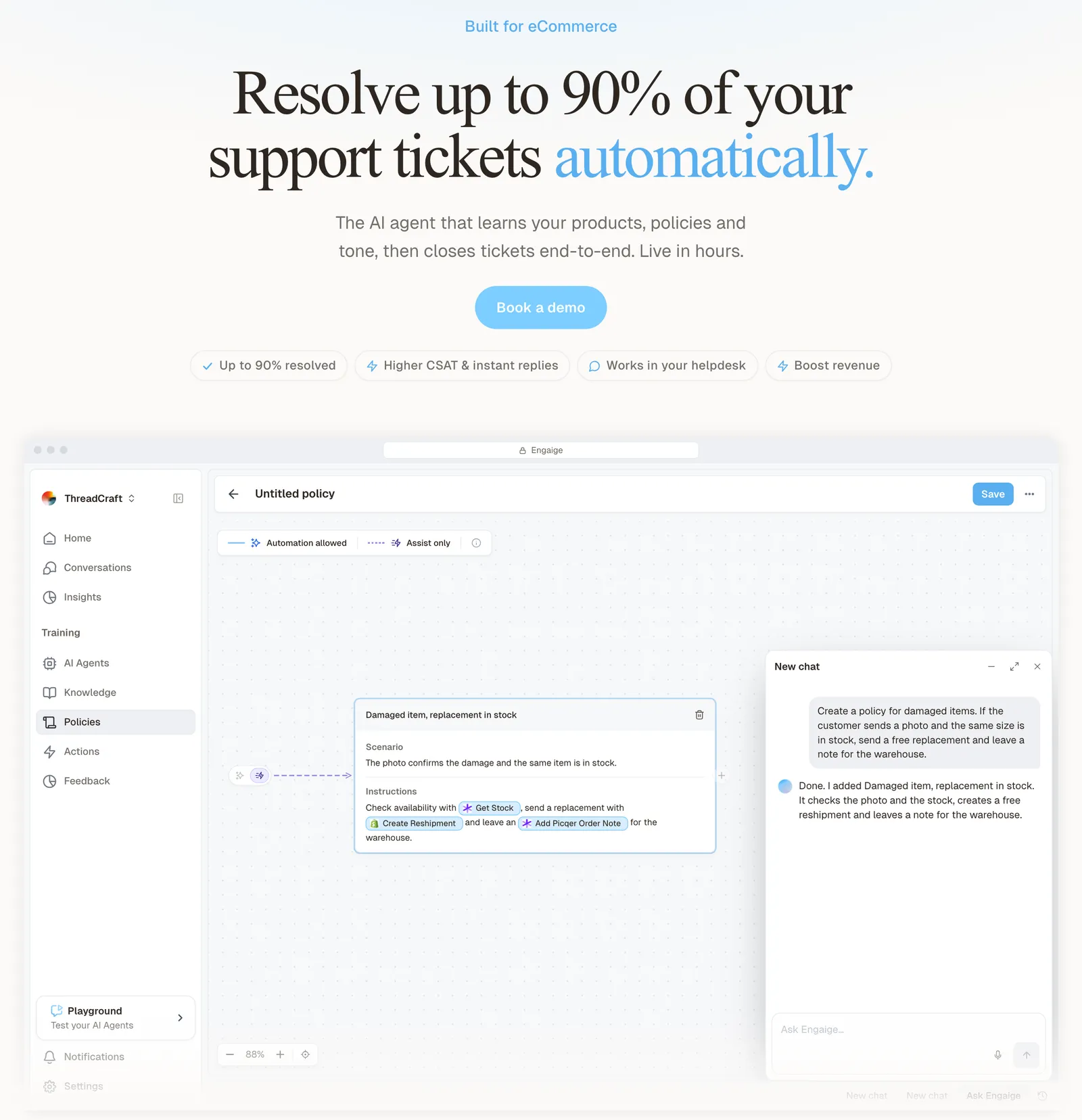
This is the subscriptions use case Engaige is built for: the same stack that builds recurring revenue is where support either protects it or leaks it, and that is the layer we strengthen. Subscriptions are only one post-purchase lever, and they work best beside the others: see our guides to loyalty software and returns software for the rest of the retention stack.
Frequently asked questions
What is subscription software for e-commerce?
Subscription software manages recurring orders and payments for an online store. It charges customers on a schedule, retries failed payments, and gives subscribers a portal to pause, skip, swap or cancel. It runs on top of your commerce platform as an app, a native feature, or a self-hosted extension.
How much does subscription software cost?
It depends on the model. Hosted apps usually charge a monthly fee plus a transaction percentage, with entry tiers from around $25 per month and enterprise minimums in the thousands. Self-hosted extensions on WooCommerce and Magento are typically a one-time licence. The total cost scales with your subscriber count.
What is the best subscription app for Shopify?
There is no single winner. Recharge is the most established, Bold has the lowest entry price, Stay AI and Skio focus on retention, and Awtomic suits build-a-box models. The comparison above lines them up on platform, pricing, dunning and self-service.
Does WooCommerce have native subscription software?
Yes. WooCommerce Subscriptions is the first-party extension and handles automatic rebilling and customer self-service. There is also an independent plugin field, including SUMO and YITH. See the comparison table above for how it sits against the hosted Shopify apps.
What should I look for in subscription software?
Check billing flexibility, automatic failed-payment recovery, a self-service portal, retention tooling, platform fit and the pricing model. The tools that recover payments automatically and let customers manage their own plans are the ones that protect revenue and keep your support volume low.