“Where is my order” is the single most common question in e-commerce support, and silence is what triggers it. Order-tracking software replaces the carrier’s bare tracking page with your own branded one, and pushes proactive email and SMS updates as the parcel moves. It is the first post-purchase lever on customer lifetime value, because a delivery a customer can follow builds the trust that brings them back.
This guide explains what order-tracking software does, how to judge it, and which tools fit your platform. We make AI customer support software, so we see these tools from the support side, as the systems our AI reads and acts on, not products we sell. That is why none of them is ours, and we weigh each on its own merits.
What is order-tracking software for e-commerce?
Order-tracking software, also called post-purchase or shipment-tracking software, keeps customers informed after they buy. It pulls live tracking from the carriers, shows it on a branded tracking page on your domain, and sends proactive email or SMS updates as the parcel moves and when it is delayed. In short, it answers “where is my order” before the customer asks.
Most tools cover the same core: a branded tracking page, multi-carrier tracking, and shipping notifications. The differences are in how many carriers they support, whether they detect delays and exceptions proactively, how far they go into marketing and analytics, and which platforms they run on. Some are built for one platform; others span many.
How do you choose the right tool?
Judge order-tracking software on how well it keeps customers informed and how much support load it removes, not on its feature list. The questions that matter are whether it covers your carriers, detects delays before customers chase them, fits your platform, and keeps WISMO tickets down. Price is the last filter, not the first.
The hard part is telling the options apart, which is the whole reason this guide exists. As one merchant put it on r/ecommerce:
January 2026 Reddit Been trying to find a shipping solution for my brand but there's so many out there and they all sound so similar. I'm not sure what the actual pros/cons of each are. · r/ecommerce View on RedditThat is exactly what the checks below are for: they cut through similar-sounding tools to the pros and cons that actually differ, from carrier coverage and proactive alerts to platform fit and true cost.
| What to check | Why it matters |
|---|---|
| Carrier coverage | The tool is only as good as the carriers it tracks, so confirm yours, from PostNL, DPD and DHL in Europe to USPS, UPS and FedEx in the US |
| Proactive alerts | Detecting delays and delivery exceptions before the customer chases cuts the most tickets |
| Branded tracking page | A tracking page on your own domain keeps customers on your brand, not the carrier’s |
| Notification channels | Email, SMS and WhatsApp reach customers where they actually read updates |
| Platform fit | A native app or extension for your platform beats a custom API build you maintain |
| Pricing model | A monthly fee, a per-shipment fee, or a quote changes the cost as volume grows |
| Support and self-service load | The more a tool answers “where is my order” automatically, the fewer tickets your team handles |
The last row is easy to overlook and expensive to ignore. WISMO is the highest-volume question in e-commerce support, and the tools that surface tracking and flag delays early are the ones that keep that volume down.
What is the best order-tracking software for e-commerce?
There is no single best tool, because the right one depends on your platform, your carriers, your region, and whether you want a simple tracker or a full post-purchase platform. Below are the leading options with a short introduction each, and the platform and region each one fits, so you can match them to your store.
1. AfterShip: best for multi-platform stores that want the widest carrier coverage
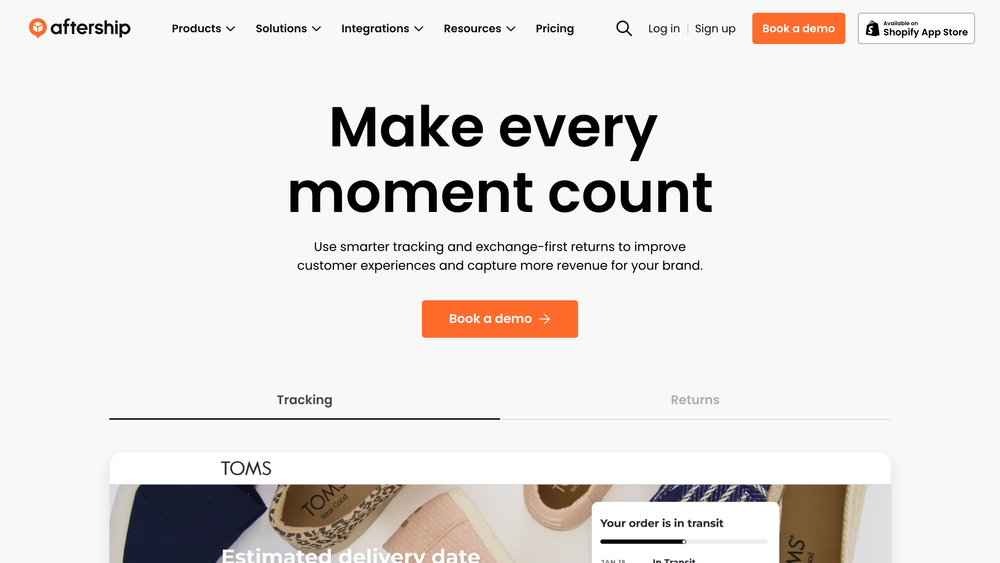
AfterShip is the most established tracking platform, with a branded tracking page, email and SMS notifications, and over 1,100 carriers. It integrates with Shopify, WooCommerce, Magento and BigCommerce, plus an API on higher tiers. Pricing is free up to 50 shipments a month, then Essentials at $11 a month and Premium at $70 a month, with per-shipment overage.
Pros
- Genuinely multi-platform, with 1,100+ carriers and a free tier to start.
- Branded tracking page, proactive notifications and analytics in one.
Cons
- The custom-domain tracking page and API sit on higher tiers.
- Per-shipment overage fees add up at volume.
2. parcelLab: best for enterprise and global brands wanting tracking, notifications and AI in one
parcelLab is an enterprise post-purchase platform from Europe, covering branded tracking, proactive notifications, delivery promises, carrier benchmarking and AI agents that deflect WISMO questions. It integrates with Shopify, Magento and Shopware, with more platforms by arrangement. Pricing is not published, so it is demo-and-quote only.
Pros
- Deep, enterprise-grade post-purchase suite with AI WISMO deflection.
- Strong in Europe and built for global, multi-carrier operations.
Cons
- No public pricing; quote-only.
- Heavier than a small brand needs for simple tracking.
3. Narvar: best for large retailers wanting premium post-purchase CX
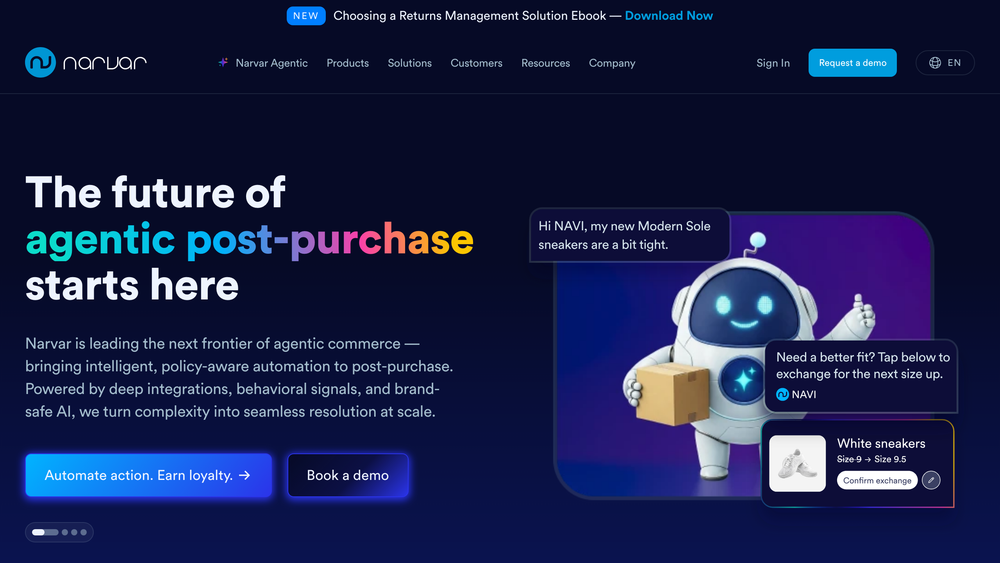
Narvar is an enterprise post-purchase platform whose tracking module offers branded, status-aware tracking pages, proactive SMS and email, multi-carrier visibility and in-flight exception resolution. It integrates with Shopify, BigCommerce, Magento and Salesforce Commerce Cloud. Pricing is by quote rather than a public tier.
Pros
- Premium, customisable tracking pages with marketing and analytics.
- Built for large, multi-locale retailers.
Cons
- No public pricing; quote-only.
- Enterprise-weight, likely overkill for smaller stores.
4. Malomo: best for Shopify brands that treat tracking as a marketing channel
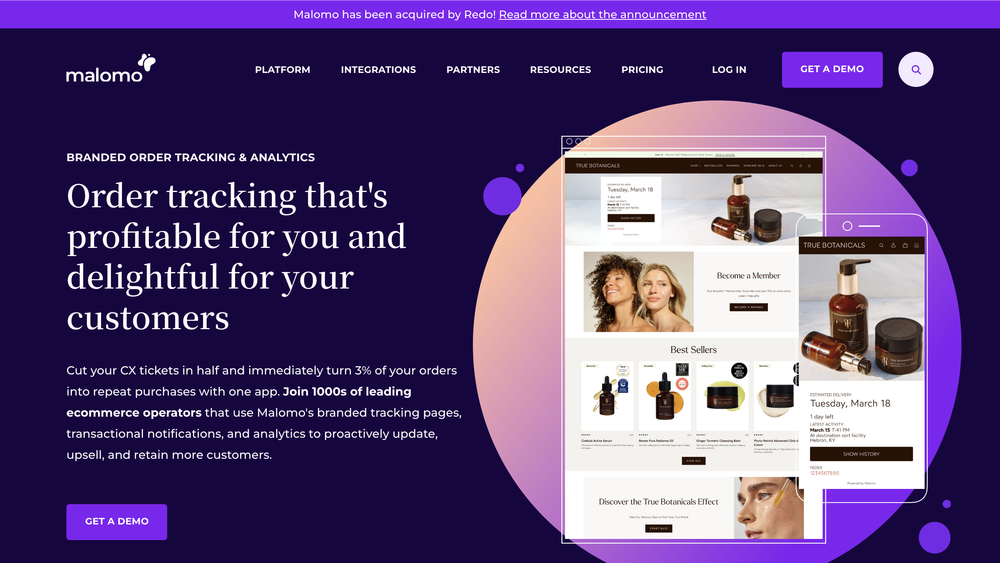
Malomo turns the tracking page and notifications into a marketing and retention channel, with branded pages, email and SMS, exception detection and around 2,000 carriers. It is Shopify and Shopify Plus only, and connects to Klaviyo, Attentive and Gorgias. Pricing starts at $49 a month on Lite, then $189 on Starter, with per-shipment overage.
Pros
- Treats tracking as an LTV and marketing channel, not just a status page.
- Strong Shopify-ecosystem integrations (Klaviyo, Attentive, Gorgias).
Cons
- Shopify and Shopify Plus only.
- Pricing climbs with shipment volume.
5. Track by Loop (formerly Wonderment): best for Shopify brands that also run Loop returns
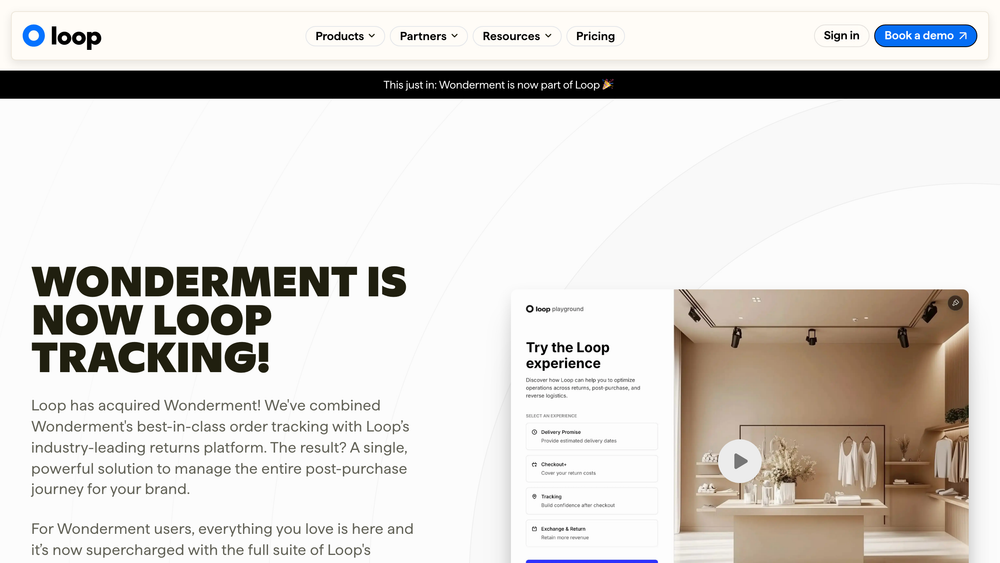
Track by Loop, formerly Wonderment, gives Shopify brands branded tracking, proactive delay and lost-package alerts, and analytics, and bolts onto Loop’s returns suite. It is Shopify-only. Standalone pricing starts at $99 a month, then $189 and $449 for API access, or it comes bundled with Loop returns.
Pros
- Strong proactive delay and lost-package detection.
- Bundles neatly with Loop returns for one post-purchase stack.
Cons
- Shopify-only.
- Standalone pricing starts higher than the budget trackers.
6. 17TRACK: best for cross-border and dropshipping with the most carriers
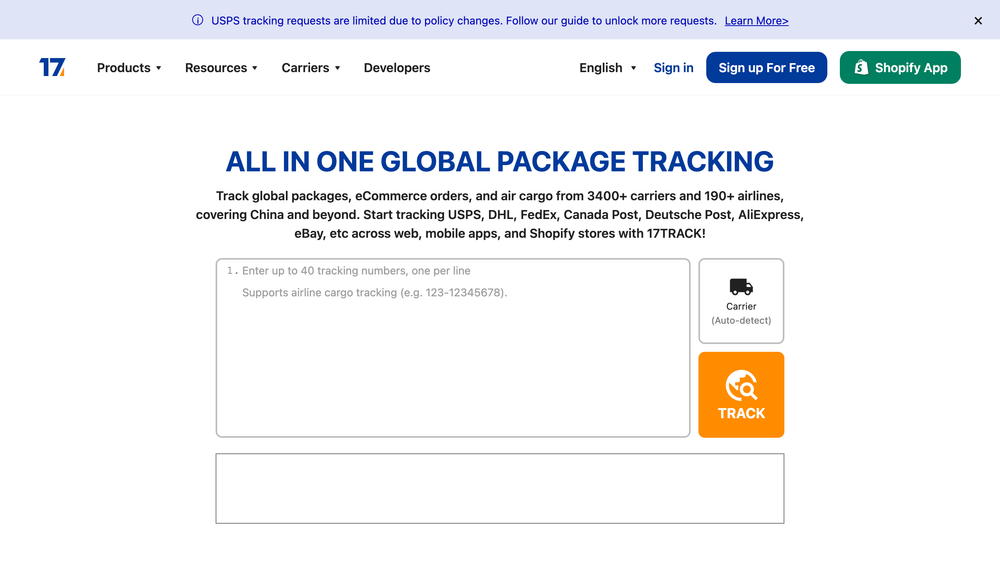
17TRACK is a global tracker with over 3,300 carriers, a multilingual branded tracking page, automated notifications, delivery estimates and a carrier-masking mode for dropshipping. It runs on Shopify with an API. Pricing is free up to 50 shipments a month, then Basic at $9, Pro at $49 and Premium at $159 a month.
Pros
- The widest carrier network (3,300+), ideal for cross-border.
- Free tier and low entry price, with carrier masking for dropshipping.
Cons
- Shopify-centred, with less depth on other platforms.
- Lighter on enterprise marketing and analytics.
7. Track123: best for Shopify brands wanting a low-cost global tracker
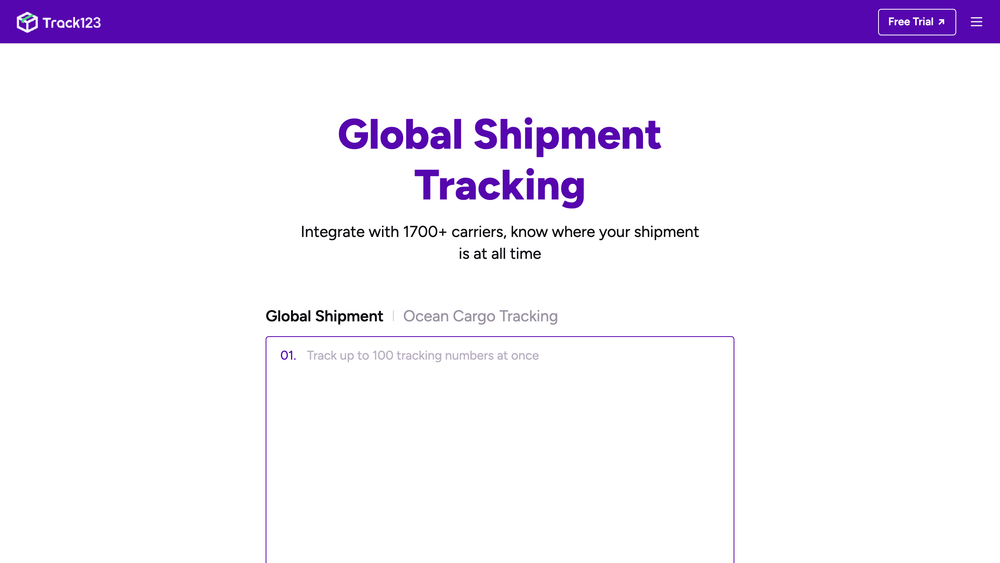
Track123 is a budget-friendly Shopify tracker with a branded tracking page, email and SMS notifications, delivery estimates and analytics, plus Apple Wallet and Klaviyo connections. Pricing is free up to 50 orders a month, then Growth at $9 and Advanced at $49 a month, up to a $699 enterprise tier.
Pros
- Very low entry price with a genuine free tier.
- Branded page, notifications and broad app connections.
Cons
- Shopify-only.
- The top enterprise tier jumps sharply in price.
8. Sendcloud: best for European brands wanting shipping and tracking in one
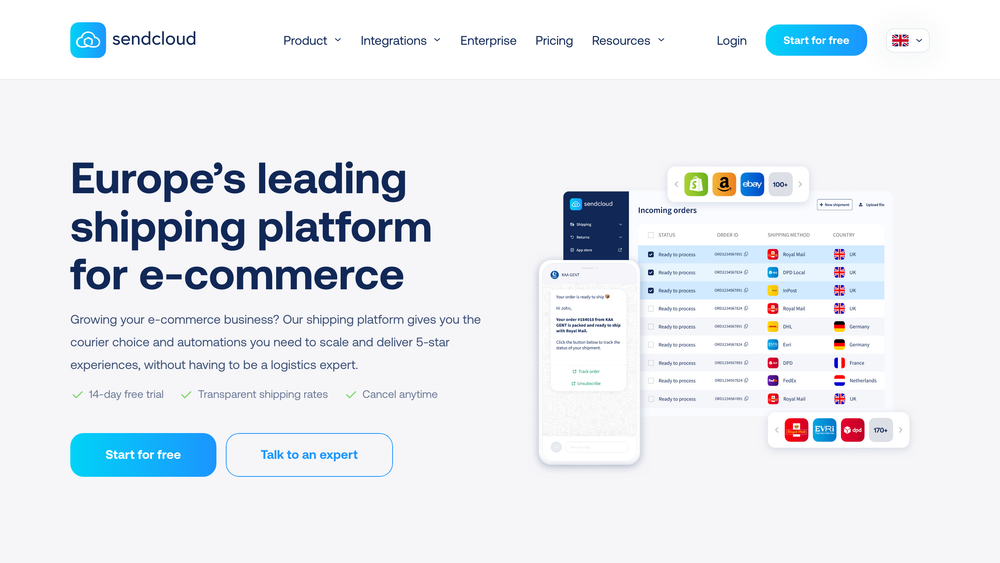
Sendcloud is Europe’s leading shipping platform, where branded tracking pages and email, SMS and WhatsApp notifications come as part of the suite, across 170+ mostly European carriers. It integrates with Shopify, WooCommerce, Magento, PrestaShop, Lightspeed and more. Pricing is not published on the tracking page, so confirm it with Sendcloud.
Pros
- Shipping, tracking and returns in one European-focused platform.
- Deep European carrier coverage, with WhatsApp notifications.
Cons
- Tracking is part of a shipping suite, not a standalone product.
- No public pricing on the tracking page.
9. Shipup: best for European brands wanting tracking plus delivery-incident management
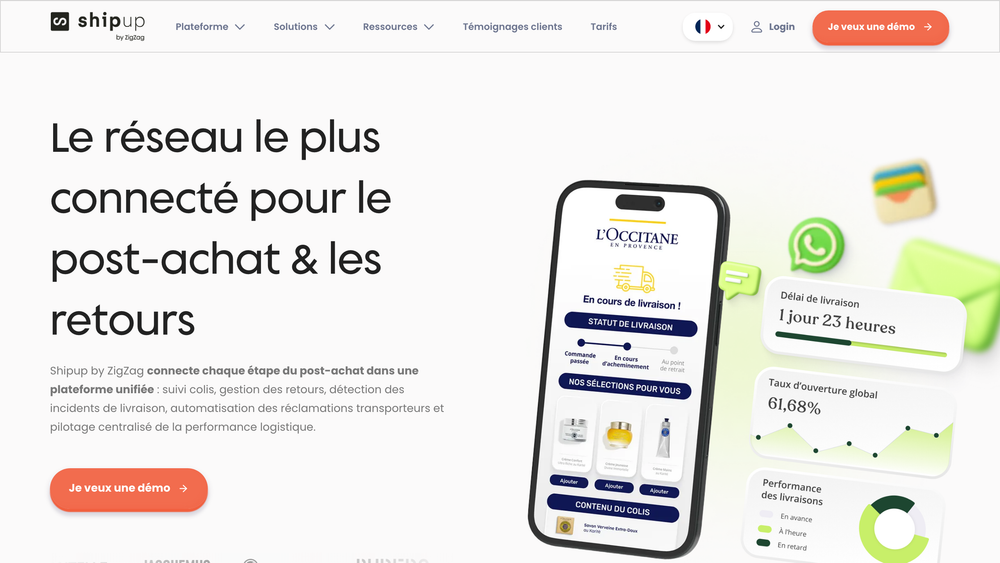
Shipup is a European post-purchase platform, strongest in France, with branded tracking pages, smart delivery estimates, multi-channel notifications, delivery-incident detection and carrier-claims automation. It integrates with Shopify, WooCommerce, Magento, BigCommerce, PrestaShop and Salesforce. Pricing is by demo and quote.
Pros
- Strong delivery-incident detection and carrier-claims automation.
- Multi-channel notifications, including WhatsApp and Apple Wallet.
Cons
- No public pricing; quote-only.
- Strongest in France and the wider EU, less so elsewhere.
10. Outvio: best for European brands wanting tracking inside an operations suite
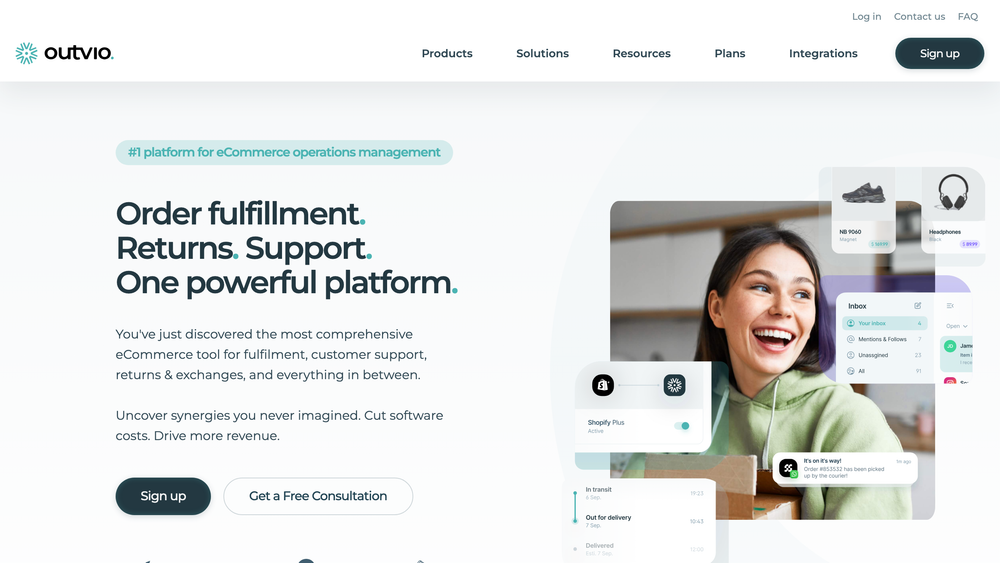
Outvio is a European operations platform that bundles fulfilment, branded tracking, delivery notifications, self-service returns and a helpdesk, across 100+ couriers. It integrates with 30+ content-management platforms, including Shopify. Pricing is not public, so confirm it with the vendor.
Pros
- Tracking, returns and fulfilment in one European operations suite.
- Broad European courier coverage.
Cons
- No public pricing; quote-only.
- Broader than a brand that only needs tracking requires.
How do the leading tools compare at a glance?
The table below covers the leading tools on the points that differentiate them, including the platforms each one runs on and the region it fits best. Where a vendor does not publish pricing, it is shown as “by quote” rather than guessed.
| Tool | Built for | Works with | Region | Pricing |
|---|---|---|---|---|
| AfterShip | Multi-platform, widest carriers | Shopify, Woo, Magento, BigCommerce | Global | Free, then from $11/mo |
| parcelLab | Enterprise post-purchase and AI | Shopify, Magento, Shopware | EU and global | By quote |
| Narvar | Enterprise retail CX | Shopify, BigCommerce, Magento, SFCC | US and global | By quote |
| Malomo | Tracking as marketing | Shopify | US and global | From $49/mo |
| Track by Loop | Shopify, paired with Loop returns | Shopify | Global | From $99/mo |
| 17TRACK | Cross-border, most carriers | Shopify and API | Global | Free, then from $9/mo |
| Track123 | Low-cost Shopify tracker | Shopify | Global | Free, then from $9/mo |
| Sendcloud | EU shipping and tracking | Shopify, Woo, Magento and more | Europe | By quote |
| Shipup | EU tracking and incidents | Shopify, Woo, Magento and more | Europe | By quote |
| Outvio | EU operations suite | 30+ platforms, incl. Shopify | Europe | By quote |
Which order-tracking tool fits your store?
Start from your platform and your carriers, because together they decide which tools are even useful to you. Shopify has the deepest app field, WooCommerce and Magento mix native tracking with extensions, and your carrier list decides whether a tool can track your parcels at all.
| Your store | Native option | Order-tracking tools that fit |
|---|---|---|
| Shopify | Native order status page and emails | AfterShip, parcelLab, Narvar, Malomo, Track by Loop, 17TRACK, Track123, Sendcloud, Shipup, Outvio |
| WooCommerce | First-party Shipment Tracking extension | AfterShip, Sendcloud, Shipup |
| Magento / Adobe Commerce | Native tracking emails plus extensions | AfterShip, parcelLab, Narvar, Sendcloud, Shipup |
| BigCommerce | None native | AfterShip, Narvar, Sendcloud, Shipup |
Beyond the platform, match the tool to your model. Lowest cost to start favours 17TRACK or Track123; marketing-led tracking favours Malomo; enterprise and global scale point to parcelLab or Narvar; and European brands have strong regional options in Sendcloud, Shipup and Outvio.
Where does customer support fit?
Order tracking generates the highest-volume support question of all: “where is my order”. Around it sit “why is it late”, “it says delivered but it is not here” and “can I change the address”. These are repetitive and rules-based, which is exactly what an AI support agent resolves well.
Engaige is the AI support layer that sits on top of your shipping and tracking stack. It integrates with the tracking tools you already run, including AfterShip, parcelLab, Track by Loop, Sendcloud, Monta, Picqer, ShopWeDo and DHL, reads the live tracking behind each order, and turns each question into an action rather than a reply.
So “where is my order” becomes the latest tracking event read back; “when will it arrive” becomes a real dispatch or delivery date; and “I typed the wrong address” becomes a correction made before the parcel ships. It can also stop a shipment or send the tracking link, all in your customer’s language.
You shape all of this through Engaige AI, where you instruct the agent in plain language, like onboarding a teammate. It goes live in Agent Assist within hours. There, the gap between what your team sends and what the agent suggested is one of its training signals, and Engaige AI proposes improvements you approve.
Most brands switch to autonomous in about a week, and Engaige automates up to 90% of supported tickets. The aim is genuine resolution, answering the question rather than deflecting it to a human.
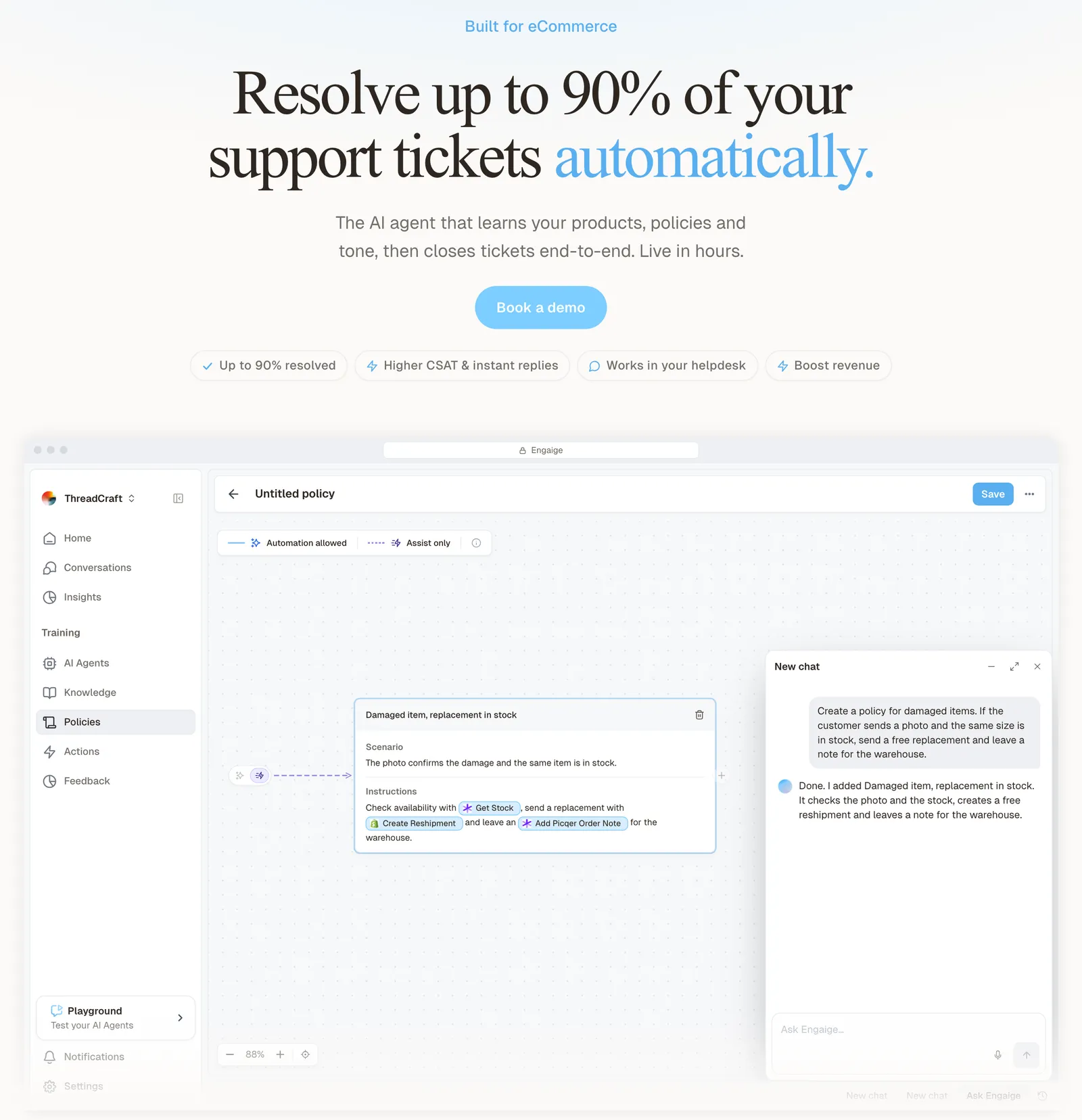
This is the WISMO use case Engaige is built for: the same delivery that builds trust is where support either protects it or leaks it, and that is the layer we strengthen. Tracking is the first post-purchase lever, so read it next to our guides to returns software and subscription software.
Frequently asked questions
What is order-tracking software for e-commerce?
Order-tracking software keeps customers informed after they buy. It pulls live tracking from the carriers, shows it on a branded tracking page on your domain, and sends proactive email or SMS updates as the parcel moves. It runs on top of your commerce platform as an app, a native feature, or an extension.
How much does order-tracking software cost?
It varies by model. Trackers start free for around 50 shipments a month, then run from $9 to $70 a month with a per-shipment fee above your allowance. Enterprise post-purchase platforms price by quote. The total scales with your shipment volume.
Does Shopify have native order tracking?
Yes. Shopify has a native order status page with real-time tracking on supported carriers, plus editable shipping-confirmation and shipping-update emails. It is enough for the basics, but specialist apps add branded pages, proactive delay alerts, more carriers and marketing tools.
What is the best order-tracking app for Shopify?
There is no single winner. AfterShip and 17TRACK cover the most carriers, Track123 is the low-cost option, Malomo treats tracking as marketing, and Track by Loop pairs with Loop returns. The comparison above lines them up on carriers, platform and pricing.
How does it reduce support tickets?
It answers “where is my order” before the customer asks, with a branded tracking page and proactive email or SMS updates. Detecting delays and delivery exceptions early, and pairing tracking with an AI support agent, keeps the highest-volume shipping question out of your inbox.