Neople is a Dutch AI-agent startup whose named digital colleagues answer tickets, process refunds and assist with order tracking on the helpdesk you already run. So if you are searching for an alternative, it is probably not because Neople lacks automation. It is usually the wish for fuller autonomy, transparent pricing, or an agent focused on e-commerce alone.
Because Neople is an AI agent rather than a helpdesk, every option below is also an AI agent, the like-for-like comparison, drawn from the wider field in our ranked guide to AI chatbots for e-commerce. If you would rather replace the helpdesk entirely, that is a different category covered in our Gorgias alternatives and Zendesk alternatives guides. Facts and figures are based on public information and our own research as of June 2026.
Why do teams look for Neople alternatives in 2026?
Three triggers come up consistently: the wish for fuller autonomy, because Neople is deliberately human-in-the-loop so more cases wait on approval; pricing, because Neople’s rates are not published; and focus, because Neople now spans hospitality and HR as well as e-commerce. Capability is rarely the genuine complaint.
The autonomy question. Neople’s design is control-first: in its own words, “nothing goes live until you’ve tested it, checked it, and given it your stamp of approval”. That is a genuine strength for teams that want to vet the AI before trusting it, but it means more of the hard middle waits on a human than with an agent built to resolve end to end. Which you want depends on how much control versus hands-off resolution suits your team.
The pricing question. Neople does not publish pricing, so the cost per resolved ticket only becomes clear in a sales conversation. Teams that want to model the bill up front, or that prefer flat pricing tied to a ticket volume, tend to shortlist agents with transparent rates.
The focus question. Neople’s integration list is broad and its remit now reaches into hospitality and HR, so it specialises less in any one segment. For a store whose tickets are mostly WISMO, returns and refunds, an e-commerce-only agent can run deeper on exactly those jobs.
What does Neople still do well?
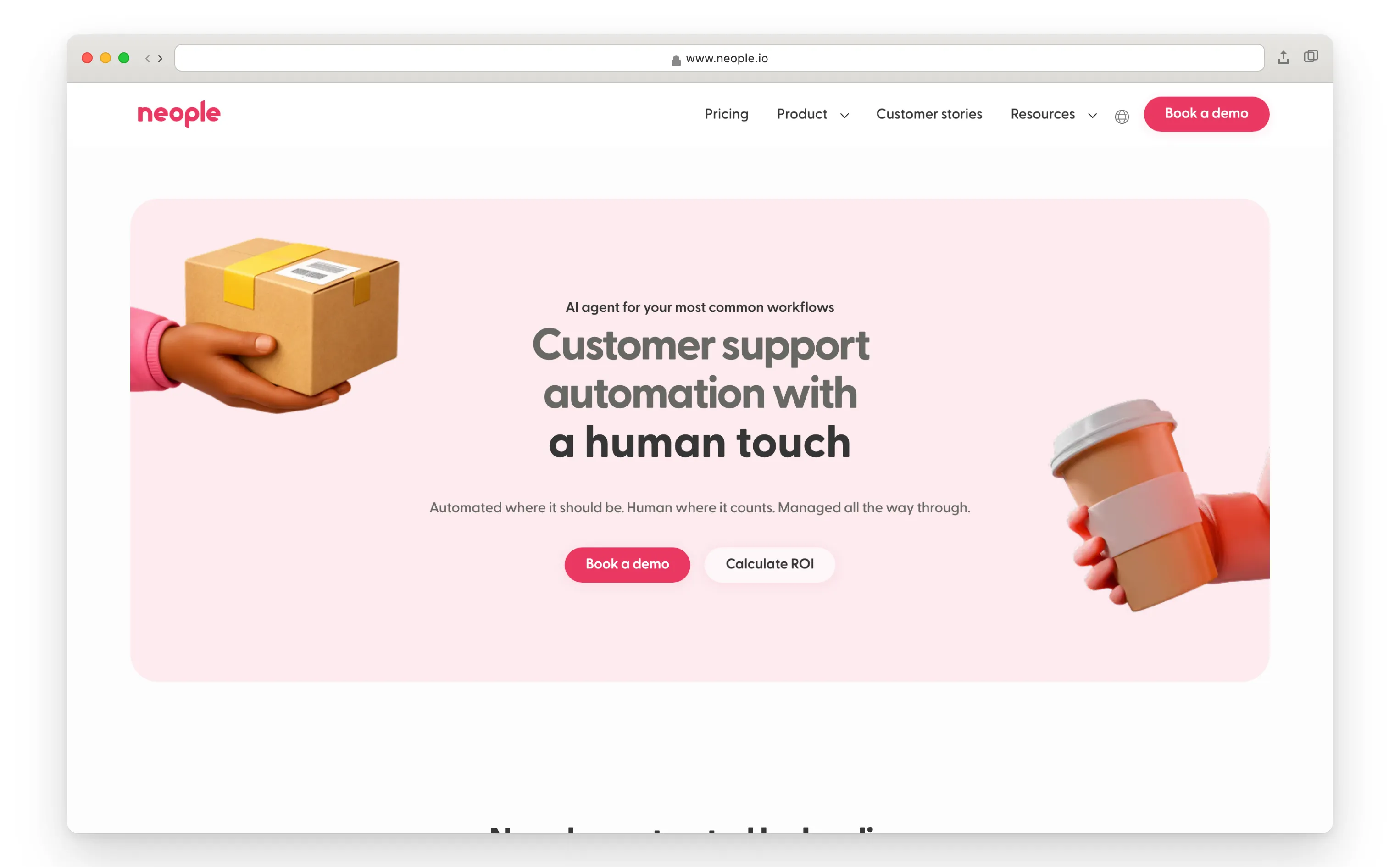
Plenty. Its named digital colleagues answer tickets, process refunds and returns and assist with order tracking while holding your brand tone, with a broad integration list (Shopify, Magento, WooCommerce, PostNL and helpdesks including Zendesk, Gorgias and Freshdesk). It is fast to set up, states 80% of questions automated (vendor-stated), and its human-in-the-loop model gives teams control before autonomy. Named clients include Levi’s, PSV and Stoov.
The catch: the headline rate is vendor-stated and arrives without a per-customer breakdown. Use the same test on every tool below, ours included: which named customer produced the number, over what period, and what counts as “resolved”? A rate with none of those attached is marketing, not a benchmark.
How should you evaluate a Neople alternative?
Five checks separate a genuine upgrade from a sideways move. The first two address why you are leaving (autonomy and cost), the next two address whether the move is practical (stack fit and store depth), and the last one protects you from buying the same headline-versus-reality gap under a different logo.
| # | Check | The question to ask |
|---|---|---|
| 1 | Resolution, not deflection | Does it complete the refund, return or order edit on its own, or draft a reply for you to approve? |
| 2 | Pricing predictability | Is pricing public and flat, or quote-based, and what is the cost per resolved ticket at twice today’s volume? |
| 3 | Stack fit | Does it layer onto the helpdesk you already run, the way Neople does? |
| 4 | Store depth | Can it act on live store data (Shopify, WooCommerce, Magento), not just read it? |
| 5 | Claim substantiation | Does the vendor publish named per-customer rates, including unflattering ones, or one headline figure? |
A practical shortcut for check one: feed every candidate your three ugliest recent tickets, the WISMO case with a stuck parcel, the part-refund, the damaged item with a replacement. Whether it completes those, rather than escalating them, predicts your real resolution rate better than any demo.
What are the best Neople alternatives?
The best Neople alternatives in 2026 are Engaige (acts on live store data end to end, learns from your feedback, flat pricing), Yuma and Intercom Fin if you want published rates or public pricing, Watermelon for a no-code start, Siena for premium brands, and Tidio for smaller stores. All are agents that layer on the helpdesk you keep, the like-for-like swap.
Engaige (that’s us)
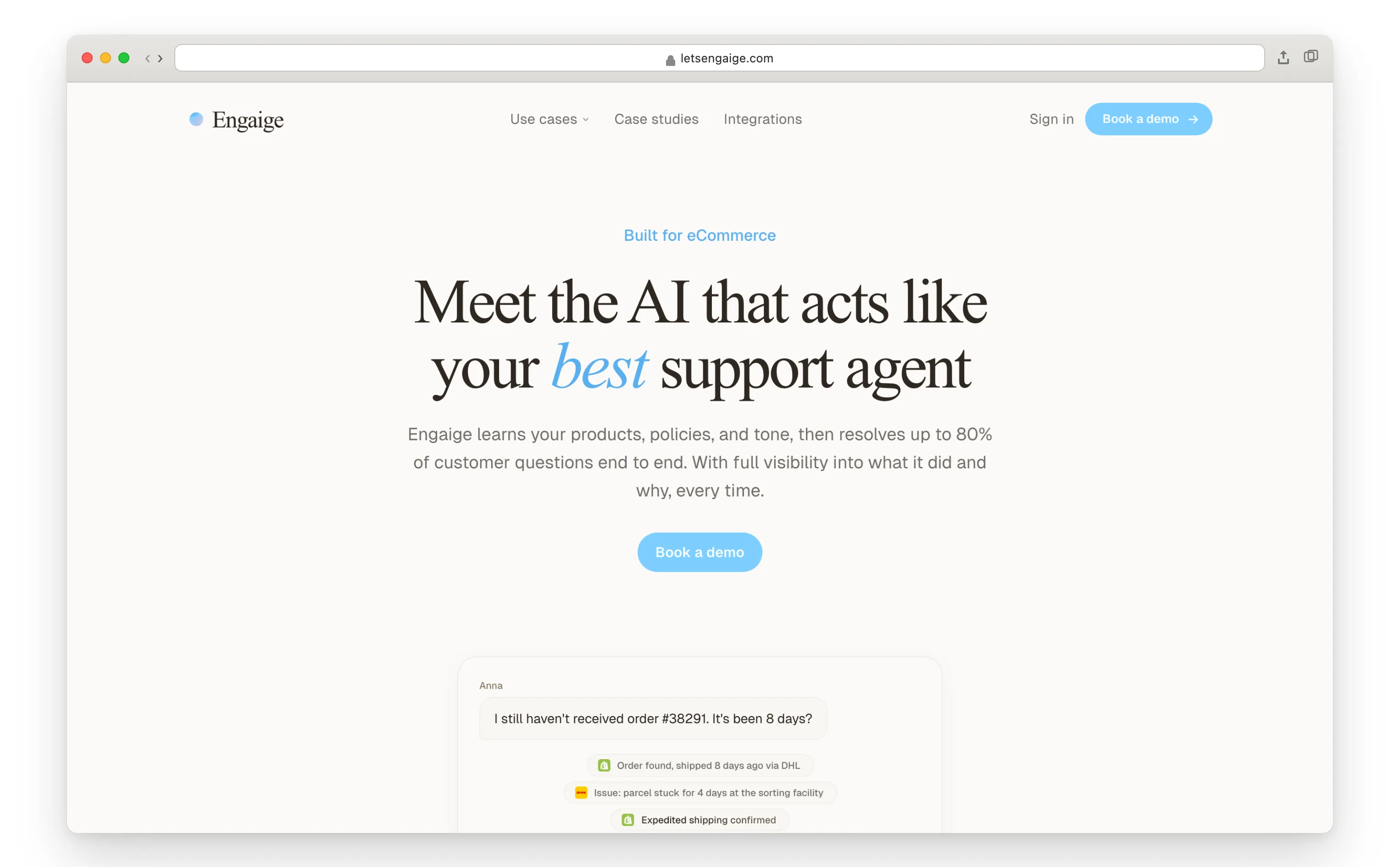
Engaige is Neople’s closest relative here: a hybrid AI agent for e-commerce that resolves tickets end to end (WISMO, returns, refunds, subscription and warranty changes) on the helpdesk you already run. Where Neople keeps a human approving each step, Engaige is built to resolve the hard middle on its own, reading live order, catalogue and policy data before replying rather than inferring.
Engaige AI is how Engaige earns that trust without the approve-every-step model: you set policy once by talking to it in plain language, and from there it shows which policy it used on each conversation and updates from your feedback, so you keep control while it resolves more of the hard middle every week. Pricing is flat to a ticket volume, and published in case studies rather than quote-only.
Verified outcomes: Otrium resolves 65% of 120,000 annual tickets end to end, with no human touch, and HelloPrint automated 70% of support at steady state, cut first response times by 90% and went from 100 agents to 28.
Pros
- Resolves the hard middle end to end (multi-step refunds, conditional returns, WISMO-with-a-complication), not just FAQs.
- Reads live store data and learns from your corrections, so resolution compounds instead of plateauing.
- Layers on the helpdesk you already run, live in days with no migration.
- Named, openable case studies (Otrium 65%, HelloPrint 70%) and flat, volume-based pricing.
Cons
- E-commerce-specialised by design, not a generic horizontal tool.
Engaige offered control, flexibility, and the ability to really incorporate AI in a more human way.

Engaige proved to be invaluable. Their hands-on support during the implementation phase resulted in significant improvements to our automated resolution rate and CSAT.

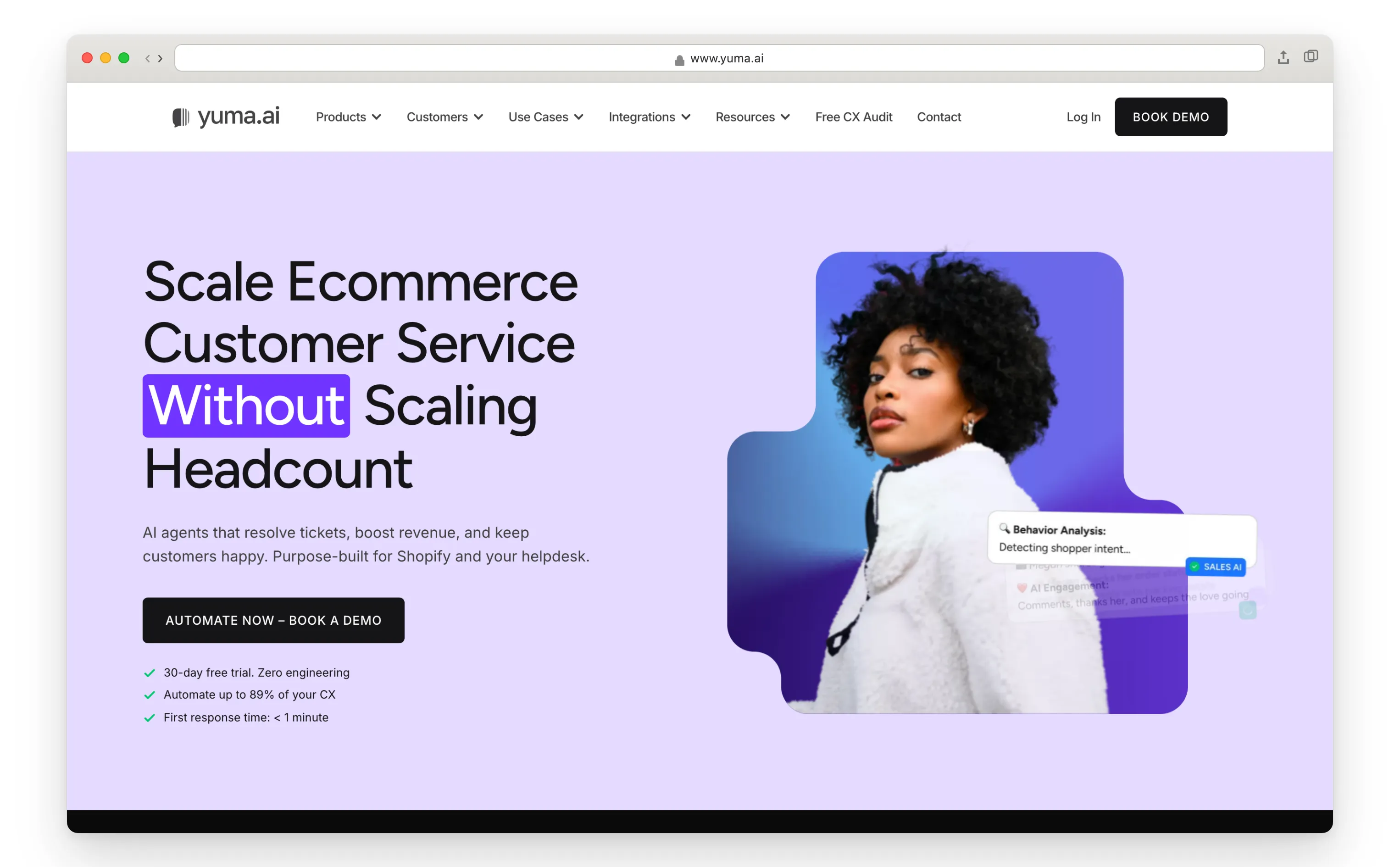
Yuma is purpose-built for Shopify and, like Neople, sits inside the helpdesk you already use (Gorgias, Zendesk, Kustomer, Gladly and more), taking real actions: refunds, label creation, subscription edits. It states top deployments reach 89% (Yuma, vendor-stated) and, unlike Neople, publishes per-customer rates including unflattering ones (40 to 89%), the substantiation bar this guide asks for.
Pros
- Acts inside the helpdesk you already use: refunds, labels, subscription edits.
- Publishes per-customer rates including unflattering ones (40-89%).
Cons
- Pricing is quote-based.
- Purpose-built for Shopify, so confirm depth on other platforms.
Fin is Intercom’s AI agent, and it deploys on helpdesks that are not Intercom’s own. Unlike Neople, its pricing is public: a flat $0.99 per resolution with a 50-resolution monthly minimum. The catch: it is horizontal rather than commerce-specialised, so store actions depend on the connectors you wire up.
Pros
- Public per-resolution pricing and deploys on helpdesks beyond Intercom’s own.
- Pays per outcome, so you can model the bill up front.
Cons
- Its 67% benchmark sits against the ~38% average an independent test found.
- Horizontal rather than commerce-specialised.
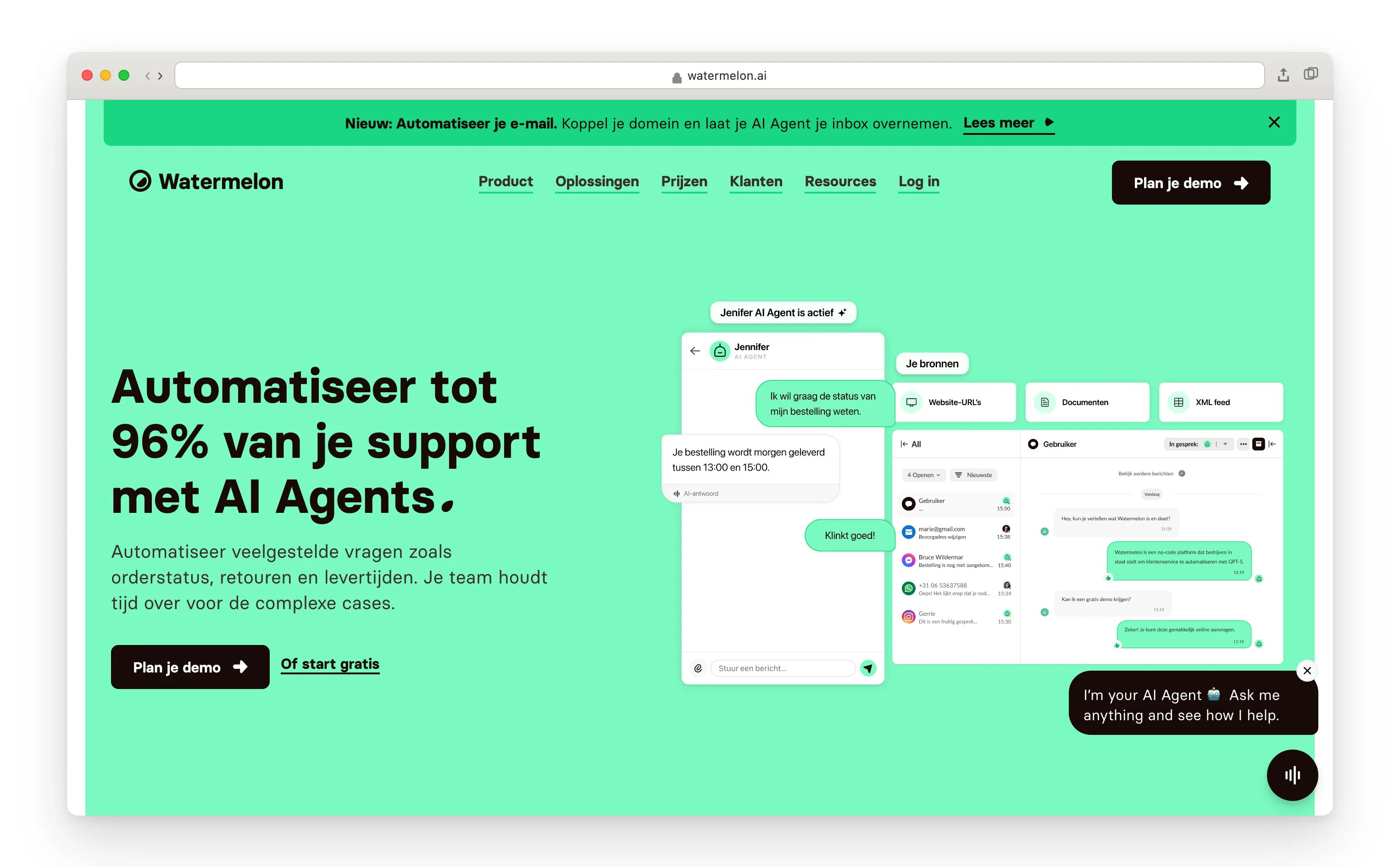
Watermelon is a friendly no-code, agent-first player with native connections to Shopify, Picqer, Monta, Sendcloud and Returnless. The agent answers, takes actions and escalates where needed, and pricing is public, by conversation volume, from €99 a month (vendor-stated). Like Neople it is a European, easy-start option.
Pros
- No-code and agent-first, with public pricing from €99 a month.
- Native e-commerce connections; the agent answers, acts and escalates.
Cons
- On the hard mid-segment it escalates to a human sooner.
- Integration depth suits a simpler ticket mix.
Siena positions itself as the AI CX operating system for consumer brands and runs agents that act, issuing refunds, generating labels and sending replacements in a single flow. It states brands automate “up to 80% of customer interactions” (vendor-stated) and backs that with 15 named case studies publishing per-customer rates, from 80% down to 49%.
Pros
- Acts in one flow, with 15 named case studies publishing per-customer rates (49-80%).
- Brand-grade CX positioning for consumer brands.
Cons
- Pricing is quote-based.
- Integrations list Shopify as the only commerce platform.
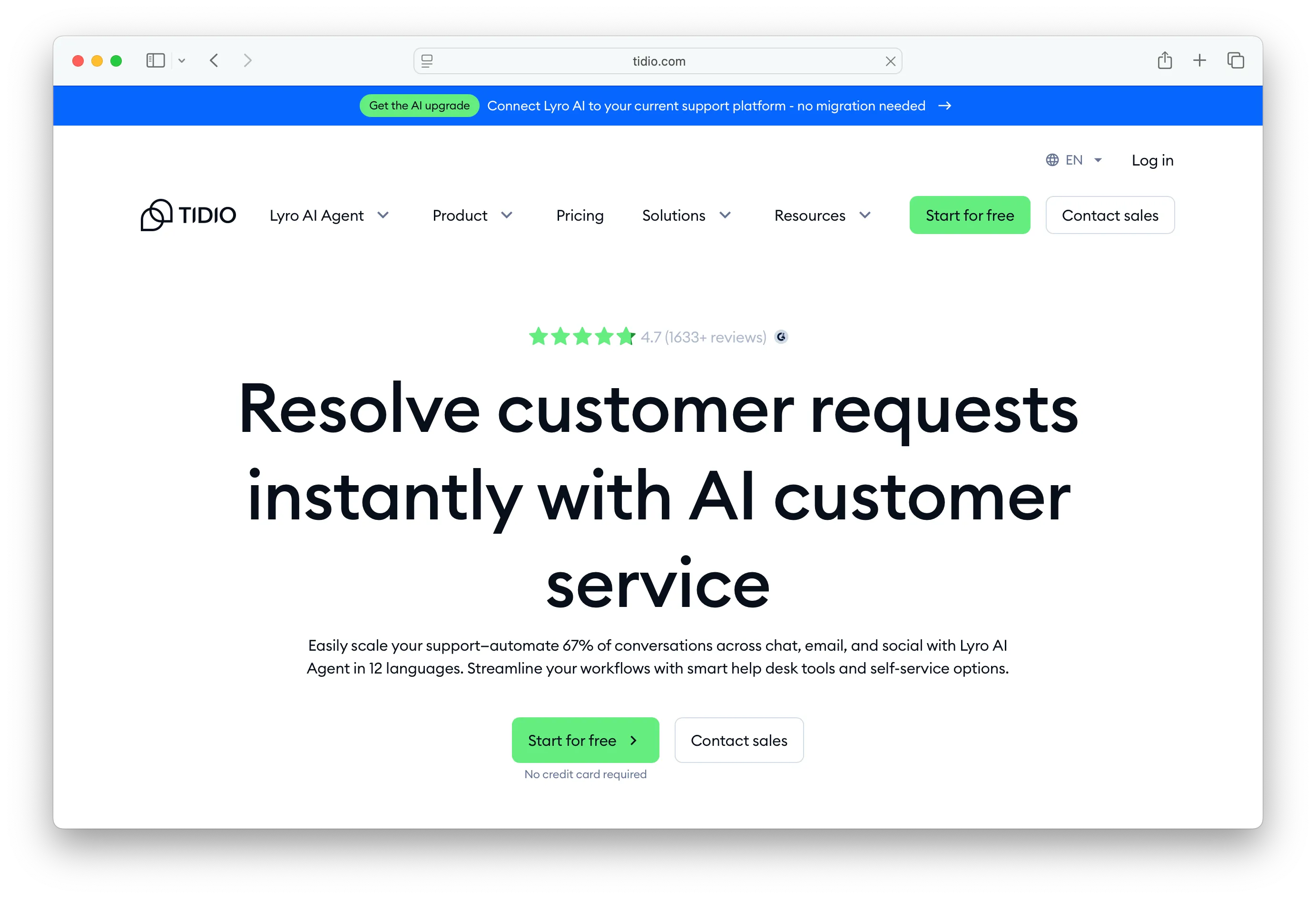
Tidio is the SMB option: its Lyro agent claims an up to 64% average resolution rate (vendor-stated), backed by a money-back guarantee if Lyro stays below 50%. Pricing is public, flat helpdesk tiers plus a per-conversation Lyro add-on of roughly $0.50. The catch: it is strongest on FAQs, with connector-dependent commerce actions.
Pros
- SMB-friendly, with public pricing and a money-back guarantee if Lyro stays below 50%.
- Flat tiers with a low per-conversation add-on.
Cons
- Strongest on FAQs, with newer, connector-dependent commerce actions.
How do the alternatives compare at a glance?
The table sorts the field by the question that matters most after Neople: does the agent resolve on its own or draft for approval, and is its pricing public? Resolution figures are vendor-stated unless marked otherwise.
| Tool | Autonomy | Acts or assists | Headline rate | Pricing model |
|---|---|---|---|---|
| Neople (baseline) | Human-in-the-loop (approve before live) | Acts, with approval | 80% automated (vendor-stated) | Quote-based, not public |
| Engaige | Autonomous end to end | Acts | Otrium 65%, HelloPrint 70% (verified case studies) | Flat to a ticket volume |
| Yuma | Autonomous | Acts | 89% top deployments (vendor-stated) | Quote-based |
| Intercom Fin | Autonomous | Acts | 67% benchmark (vendor-stated); independent test ~38% | $0.99 per resolution (public) |
| Watermelon | Agent-first, escalates sooner | Acts | No public rate | From €99/month (public) |
| Siena | Autonomous | Acts | Up to 80% (vendor-stated); cases 49-80% | Quote-based |
| Tidio (Lyro) | Autonomous on FAQs | Mixed, FAQ-strongest | up to 64% average (vendor-stated) | Flat tiers + ~$0.50 per conversation (public) |
What does a Neople alternative cost?
Neople does not publish pricing, so the comparison starts with whether a candidate is transparent at all. Public-priced agents include Intercom Fin (flat $0.99 per resolution), Watermelon (from €99 a month) and Tidio (flat tiers plus a small per-conversation add-on). Engaige prices flat to a ticket volume. Yuma and Siena, like Neople, are quote-based.
The honest comparison is total cost per resolved ticket: the agent fee divided by tickets actually closed without a human. With a quote-based tool, model that number in the sales conversation at today’s volume and at twice today’s volume before committing.
Which Neople alternative fits your store?
There is no universal winner, only a fit per situation. If Neople’s approve-before-live control is exactly what you want, it may still be your tool; if you want fuller autonomy or transparent pricing, the shortlist below maps the common situations to the agents that fit them.
| Your situation | The deciding factor | Shortlist |
|---|---|---|
| Want fuller autonomous resolution, not draft-and-approve | Acts on the hard middle on its own | Engaige, Yuma |
| Heavy pre-purchase and product questions | Live catalogue and order data, not inference | Engaige |
| Want public, predictable pricing | Transparent flat or per-resolution rates | Intercom Fin, Watermelon, Tidio |
| No-code, fast European start | Easy setup, public price | Watermelon |
| Premium DTC brand, high LTV | Brand-grade CX with actions in one flow | Engaige, Siena |
| Small store, simple ticket mix | Fast setup, low flat cost | Tidio, Watermelon |
Whichever route you take, pilot with your real ticket mix and measure end-to-end resolution, not deflection. The agent that completes your ugliest refund case at a predictable cost per ticket is the right alternative, whatever the headline rates say.
Frequently asked questions
The questions e-commerce teams ask us most often when they are weighing a move away from Neople.
Can Neople automate customer support?
Yes. Neople’s digital colleagues answer tickets, process refunds and returns and assist with order tracking, with 80% of questions automated (vendor-stated). Neople is deliberately human-in-the-loop, so nothing goes live until you approve it. Teams usually switch over the wish for fuller autonomy, pricing transparency or e-commerce focus, not missing automation.
Is there a better alternative to Neople?
It depends on your trigger. If you want fuller autonomy and flat, transparent pricing, Engaige resolves tickets end to end on the helpdesk you already run, reads live store data rather than inferring, and publishes verified 65-70% client outcomes. No tool wins every situation, so match the choice to your constraint and weigh the full field above.
What is the difference between Neople and Engaige?
Both are AI agents that layer on your helpdesk. Neople is human-in-the-loop, drafting and acting with your approval before anything goes live, and its pricing is quote-based. Engaige is built to resolve the hard middle autonomously, reading live store data and learning from your corrections, with flat pricing and named case studies (Otrium 65%, HelloPrint 70%).
What does a Neople alternative cost?
It varies. Some alternatives publish pricing (Intercom Fin at $0.99 per resolution, Watermelon from €99 a month, Tidio flat tiers), while others including Neople are quote-based. Always compare on cost per resolved ticket at twice today’s volume.