If you’re evaluating AI customer service platforms for your e-commerce team, Intercom and Gorgias are likely on your shortlist. Both promise faster responses, smarter automation and less manual work for your agents. But they’re built for fundamentally different audiences, and that shapes everything from how their AI works to what it can actually do inside your store.
In this Intercom vs Gorgias comparison, we break down how each platform performs across the areas that matter most day to day: implementation, AI capabilities, e-commerce depth, reporting, pricing and support quality. We also look at what happens when neither tool fully bridges the gap, and how Engaige fills that space.
Let’s be upfront: we’re comparing Intercom and Gorgias here on the Engaige blog. We know our own product and we naturally have opinions. But we also know that what you need might be different from what we offer. That’s why we took this comparison seriously and based it on official sources, independent reviews and real merchant feedback.
What are Intercom and Gorgias?
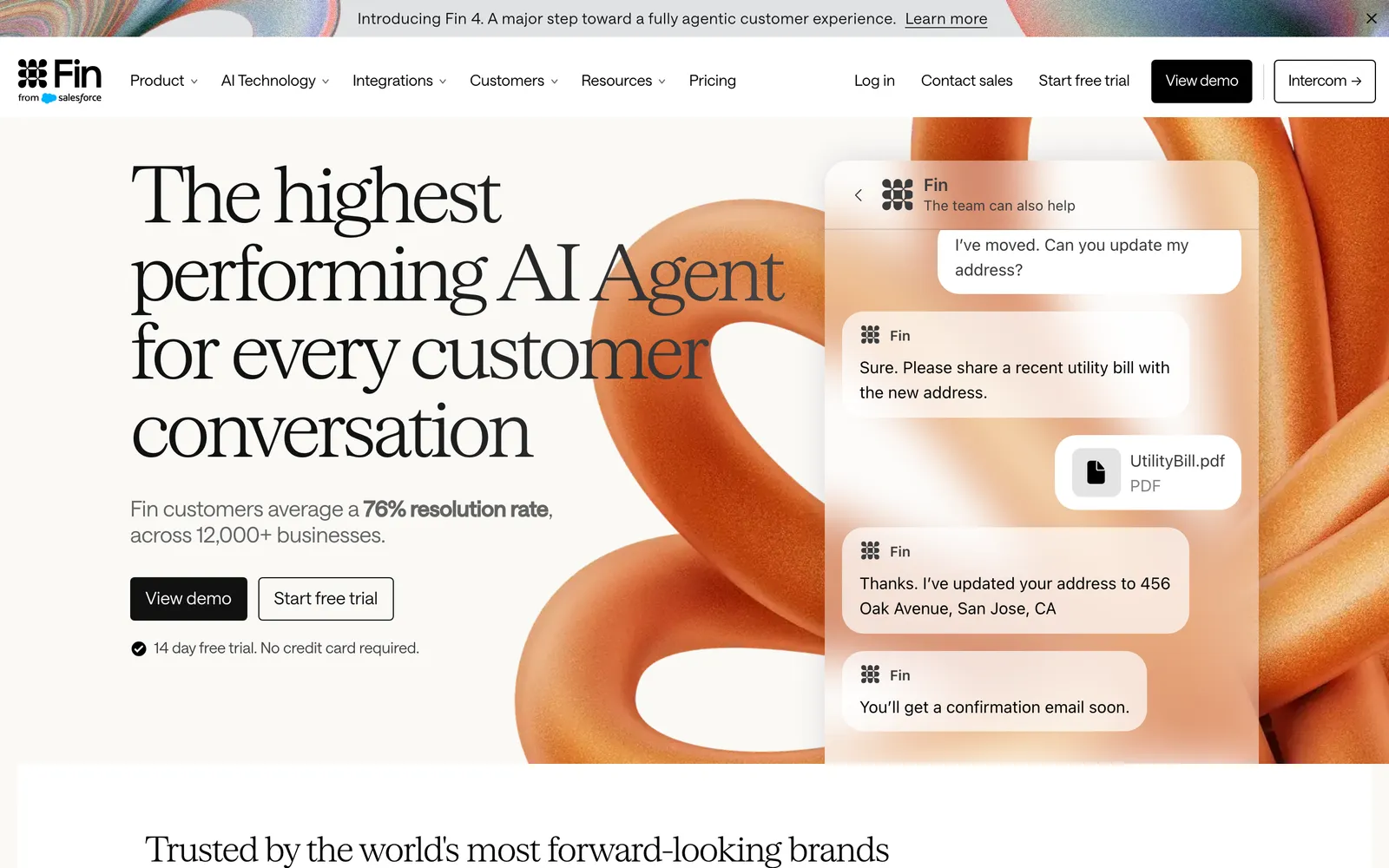
Intercom is a horizontal helpdesk built for the AI agent era, with a sophisticated Fin AI Agent but limited e-commerce depth. Gorgias is an e-commerce-only helpdesk built around deep Shopify integration. The practical divide comes down to AI sophistication versus built-in action execution.
Intercom positions itself as “the only helpdesk designed for the AI Agent era.” It targets SaaS companies, product-led businesses and general support teams with a technically advanced AI agent, 350+ integrations and broad channel coverage including Slack and Discord. The tradeoff: its e-commerce depth is limited, and getting the AI to execute actions like refunds requires custom API development.
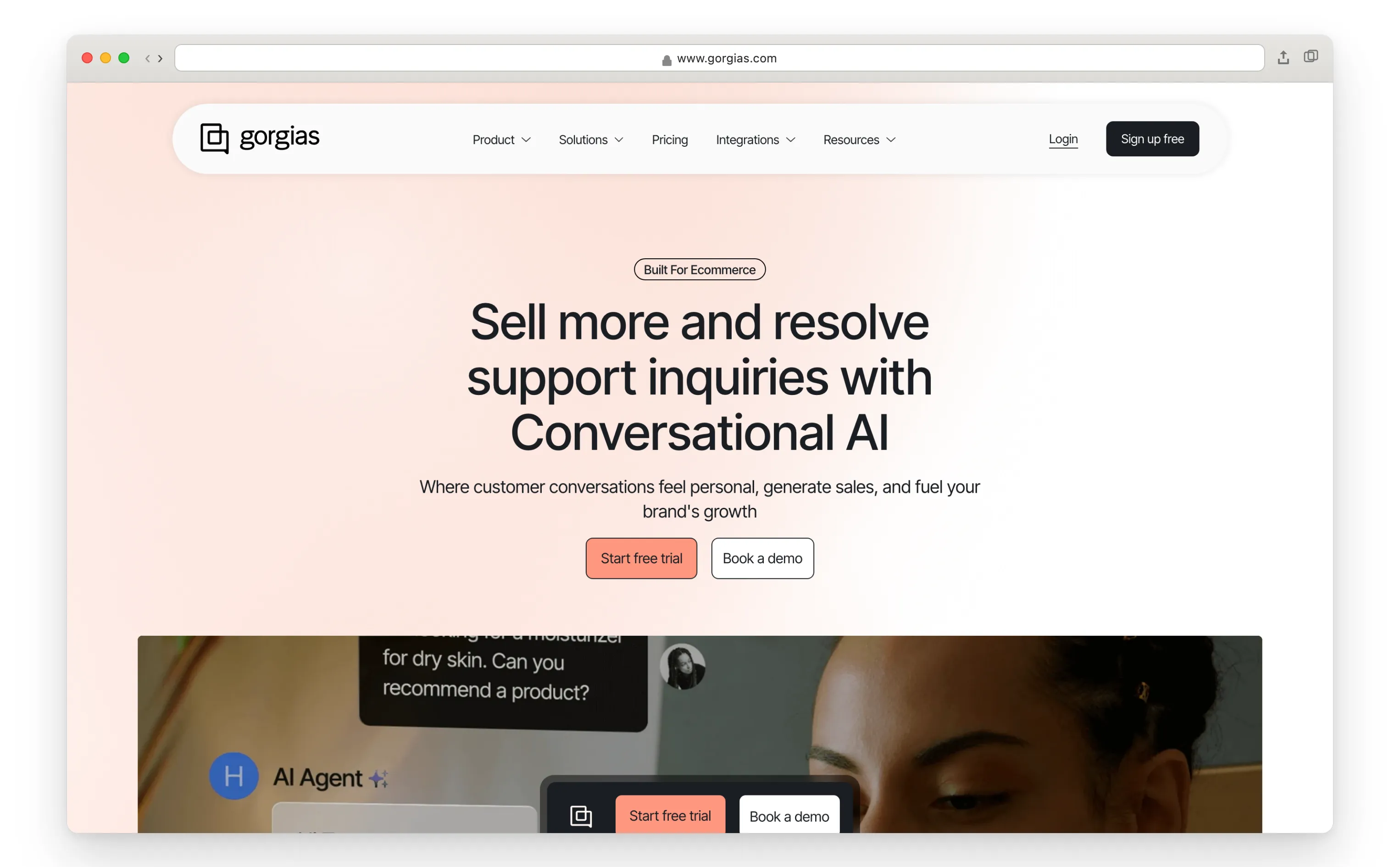
Gorgias was built exclusively for e-commerce. 17,000 brands use it, most of them on Shopify. Its strength is deep built-in integration: full order history in every ticket, refund processing, subscription management and return handling, all without custom development. The tradeoff: the AI is often described by merchants as deflection-first, and it is deepest on Shopify, where the Gorgias play is concentrated.
This comparison is based on how Intercom and Gorgias actually perform once they’re live in an e-commerce support team. We read official product websites, documentation and pricing pages (every pricing figure captured directly from the source in April 2026), independent review platforms including G2, Capterra and TrustRadius, Reddit communities (r/shopify, r/ecommerce, r/CustomerService, r/SaaS) for unfiltered merchant feedback within the last 90 days, and product capability verification to confirm what each platform does out of the box versus what requires custom development.
What is each built for?
Intercom is built for SaaS and product-led teams that want a sophisticated AI brain and the broadest channel and integration coverage. Gorgias is built for Shopify-first merchants that want an AI with e-commerce hands: one that issues refunds, edits orders and manages returns from inside the ticket.
Intercom’s Fin AI Agent markets the more sophisticated model. It cites a 67% platform-wide resolution benchmark (vendor-stated), supports image understanding, and translates in 45+ languages. It connects to over 350 integrations across SaaS, CRM and productivity tools, and covers email, chat, WhatsApp, SMS, social, phone, Slack and Discord. The depth for e-commerce isn’t there: its pre-built Shopify and Stripe integrations are read-only.
Gorgias takes the opposite approach: its AI handles the basics, and it can issue refunds, cancel orders and edit subscriptions directly inside Shopify. It lists over 100 integrations, fewer than Intercom but far more targeted: native connections with Shopify, Shopify Plus, BigCommerce, Magento, WooCommerce and PrestaShop, plus partners like Recharge and Loop Returns.
For Shopify merchants, full order history appears in every ticket and the AI acts on orders directly. The trade is no Slack, Salesforce or Jira.
Where does each fall short?
Neither platform is weak, but each carries a structural cost. Intercom’s AI is sophisticated yet its e-commerce templates are read-only, so write actions need custom engineering. Gorgias acts in the store but some merchants describe the AI itself as deflection-first, and its automation is deepest on Shopify, sometimes pushing non-Shopify teams to bolt on a second tool.
Intercom’s pre-built Data Connector templates for Shopify and Stripe are explicitly read-only: the Shopify template can search the catalogue and retrieve cart information but can’t process orders or refunds, and the Stripe template excludes subscription management and refund issuance.
To get Fin to execute write actions you build and host your own API endpoints, connect them via custom Data Connectors and make them idempotent, since Intercom’s own docs warn that “Fin may submit the same refund request multiple times.”
Gorgias earns the opposite criticism. Merchants on Reddit consistently describe the AI as immature, and many keep Gorgias as the helpdesk but bolt on a separate third-party AI tool like Siena, eesel AI or Ochatbot.
Gorgias has since added Gaia, which drafts changes to the AI Agent for you to approve, and a reasoning summary under every AI message. The Gorgias play is concentrated on Shopify, where its AI Agent is deepest.
How do Intercom and Gorgias compare?
Both use AI to improve customer support, but they target different audiences and make different tradeoffs. The headline is simple: Intercom markets the more sophisticated model, but its read-only e-commerce templates trail in a store; Gorgias has the better e-commerce hands. The table below summarises where they overlap and diverge, and the sections that follow explain each criterion in practice.
| Category | Intercom | Gorgias |
|---|---|---|
| Ease of implementation and integration | ✅ 350+ integrations, 14-day trial ❌ Complex automation setup, basic Shopify integration | ✅ Deep built-in Shopify integration, simple e-commerce setup ❌ Only 100+ integrations, AI depth concentrated on Shopify |
| Automation and AI capabilities | ✅ Fin AI: 67% platform benchmark (vendor-stated), image understanding, 45+ languages ❌ E-commerce templates are read-only. Write actions need custom APIs | ✅ Built-in Shopify action execution (refunds, order edits) ❌ AI seen as deflection-first, automation deepest on Shopify |
| E-commerce and omnichannel support | ✅ Email, chat, WhatsApp, SMS, social, phone, Slack, Discord ❌ No native order management from inbox | ✅ Full order history in every ticket, revenue attribution ❌ No Slack, Salesforce, or Jira integrations |
| Analytics, reporting and workforce management | ✅ CX Score, Topics Explorer, AI conversation scoring ❌ Pro analytics costs $99/month extra | ✅ Revenue attribution, support performance stats ❌ Less advanced reporting overall |
| Pricing and scalability | ✅ Public $0.99/outcome AI pricing, 14-day free trial Model: per seat + per outcome + optional add-ons | ✅ Low $10/month entry, month-to-month available Model: per-ticket plan + per-AI-resolution fee |
| Customer support and training | ✅ G2 Quality of Support 8.7/10, comprehensive docs ❌ Meaningful learning curve for automation setup | ✅ E-commerce-specific knowledge base ❌ Slow email support, dedicated CSM only at $20M+ revenue |
Implementation
How quickly you can get live, and how much flexibility you have once your stack grows, sets the tone for everything that follows.
Intercom offers a 14-day free trial (no credit card required) and connects to over 350 integrations across SaaS, CRM, and productivity tools, including Salesforce, HubSpot, Jira, Slack, and Discord. Its Shopify integration covers event tracking, order status lookups, and multi-store support, but it’s fundamentally a horizontal platform.
The breadth is impressive; the depth for e-commerce isn’t. Setting up complex automation workflows in Intercom requires meaningful configuration time, particularly when you need the AI to interact with external systems.
Gorgias provides a shorter 7-day trial and lists over 100 integrations. Fewer than Intercom, but far more targeted. Where Intercom gives you breadth, Gorgias gives you depth within e-commerce: native integrations with Shopify, Shopify Plus, BigCommerce, Magento, WooCommerce, and PrestaShop.
For Shopify merchants specifically, the integration is deep: full order history in every ticket, refund processing, discount generation, and subscription management through partners like Recharge and Loop Returns. The tradeoff is clear outside the e-commerce ecosystem: no Slack, no Salesforce, no Jira.
For stores also exploring other helpdesks, our Gorgias vs Zendesk comparison covers how Gorgias stacks up against another major player.
AI capabilities
Both Intercom and Gorgias talk a lot about AI. The real difference is where the automation stops, and what happens when the AI needs to actually do something inside your store.
Intercom’s Fin AI Agent is the more technically sophisticated product. It’s built on Intercom’s proprietary Fin Apex 1.0 model and generates answers from your knowledge base using retrieval-augmented generation (RAG). It supports multi-source generative answers and includes Fin Vision for image understanding, useful for processing damaged product photos.
Fin translates in real time across 45+ languages, offers customisable tone of voice and lets you simulate conversations before going live. Fin Operator proposes configuration changes as reviewable diffs you approve. Intercom cites a 67% platform-wide resolution benchmark for Fin (vendor-stated), measured across its whole customer base rather than e-commerce specifically.
For what Fin is today, after the company’s rename and the Salesforce deal, see our Intercom Fin guide. If you are weighing a move away from Intercom rather than a head-to-head, see these Intercom alternatives.
The critical caveat: Fin’s pre-built Data Connector templates for Shopify and Stripe are explicitly read-only. The Shopify template can search the catalogue and retrieve cart information but can’t process orders or refunds. The Stripe template excludes subscription management and refund issuance. To get Fin to execute write actions you need to build and host your own API endpoints, then connect them via custom Data Connectors.
Gorgias AI Agent takes a different approach. It splits into two modules: a Shopping Assistant for pre-purchase (product recommendations, personalised guidance, upsell offers) and a Support Agent for post-purchase (order tracking, returns processing, FAQ responses).
The AI accesses real-time Shopify data (orders, products, inventory, customer tags) and can issue refunds, edit subscriptions via Recharge, update shipping details, cancel or modify orders and process returns through Loop Returns. These actions happen without human agent involvement. The criticism is the AI itself: merchants on Reddit have described it as immature, though Gorgias now shows a reasoning summary under every AI message and its Gaia teammate drafts improvements you approve. Its automation is concentrated on Shopify.
For a deeper look at how automation is evolving across the industry, see our automation guide.
Omnichannel
This is mainly a question of channel breadth versus e-commerce depth.
Intercom covers a wide range of channels: email, live chat (via Messenger), WhatsApp, SMS, social media, Slack, Discord, and phone (Fin Voice, custom pricing for select customers). This makes it one of the more complete omnichannel offerings on the market. The limitation for e-commerce merchants is that agents can’t manage orders from within the inbox natively. Order information flows in for context, but the actions themselves require workarounds or custom development.
Gorgias supports email, live chat, SMS, voice/phone, Facebook, Instagram, TikTok, and WhatsApp. The channel list is competitive, though it lacks Slack and Discord support.
Where Gorgias differentiates is the e-commerce layer on top of those channels: full order history appears in every ticket regardless of channel, revenue attribution tracks how support interactions drive sales, and agents (or the AI) can take action on orders directly from the ticket view. For Shopify merchants, this means a customer reaching out via Instagram DM gets the same order context and action capabilities as one emailing in.
If you’re evaluating AI support tools more broadly, our guide to the best AI agents for customer service covers additional options.
Analytics
How much insight you need depends on how tightly you run your support operation.
Intercom offers CX Score, Topics Explorer, AI-powered conversation scoring, and customisable reporting dashboards. The analytics surface is broad and well-regarded. The most powerful analytics features sit in the Pro Analytics add-on at $99/month.
A recent G2 reviewer (March 2026) noted that Fin “significantly reduced response times and eased the workload on human agents, allowing them to focus on more complex and sensitive issues,” suggesting the AI’s reporting on workload redistribution is actionable.
Gorgias provides support performance statistics, and Pro plan subscribers and above get revenue statistics that track how support interactions contribute to sales. Revenue attribution is a genuinely useful feature for e-commerce teams who need to justify support spend. However, the reporting capabilities are less advanced overall compared to Intercom: fewer customisation options, less granular AI performance tracking, and no equivalent to Intercom’s Topics Explorer for identifying emerging support patterns.
Support quality
How much help you need after go-live often depends on how complex your setup is.
Intercom scores 8.7/10 on G2 for Quality of Support and offers comprehensive documentation alongside an intuitive modern UI. The onboarding experience is generally well-regarded, though the platform’s complexity means there’s a meaningful learning curve for automation setup. The 14-day trial gives more time to evaluate than most competitors.
Gorgias receives mixed reviews on support quality. While the e-commerce-specific knowledge base is helpful for Shopify merchants, email support is repeatedly described as slow. “Takes a few days or more” according to multiple merchant reports.
Support tiers are gated by your store’s revenue: Standard support for brands under $3M, Specialist for $3M to $20M, and Dedicated (with a named CSM) only for brands at $20M+ revenue or $40K+ annual contract. The 7-day trial is shorter than most competitors, giving less time for a thorough evaluation.
If you’re also exploring Zendesk alternatives for e-commerce, support quality varies significantly across the category.
What do Intercom and Gorgias cost?
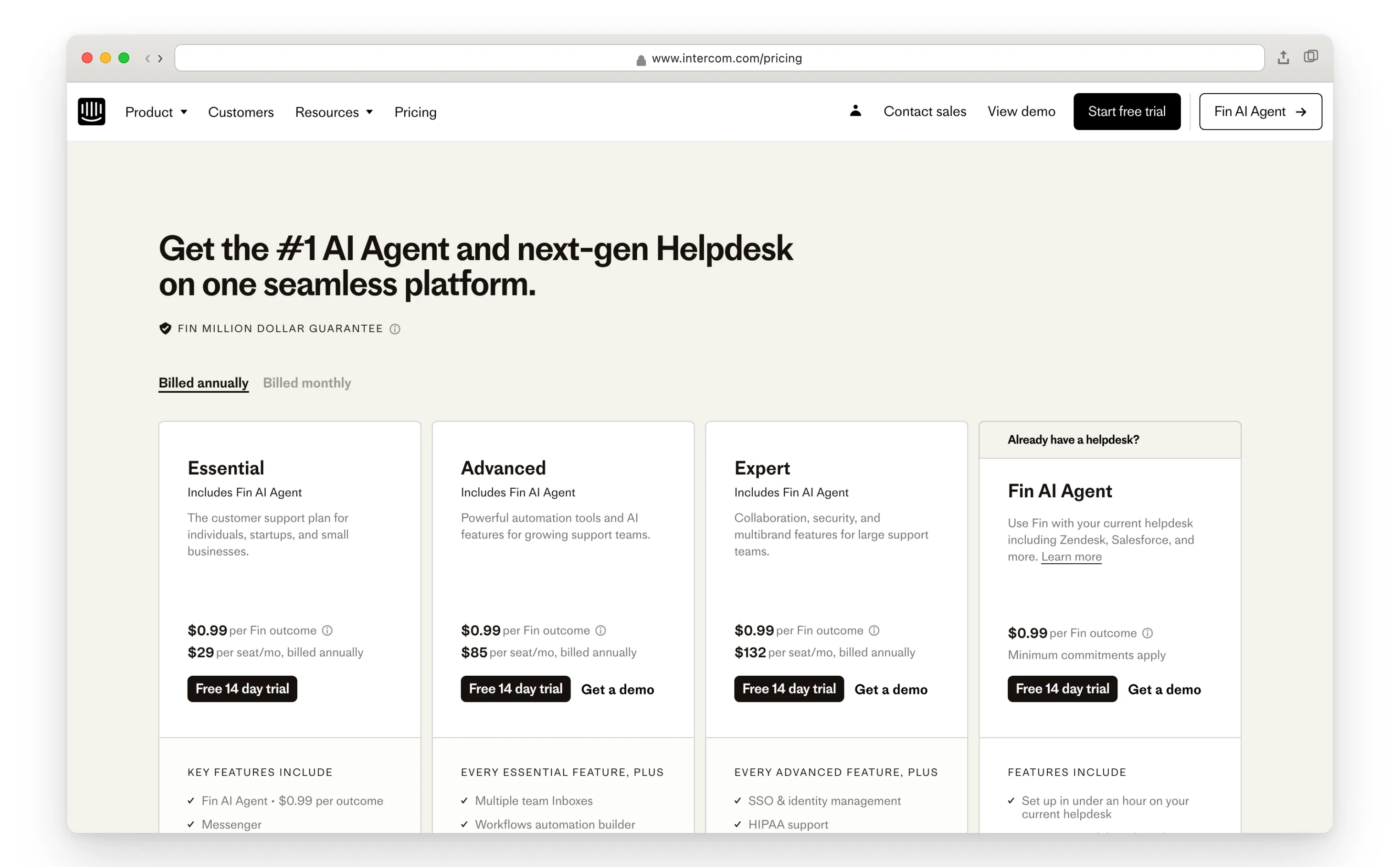
Both platforms pair a per-resolution AI fee with their base plan, so the honest comparison is total cost per resolved ticket at your volume, not the headline price. Intercom uses per-seat pricing plus a flat $0.99 per Fin resolution, with optional add-ons. Gorgias has a lower entry point, with a per-ticket plan plus a per-AI-resolution fee.
Intercom uses a hybrid model: per-seat pricing ($29 to $132/seat/month on annual plans, $39 to $139 monthly) plus per-AI-outcome pricing ($0.99 per Fin resolution). Optional add-ons include Copilot at $35/agent/month, Proactive Support Plus at $99/month, and Pro Analytics at $99/month. WhatsApp is priced per conversation, SMS per message, and bulk email per send. Multiple G2 reviewers mention 12-month contracts.
Gorgias uses per-ticket pricing, starting at $10/month for 50 tickets (Starter) and scaling to $750/month for 5,000 tickets (Advanced), with Enterprise pricing above that. Seats are generous: 500 included on Basic through Enterprise, so billing is based on ticket volume, not team size.
The AI Agent is priced separately: $0.90 to $1.00 per resolved conversation ($0.90 annual, $1.00 monthly), alongside the ticket-volume plan.
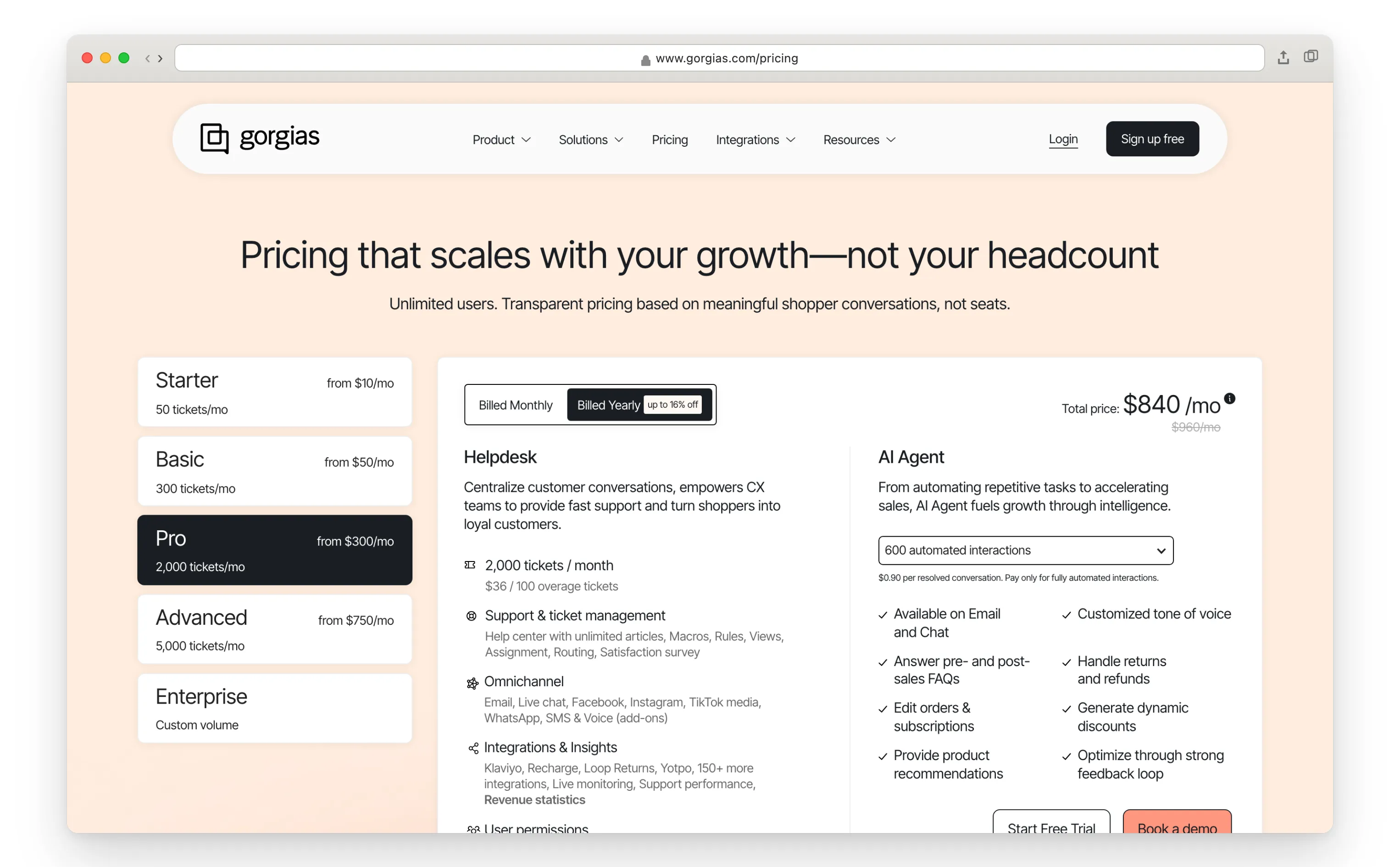
Voice ($0.40 to $1.20/ticket) and SMS ($0.41 to $0.80/ticket) are add-ons. Model your peak months, such as Black Friday or a product launch, alongside an average one.
| Cost layer | Intercom | Gorgias | Engaige |
|---|---|---|---|
| Platform | Per-seat, $29-132/seat/month (annual) | Per-ticket, $10-750/month by volume (500 seats included) | Flat monthly fee tied to your ticket volume |
| AI layer | $0.99 per Fin resolution | $0.90-1.00 per AI resolution, alongside the ticket plan | Included in the flat fee |
| Seats | Per-seat pricing | 500 included | Set by your helpdesk |
| Bill shape as you grow | Seats plus Fin resolutions, plus any add-ons | Ticket volume plus AI resolutions | Predictable as you scale |
For merchants weighing alternatives, our list of the Gorgias alternatives explores platforms with different pricing models.
Which should you choose?
There’s no universal winner here. The right choice depends on how your e-commerce operation actually runs today and where it’s heading. Choose Intercom for AI sophistication and channel breadth if you have engineering resources; choose Gorgias for built-in Shopify action execution if your support is e-commerce-first.
Choose Intercom if:
- You run a SaaS or product-led business alongside e-commerce
- You need sophisticated AI with image understanding, multilingual support, and advanced routing
- Your team uses Slack, Jira, and CRM tools that need helpdesk integration
- You have engineering resources to build custom API connectors for e-commerce actions
- Channel breadth (including Discord and Slack) is a priority
Choose Gorgias if:
- You’re a Shopify-first merchant and your support is primarily e-commerce
- You need AI that can process refunds, edit orders, and manage returns inside Shopify without custom work
- You want per-ticket pricing rather than per-seat (and your volume is moderate)
- Your integration stack is e-commerce-native (Klaviyo, Recharge, Loop Returns, AfterShip)
- You don’t need Slack, Salesforce or Jira integrations
Where both fall short:
Neither platform fully solves the core problem e-commerce merchants face: getting AI customer service that’s both smart enough to understand complex customer inquiries and capable enough to execute backend actions like returns without custom development.
Intercom markets the more sophisticated model, but its read-only e-commerce templates trail in a store, so it asks you to build your own integrations for basic e-commerce actions. Gorgias executes actions in the store, though some merchants say the AI itself is deflection-first, leading many to add third-party AI tools on top.
Merchants who live with these tools see the shift happening. In a February 2026 thread on automation metrics, one operator put the deflection trap bluntly:
February 2026 Reddit execs loved our 'automation success rate' - 40-something percent deflection, beautiful QBR slides. meanwhile i'm going through churn interviews and people are literally saying 'i tried to get help and just gave up.' · r/CustomerSuccess View on RedditThe gap is real: merchants want AI that resolves, not just deflects, and that executes actions, not just suggests them. That’s exactly the gap Engaige is built to fill.
Where does Engaige fit?
That’s where Engaige comes in, and yes, that’s us 😊. Neither Intercom nor Gorgias gives e-commerce merchants both AI quality and built-in action execution in one package. Engaige is an AI customer support tool for e-commerce built to fill exactly that gap: it works on the helpdesk you keep, resolves end to end and acts in your store. Keep your helpdesk, replace the AI.
Want the direct comparison? We go point by point against Intercom and Gorgias.
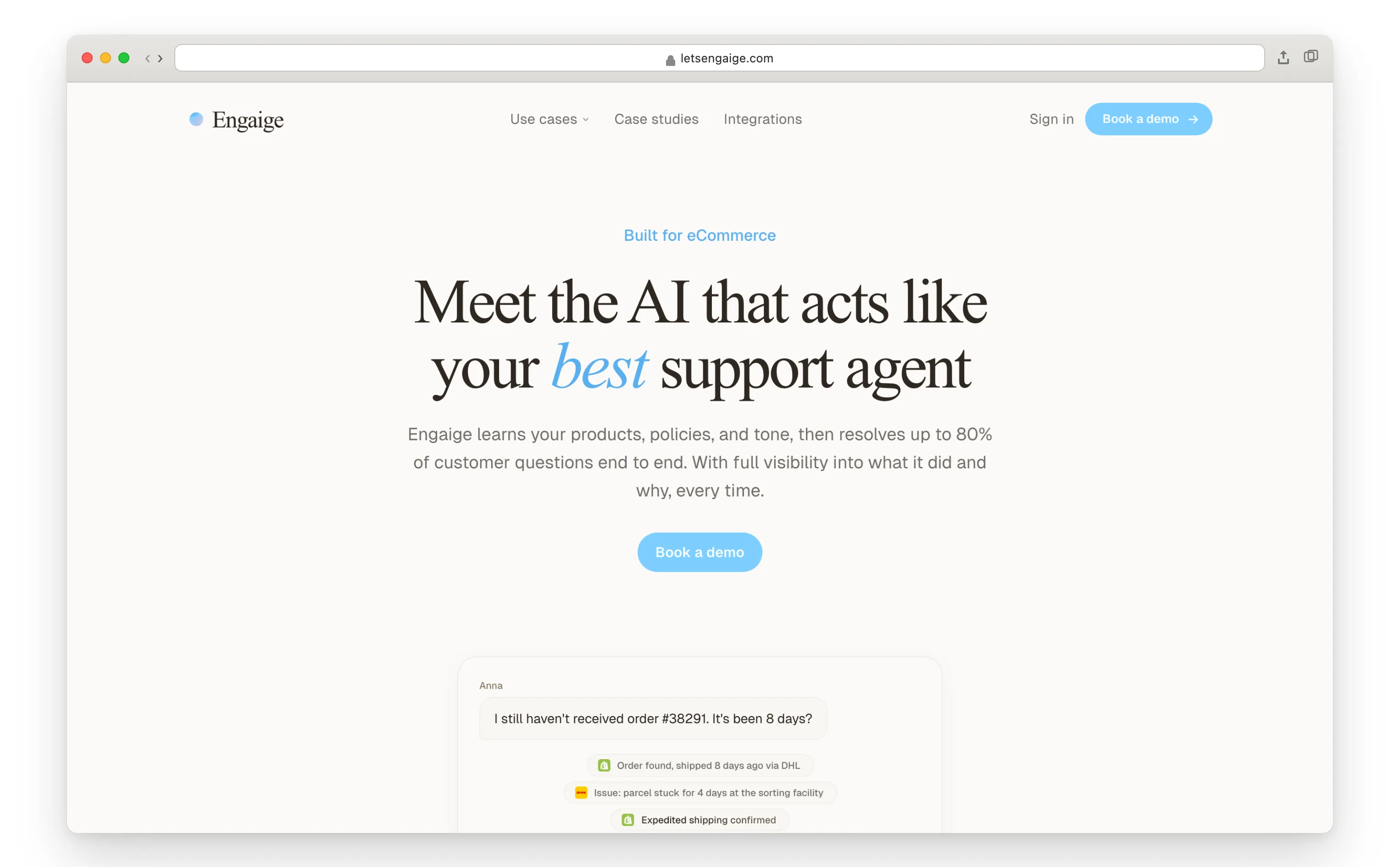
Intercom and Gorgias both now propose improvements you approve, so the difference is what the agent learns from. You go live in Agent Assist within hours: Engaige suggests a reply on every ticket while your team stays in control, and every reply your team sends is compared with what it suggested, one of the signals Engaige AI learns from. Engaige AI then proposes changes with its reasoning, and you approve them.
We found no competitor that publicly describes learning from the team’s normal replies from day one with changes a person approves. Once a ticket type matches your team’s replies, you switch it to autonomous; most brands get there in about a week.
Engaige AI is not a one-off setup wizard: you define your support policies in plain language, connect your e-commerce stack, and test every policy in the Playground before going live, for example by pasting in a past ticket.
Full reasoning for every answer and action sits in the Engaige dashboard, a hand-over leaves a reasoning summary as an internal note in the ticket, and policies can carry thresholds, with each step running Automated or in Agent Assist.
Once live, the AI handles full conversations end-to-end. It understands the customer’s intent, checks the order status, looks up the return policy, issues the refund and resolves the ticket. One conversation, no custom API development, no human in the loop for routine requests.
And it keeps learning in autonomous mode: it surfaces emerging trends and the cases where it hands a ticket back to a human, and learns from both, so its coverage keeps widening.
Otrium, a fashion e-commerce brand handling 120,000 tickets per year, achieves a 60% autonomous resolution rate using Engaige.
Engaige offered control, flexibility, and the ability to really incorporate AI in a more human way.

Engaige proved to be invaluable. Their hands-on support during the implementation phase resulted in significant improvements to our automated resolution rate and CSAT.

Frequently asked questions
Below are answers to the most common questions merchants ask when choosing between Intercom and Gorgias for their e-commerce support stack.
What is the difference between Gorgias and Intercom?
Gorgias is built exclusively for e-commerce. It integrates deeply with Shopify to manage orders, process refunds, and handle returns directly from support tickets. Intercom is a horizontal helpdesk designed for SaaS and general businesses, with a more sophisticated AI agent (Fin) but limited native e-commerce action execution. Intercom has broader channel and integration support (350+ vs. 100+), while Gorgias has deeper e-commerce-specific functionality.
Is Gorgias or Intercom better for Shopify?
For Shopify-specific workflows, Gorgias is the stronger choice. Its built-in Shopify integration pulls full order history into every ticket and allows the AI Agent to issue refunds, cancel orders, and edit subscriptions without custom development.
Intercom integrates with Shopify for event tracking and order status, but its pre-built Shopify Data Connector templates are read-only. Processing refunds or order modifications requires building custom API endpoints.
If you need a Shopify AI agent that pairs strong autonomous AI with full order-level action execution on top of the helpdesk you already run, Engaige is built for exactly that.
How does Gorgias pricing compare to Intercom pricing?
Intercom charges per seat ($29 to $132/month annually) plus $0.99 per Fin AI resolution, with additional add-on fees. Gorgias charges per ticket ($10 to $750/month by volume band) plus $0.90 to $1.00 per AI Agent resolution.
Gorgias has a lower entry point; because both platforms pair a per-resolution AI fee with their base plan, model the total cost per resolved ticket at your expected volume rather than comparing headline prices.
What percentage of tickets can Gorgias AI resolve automatically?
Gorgias claims 60% of inquiries resolved instantly (vendor-stated). However, merchants and reviewers suggest real-world rates are often lower. The gap between marketed and real-world resolution rates is something to evaluate carefully before committing to either platform’s AI tier.
Can Intercom process refunds and edit orders like Gorgias?
Intercom’s Fin AI can execute backend actions in theory, but the pre-built Shopify and Stripe templates are read-only. To get Fin to process refunds, cancel orders, or modify subscriptions, you need to build and host your own API endpoints and connect them via custom Data Connectors. Intercom’s documentation also warns that “Fin may submit the same refund request multiple times,” requiring idempotent API design. Gorgias handles these actions for Shopify without custom development.
Why do e-commerce brands switch from Gorgias to another platform?
The most common reason cited by merchants is AI maturity. The AI Agent is often described as deflection-first, leading some brands to bolt on third-party AI tools. Slow customer support response times are also a frequent complaint, and its automation depth is concentrated on Shopify.
Is there a helpdesk where AI can both understand complex queries and execute order actions?
This is exactly the gap that Engaige fills, on top of the helpdesk you already run. Intercom has strong AI but read-only Shopify templates; Gorgias has built-in actions with an AI some merchants call deflection-first. Engaige combines contextual AI understanding with real e-commerce action execution. The AI resolves conversations end-to-end, from understanding the issue to executing the fix, without custom API development. Otrium achieves a 60% autonomous resolution rate across 120,000 tickets per year using this approach.
What are the best alternatives if neither Intercom nor Gorgias fits my store?
If Intercom is too SaaS-focused for you, and Gorgias’s AI doesn’t go far enough, consider an AI ecommerce support tool that combines AI quality with real action execution. Engaige works on top of your existing helpdesk inbox with vetted, plug-and-play actions across e-commerce platforms.
Other options in the space include Zendesk (broad feature set, horizontal platform), Gladly (people-centred approach), and Tidio (budget-friendly with basic AI). For a full breakdown, see our guide to the Gorgias alternatives.