Gorgias vs Tidio looks like a like-for-like choice because both promise AI-powered support for online stores. In practice they sit in different weight classes: Gorgias is a full e-commerce helpdesk whose AI takes actions on orders, while Tidio is a lighter platform built to answer customer questions quickly.
That difference decides the comparison. The two questions that matter are what the AI can actually do inside your store, and how each prices its AI. Both pair an AI fee with a base plan, in different shapes.
One disclosure up front: we build Engaige, an AI support agent for e-commerce, so this page stays a strict head-to-head; Engaige appears once, at the end, clearly labelled. For the full field beyond these two, see our guide to the best AI chatbots.
What are Gorgias and Tidio?
Gorgias is a Shopify-first e-commerce helpdesk whose AI Agent takes real actions: it issues refunds, edits subscriptions and updates shipping details. Tidio is an SMB-focused live chat and helpdesk platform whose Lyro AI is strongest at answering FAQs, with commerce actions that are newer and connector-dependent. They serve the same merchants at different depths.
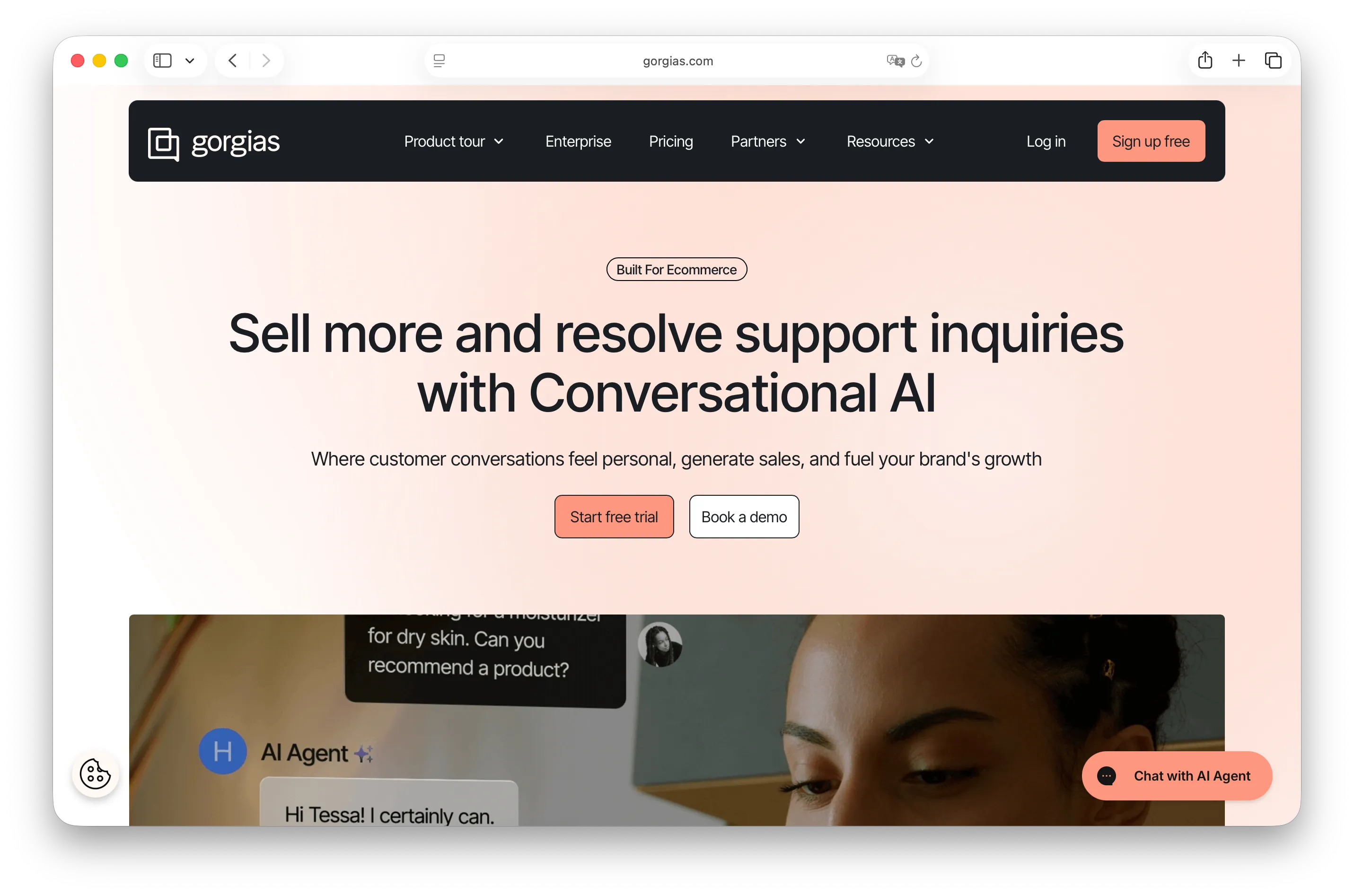
Gorgias centralises tickets from every channel and ties each conversation to customer and order data. Its AI Agent works that same data: when a customer asks for a refund or a subscription change, the agent can perform the action rather than draft a reply. It runs deepest on Shopify, with BigCommerce, WooCommerce and Magento supported at a shallower level.
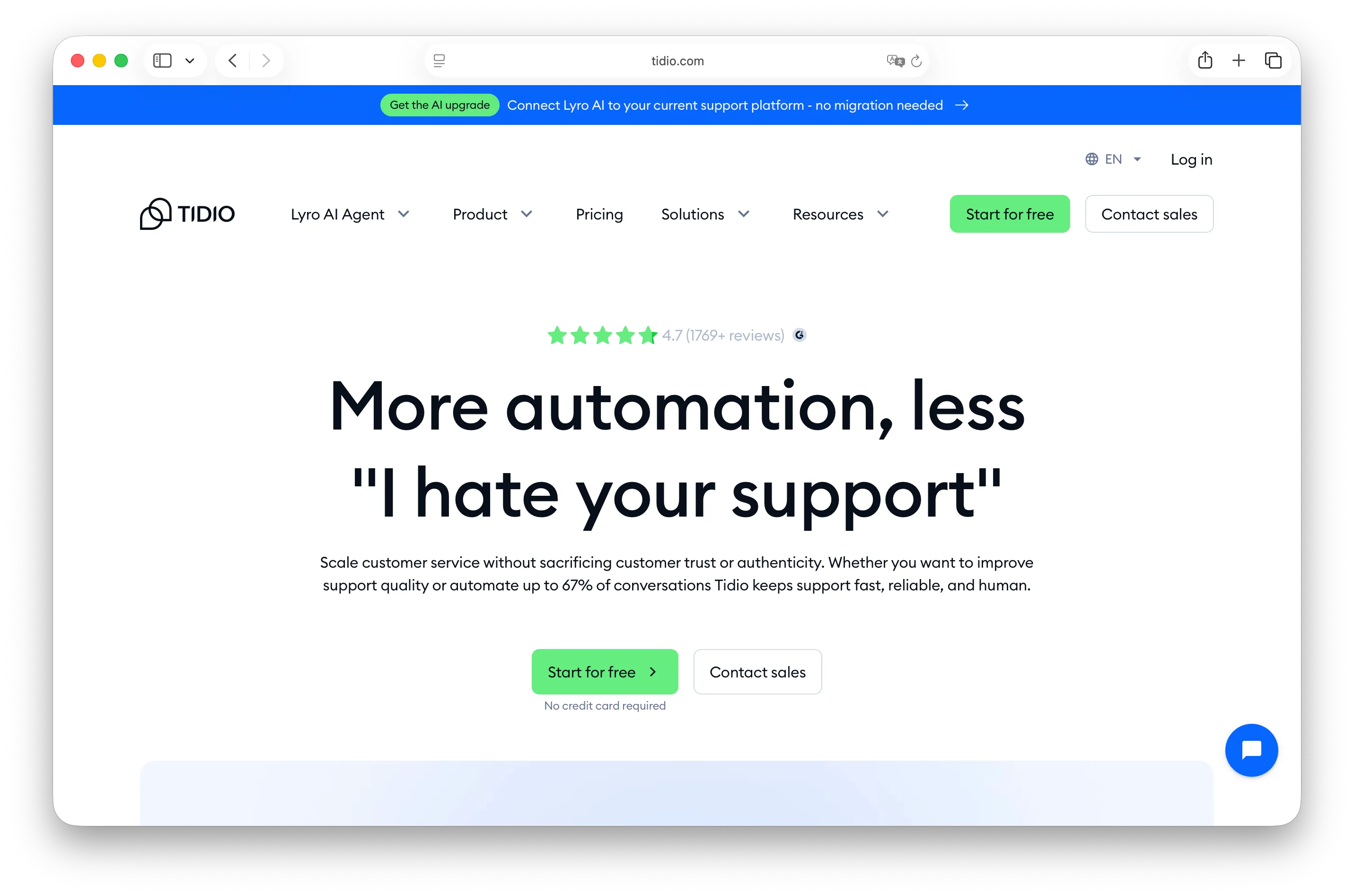
Tidio approaches support from the conversation side. It deploys in minutes as a chat widget, and Lyro answers common questions (order status, shipping policies, product FAQs) from your help content. The catch: its autonomous commerce actions are a newer layer that depends on connectors, so the harder half of e-commerce support, the part that requires doing something in the store, is where the two products diverge most.
What is each built for?
Gorgias is built for Shopify-centred brands that need the AI to act on orders, counting a processed refund as a resolution. Tidio is built for smaller stores that mostly need fast FAQ coverage, where Lyro is strongest. The two count different work as “resolved”, so the fit follows your ticket mix.
Gorgias markets up to “60%” of inquiries resolved instantly (vendor-stated), while a third-party review notes it caps automation around 60% and named case studies land lower, with Psycho Bunny at 26%. A Gorgias resolution can include an action, such as a processed refund, which is why it suits brands whose queues are dominated by actionable tickets: order edits, returns, exceptions.
Tidio states its customers average a 75% resolution rate with Lyro (vendor-stated, checked October 2026), and guarantees 50% on its Premium plan. Those resolutions lean toward informational answers, where the product is strongest. A lean team whose ticket mix is mostly repeat questions gets the most from it. The catch: a 60% rate on actionable tickets and a 75% rate on FAQ traffic are not the same workload, so compare against your own mix.
Where does each fall short?
Neither tool is weak, but each carries a structural limit. Gorgias’s realised resolution rate sits well below its headline in its own case studies, and its AI is bolted onto the ticketing platform. Tidio is gentle to start but FAQ-first, so the actionable tickets that remain as you grow strain its newer connector-dependent layer.
Gorgias publishes a 60% headline, yet a third-party review notes it caps automation around 60% and named merchants land lower, with Psycho Bunny at 26%, so your catalogue, policies and integration depth move the result far more than the headline suggests.
Tidio’s 50% Premium-plan guarantee floor is a confident move for an SMB tool, yet it sits below the 75% headline for the same reason the headline is generous. As a store grows, the tickets that remain are the actionable ones (refunds, order edits, exceptions), precisely the territory where a FAQ-first tool needs its newer, connector-dependent action layer to catch up.
How do Gorgias and Tidio compare?
The platforms differ on three axes: what the AI can do in your store, how deep the commerce integration goes, and how each prices its AI. Gorgias leads on commerce actions and Shopify depth; Tidio leads on speed to launch and entry price. The table below summarises the head-to-head.
| Gorgias | Tidio (Lyro) | |
|---|---|---|
| Built as | E-commerce helpdesk, Shopify-first | SMB live chat and helpdesk platform |
| AI behaviour | Acts: refunds, subscription edits, shipping updates | Answers: FAQ-strongest; commerce actions newer, connector-dependent |
| Platform coverage | Deepest on Shopify; BigCommerce, WooCommerce, Magento supported but shallower | Broad widget-based deployment via plugins |
| Stated resolution | up to 60% instantly (vendor-stated); Psycho Bunny case at 26% | 75% customer average (vendor-stated, Oct 2026); 50% guarantee on Premium plan |
| Pricing model | Ticket-volume plan plus ~$0.90-1.00 per AI resolution (vendor-stated) | Flat tiers plus ~$0.50-0.65 per Lyro conversation (third-party) |
| Time to launch | Helpdesk migration plus AI configuration | Widget live in minutes |
| Best fit | Shopify brands that need the AI to act on orders | Smaller stores that mostly need fast FAQ coverage |
Two clarifications on that table. First, Gorgias supports more than Shopify; its AI Agent simply goes deepest there, so the platform you run shifts how much of the headline you should expect. Second, Tidio’s action layer exists and is improving; it is the maturity and connector dependence that separate it from Gorgias today, not its absence.
The headline rates are ceilings, and the spread beneath them matters more. The chart below sets each vendor’s headline next to the lowest figure it publishes.
Sources: Gorgias AI Agent page (vendor-stated headline) and Gorgias’s Psycho Bunny case study at 26%; Tidio’s Lyro page (vendor-stated 75% customer average) and the 50% guarantee on its Premium plan, both checked October 2026.
Gorgias’s named merchants landing as low as 26% (Psycho Bunny) against its 60% headline shows how much your catalogue, policies and integration depth move the result. Tidio’s guarantee is a genuinely confident move for an SMB tool, but the 50% floor it guarantees is below its 75% headline for the same reason. Compare against your own ticket mix, not the headlines.
What do Gorgias and Tidio cost?
Both platforms charge in two layers. Gorgias pairs a ticket-volume helpdesk plan with a fee of $0.90 to $1.00 per AI resolution, $0.90 on most plans and $1.00 on Starter (vendor-stated). Tidio combines flat helpdesk tiers with a Lyro add-on at $0.50 to $0.65 per conversation, depending on tier (third-party). Neither AI layer is included in the base price.
| Cost layer | Gorgias | Tidio |
|---|---|---|
| Platform fee | Ticket-volume helpdesk plan | Flat helpdesk tiers |
| AI fee | ~$0.90-1.00 per AI resolution | ~$0.50-0.65 per Lyro conversation |
| 1,000 AI-handled tickets | Roughly $900-1,000 in resolution fees, alongside the ticket-volume plan | Roughly $500-650 in conversation fees, alongside the tier |
| How it scales | AI fee tracks resolutions; no per-seat fee | Add-on tracks conversation volume; tiers stay flat |
The Gorgias model charges when the AI resolves a ticket, which ties the AI fee to outcomes. Model it at your expected resolution volume alongside the ticket-volume plan.
Tidio’s flat tiers keep the base predictable, and Lyro is priced per conversation at roughly $0.50-0.65. Model it at your expected conversation volume, and compare both on total cost per resolved ticket.
Which should you choose?
Choose Gorgias if you are a Shopify-centred brand that needs the AI to act on orders and is comfortable with per-resolution pricing. Choose Tidio if you run a smaller store that mostly needs FAQ coverage at a predictable entry price. If neither trade-off fits, a third category exists.
Gorgias rewards commitment. If your operation lives on Shopify, its order-deep integration and acting AI Agent are the strongest part of the offer, and the AI fee buys genuine work. If you want to keep Gorgias but change the AI, our Gorgias alternatives guide compares the options.
Tidio rewards speed. For a lean team whose ticket mix is dominated by repeat questions, Lyro deployed this afternoon at a flat tier is a rational buy. The catch: as your store grows, the tickets that remain are the actionable ones (refunds and returns, order edits, exceptions), which is precisely the territory where a FAQ-first tool needs its newer, connector-dependent action layer to catch up.
Operators describe exactly that growing pain. In an April 2026 thread on leaving Tidio, one small-business owner traced the limit to scale, not the product:
April 2026 Reddit We used Tidio for about eight months. Worked fine when it was just me and one other person handling customer stuff. Then we hired more people and it turned into a mess. · r/smallbusiness View on RedditWhere does Engaige fit?
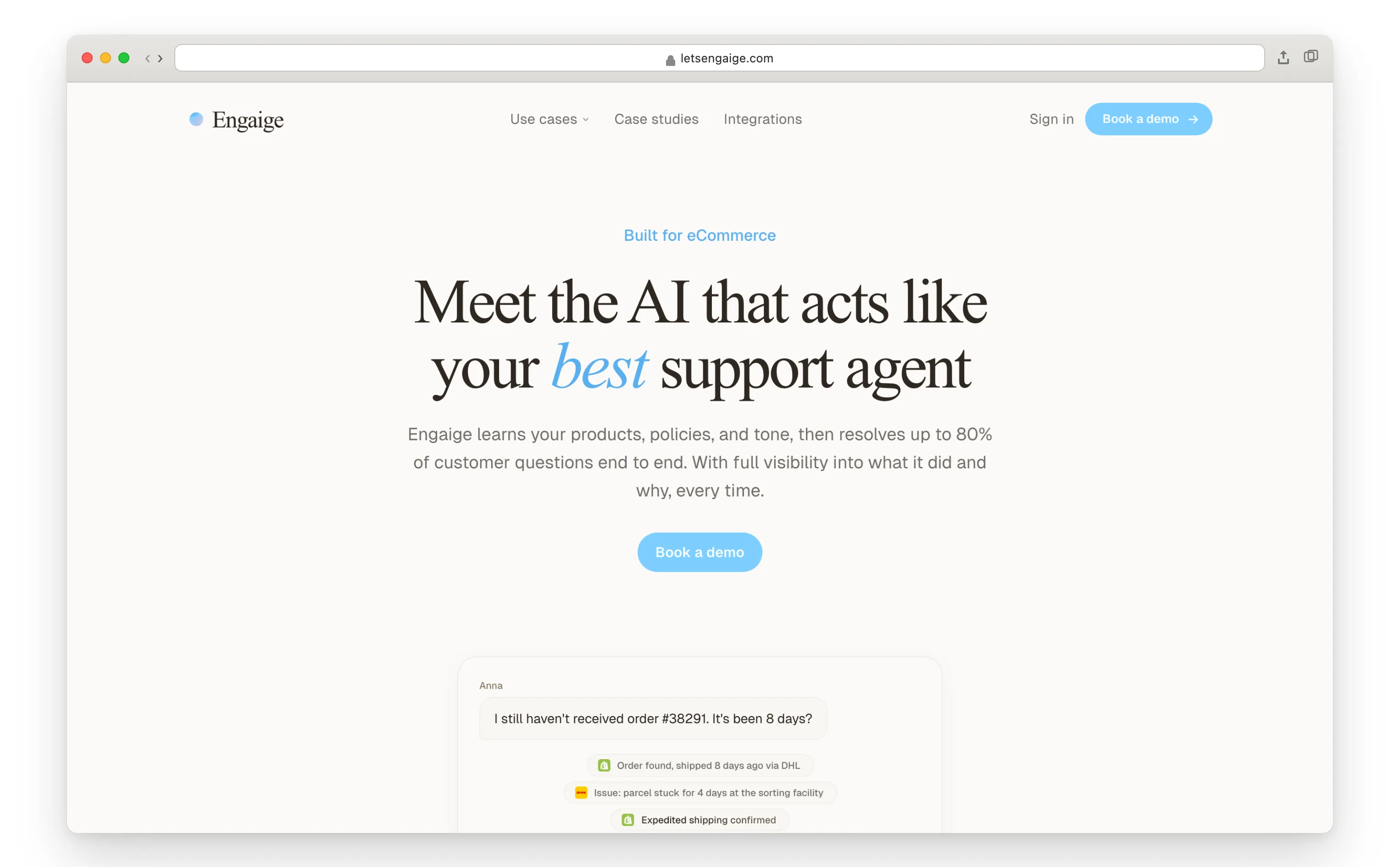
Engaige is a continuously improving AI customer support agent for e-commerce that resolves tickets end to end on top of your existing helpdesk, for a flat monthly fee tied to your ticket volume. Keep your helpdesk, replace the AI. It suits brands that want deep Shopify actions and more autonomous resolution than an FAQ-first tool. We are the vendor here, so judge us by named outcomes.
Want the head-to-head with Gorgias? Our Gorgias comparison goes through it in detail.
Those outcomes are public case studies you can open. Otrium resolves 60% of 120,000 annual tickets end to end, with no human touching them. HelloPrint runs at 80% automated at steady state, cut first response times by 90%, and reduced its support team from 100 to 28 people. Our “up to 90%” is a ceiling reached at the deepest integrations, and we label it as such.
Engaige offered control, flexibility, and the ability to really incorporate AI in a more human way.

Engaige proved to be invaluable. Their hands-on support during the implementation phase resulted in significant improvements to our automated resolution rate and CSAT.

Honesty cuts both ways. Gorgias is the Shopify-first helpdesk, so it bundles those order actions into the platform itself rather than layering on top as we do. The catch with Engaige: it is built for e-commerce rather than horizontal support. What you get in return is an agent that keeps getting better.
Engaige is the agent; Engaige AI configures and improves it from plain-language briefs. You go live in Agent Assist in hours with no migration, and every reply your team sends is compared with what the agent suggested, one of the signals Engaige AI learns from. It proposes changes to policies and behaviour with its reasoning, and you approve what goes live.
Once a ticket type matches your team’s replies, you switch it to autonomous (most brands get there in about a week), and it keeps learning from live outcomes and hand-offs. Full reasoning for every answer and action sits in the Engaige dashboard, and a hand-over leaves a reasoning summary as an internal note in the ticket. Policies can carry thresholds, and you test them in the Playground.
The structural difference is how it learns. We found no competitor that publicly describes learning from the team’s normal replies from day one with changes a person approves. If your Gorgias vs Tidio shortlist exists because you want deep store actions on the helpdesk you keep, that is the gap we built for.
Frequently asked questions
Is Gorgias better than Tidio?
For Shopify-centred brands that need AI to act on orders (refunds, subscription edits, shipping updates), Gorgias is the stronger product. For smaller stores that mainly need fast, affordable FAQ coverage, Tidio is the more rational buy. They sit in different weight classes, so “better” depends on your ticket mix and platform.
Can Tidio’s Lyro handle commerce actions like refunds?
Lyro is strongest at answering questions from your help content. Its autonomous commerce actions are a newer layer and depend on connectors, whereas the Gorgias AI Agent performs refunds, subscription edits and shipping updates directly against order data. If actionable tickets dominate your queue, test that layer specifically before committing.
What do Gorgias and Tidio actually cost?
Both price in two layers. Gorgias charges a ticket-volume helpdesk plan plus $0.90 to $1.00 for each AI resolution, depending on plan. Tidio charges flat helpdesk tiers plus a Lyro add-on of roughly $0.50 to $0.65 per conversation. Compare them on total cost per resolved ticket at your volume, not on the headline unit price.
What resolution rate should I realistically expect?
Below the headlines. Gorgias markets up to 60% instant resolution (vendor-stated) but named case studies land lower, with Psycho Bunny at 26%; Tidio states a 75% customer average for Lyro (vendor-stated, October 2026) with a 50% resolution guarantee on its Premium plan. Your real rate depends on your catalogue, policies, integration depth and how actionable your ticket mix is.
When does a third option like Engaige make sense?
When you want to keep your helpdesk and Tidio’s FAQ-first depth runs out as you grow. Engaige, an AI ecommerce support tool, resolves tickets end to end on your existing helpdesk for a flat monthly fee tied to your ticket volume, with named outcomes of 60% (Otrium) and 80% (HelloPrint). It goes live in Agent Assist in hours with no migration, and Engaige AI learns from your team’s replies, with changes you approve, before ticket types switch to autonomous.