E-commerce support is shifting fast. Shoppers expect instant, accurate answers at any hour, ticket volumes spike with every promotion and peak, and the first wave of automation, the FAQ bot that deflected questions, is giving way to AI agents that complete the work. The bar has moved from deflecting tickets to resolving them end to end.
And the rules never sit still: your policies, catalogue and edge cases change every week. A tool you configure once quietly goes stale, so what keeps up is a self-learning system, an agent that reviews its own conversations, shows which policy it applied, and updates from your feedback. That is the lens this guide uses: which agents keep resolving the hard cases as your rules change, not just the easy ones at launch.
Why are more teams looking for Minimal alternatives in 2026?
One trigger matters more than the rest: resolution depth. A fast setup is great, and Minimal’s is genuinely quick, but on its own it is a shiny object: what holds its value once real tickets arrive is how much of the work the agent actually resolves.
And handing a ticket back is only half the cost. If the agent escalates without showing you why, you never learn what to fix, so the same case returns tomorrow. That is the opposite of the self-learning loop a fast-moving market needs: the setup gets you started, but what you live with is an agent that shows its reasoning and resolves more every week.
The trade shows at the hard middle of the ticket mix. On partial refunds and complex multi-item returns, Minimal is lighter than agents built specifically to resolve those, escalating to a human sooner. If your volume is mostly straightforward, that rarely bites; if the hard middle is where your team drowns, a deeper agent resolves more of it.
What is Minimal, and who uses it?
Minimal (gominimal.ai) is an AI support agent for e-commerce, not a helpdesk: it rides on the one you already run and acts autonomously, cancelling orders, blocking shipments, creating invoices and processing returns. It states it automates “up to 90% of tickets” (vendor-stated), names customers like XXL Nutrition, ETQ and Proforto, and goes live in about an hour through a plain-language setup.
The credit is real but narrow. That quick start is its strength, but the rates are all Minimal’s own (vendor-stated, and the company is young), and the depth is lighter: the moment a ticket leaves the easy lane, a partial refund, a complex return, a cancellation after the warehouse cut-off, Minimal hands it to a human sooner than an agent built to resolve it.
The 7 best Minimal alternatives
Because Minimal is an AI agent rather than a helpdesk, every option below is also an AI agent, the like-for-like comparison, drawn from the wider field in our ranked guide to AI customer service chatbots for e-commerce. If you would rather replace the helpdesk entirely, that is a different category covered in our Gorgias alternatives and Zendesk alternatives guides.
1. Engaige (that’s us): best if you want Minimal’s easy setup with deeper resolution on the hard middle
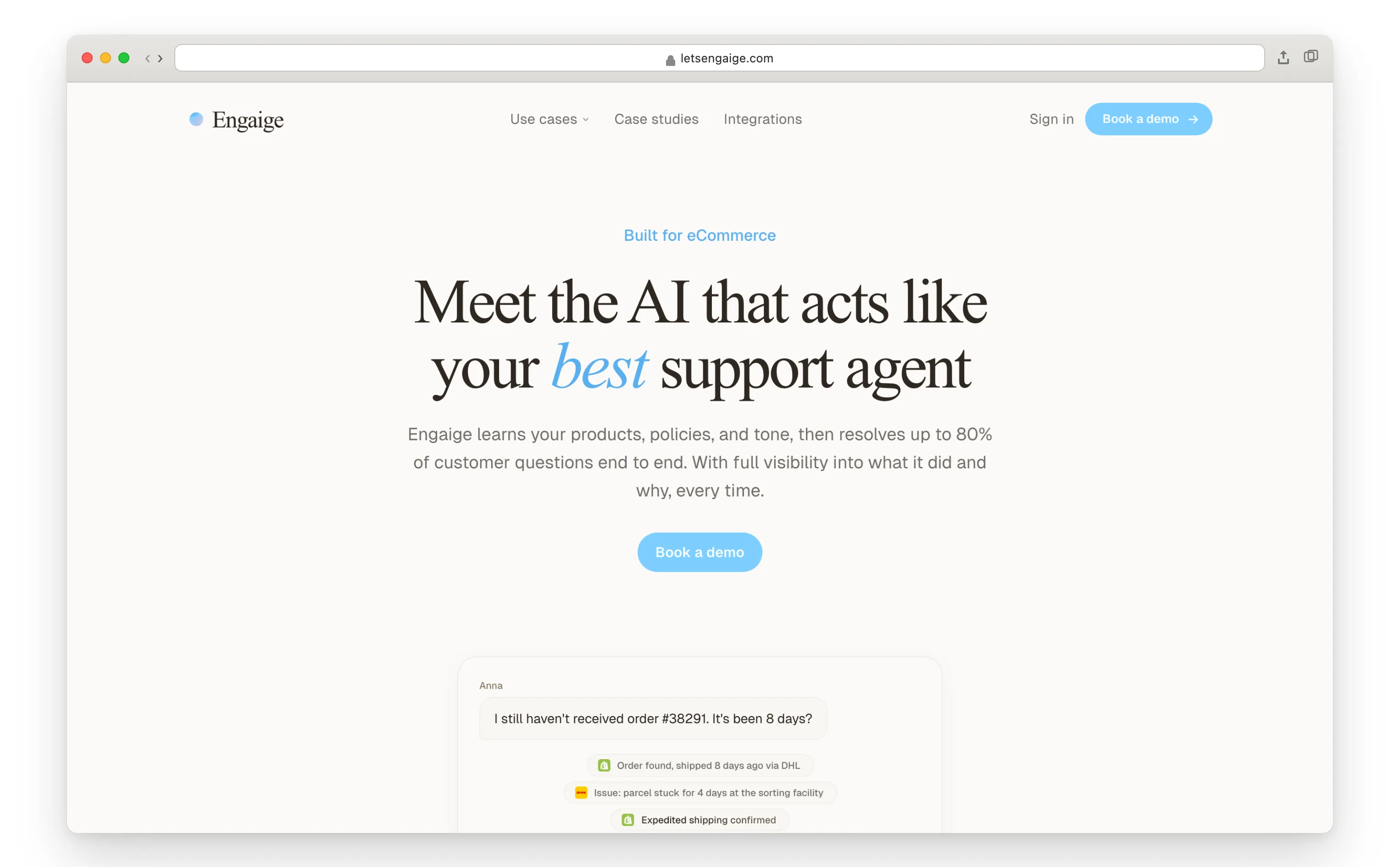
Engaige is Minimal’s closest relative here: a hybrid AI agent for scaling direct-to-consumer and e-commerce brands, Shopify-first and beyond, that resolves tickets end to end (WISMO, returns, refunds, subscription and warranty changes) on the helpdesk you already run.
Want the like-for-like? Our Minimal comparison walks through where each one lands on the hard middle.
The difference is a continuously improving agent. You go live in Agent Assist in hours; from there Engaige AI compares what your team sends with what it suggested, learns from that gap, and proposes improvements you approve, so resolution compounds.
Once a ticket type has learned enough, often within about a week, you switch it to autonomous, where it keeps learning from live outcomes and the tickets it hands back to a human.
Engaige AI is configuration and learning, not a setup wizard: you set policy in plain language, and every answer and action shows its reasoning and the source it used. Minimal sets up just as fast, but as a plug-and-play tool it stays where you configure it; Engaige keeps improving.
It shows at scale, on both jobs an agent has to do. MR MARVIS (Shopify Plus) resolves over 60% of the conversations its agent handles across 120,000 questions a year and doubles as a shopping assistant, giving personal product advice its team singles out for the quality of its recommendations; Otrium resolves 60% of 120,000 tickets end to end; and HelloPrint automated 80% while cutting first response times 90% and taking its support team from 100 agents to 28. These are named, openable case studies.
Support comes as an accelerator, not a crutch: every customer gets a dedicated Slack channel and hands-on help whenever they want it. The product gets you live and resolving on its own; the team is there to push your rate higher, not to keep it running.
Pros
- Resolves the hard middle end to end (partial refunds, complex returns, post-cutoff cancellations), not just FAQs.
- Engaige AI shows its reasoning and learns from your feedback, so resolution climbs over time.
- Easy, self-service setup, live in days with no migration; you change policies yourself.
- Shopify-first and multi-platform (WooCommerce, Magento, BigCommerce, custom), with connectors built on demand.
- Named, openable case studies (MR MARVIS, Otrium, HelloPrint) and flat, volume-based pricing.
Cons
- E-commerce-specialised by design, not a generic horizontal tool.
Engaige offered control, flexibility, and the ability to really incorporate AI in a more human way.

Within the AI we can see the reasoning, and how it comes to a response. That shows us where information is missing or unclear, and helps us improve our workflow.

2. Yuma: best if you are on Shopify and want published per-customer rates
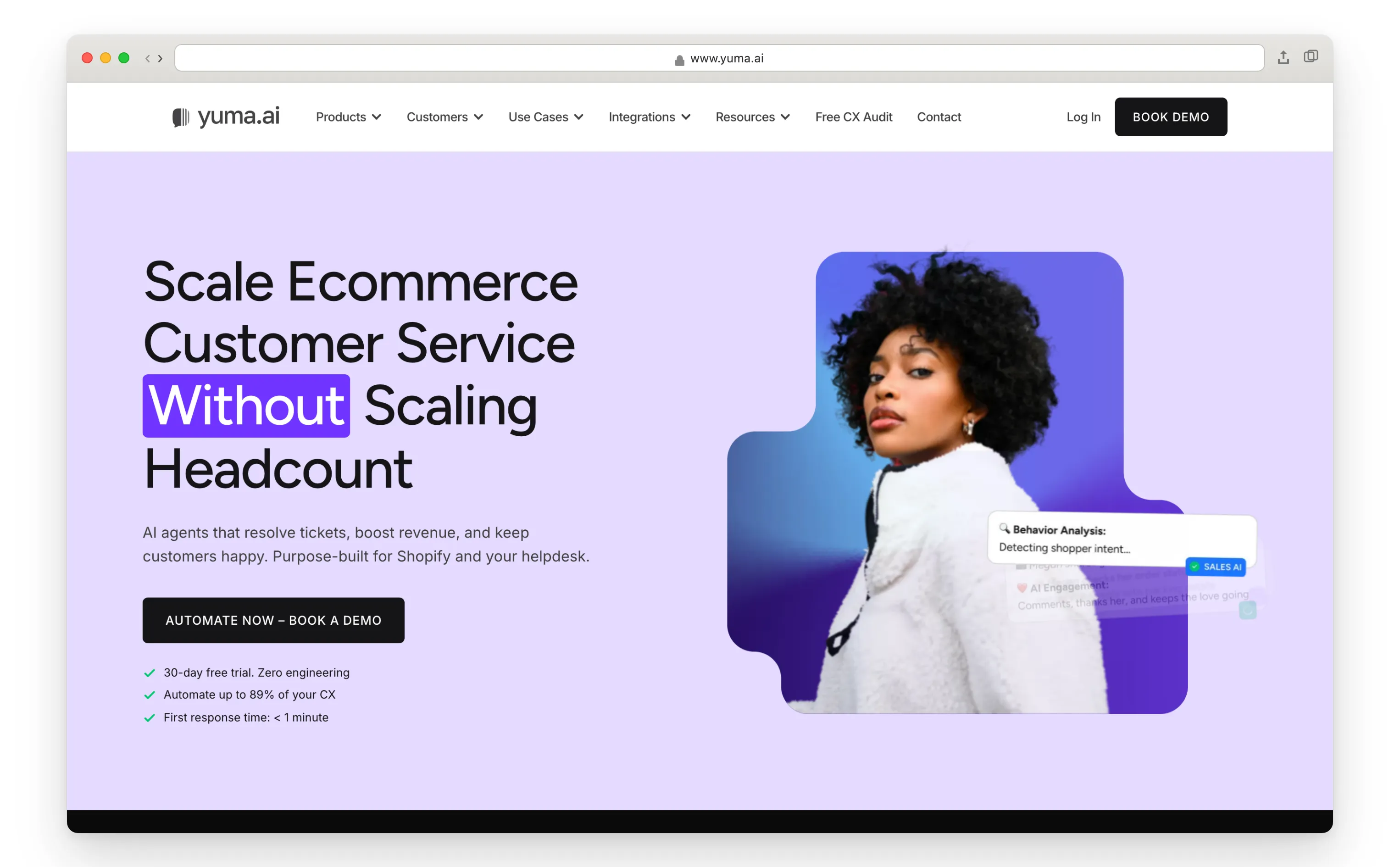
Yuma is purpose-built for Shopify and, like Minimal, sits inside the helpdesk you already use (Gorgias, Zendesk, Kustomer, Re:amaze, Gladly and more), taking real actions: refunds, label creation, subscription edits. It states top deployments reach 89% (vendor-stated) and, to its credit, publishes per-customer rates including unflattering ones: EvryJewels 89%, Clove 70%, Tediber 64%, FINN 45% and The Koin Club 40%.
Pros
- Acts inside the helpdesk you already use (Gorgias, Zendesk, Kustomer, Re:amaze, Gladly): refunds, labels, subscription edits.
- Publishes per-customer rates including unflattering ones (40-89%), the substantiation bar this guide asks for.
Cons
- Pricing is quote-based, less transparent than Minimal’s public tiers.
- Shopify purpose-built, so confirm depth on anything else before committing.
3. Intercom Fin: best if you want public per-resolution pricing on the helpdesk you keep
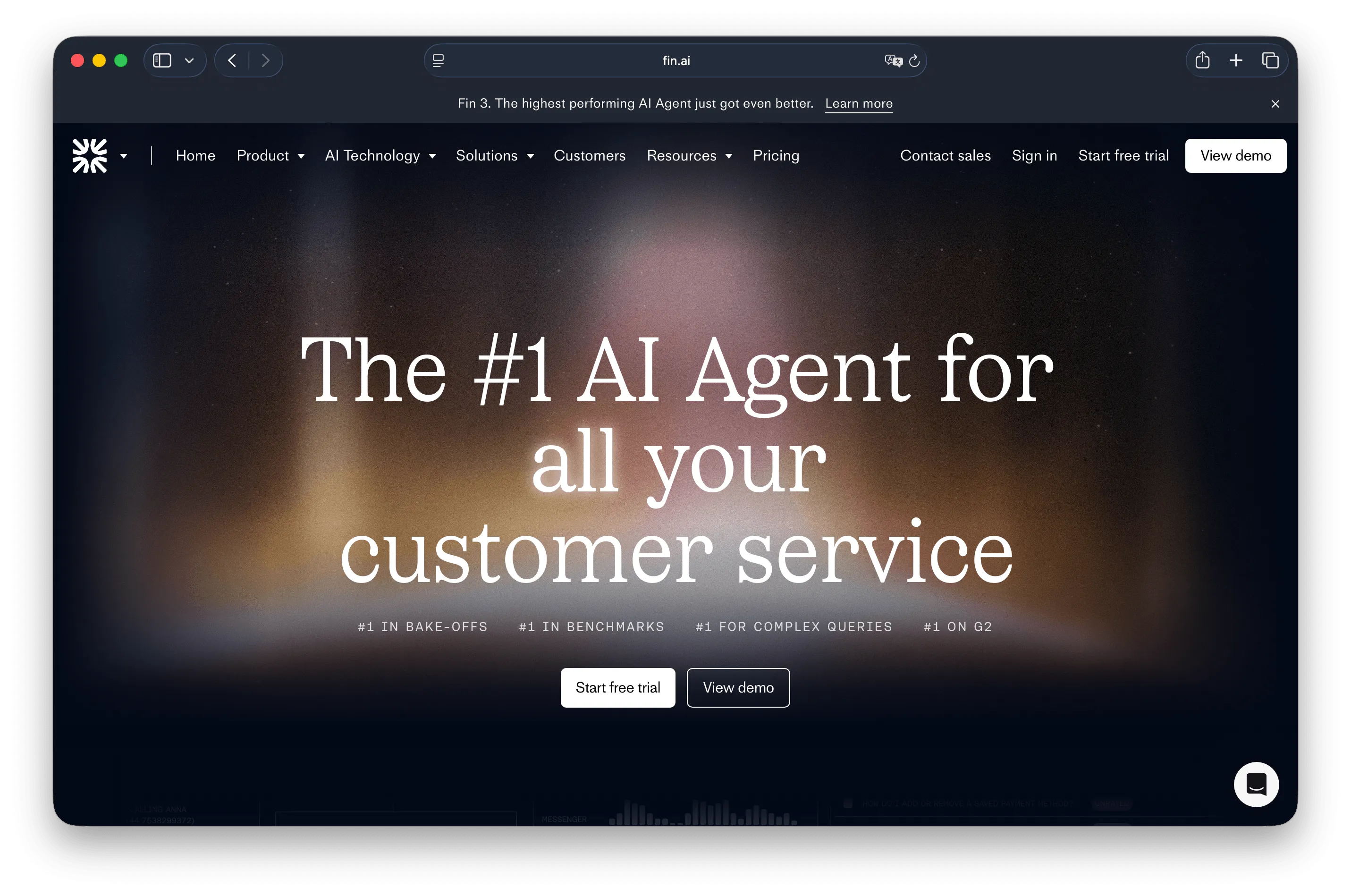
Fin is Intercom’s AI agent, and unusually for a suite vendor it deploys on helpdesks that are not Intercom’s own. It acts through Procedures and connectors, and pricing is public: $0.99 per resolution with a 50-resolution monthly minimum, with seats extra on Intercom’s own stack.
Pros
- Public pricing ($0.99 per resolution) and deploys on helpdesks that are not Intercom’s own.
- Acts through Procedures and connectors.
Cons
- Its 67% benchmark sits against the ~38% average an independent 60-day test found.
- Per-resolution pricing scales the bill with success, and Fin is horizontal rather than commerce-specialised, so store actions depend on the connectors you wire up.
4. Watermelon: best if you want a no-code, public-priced start
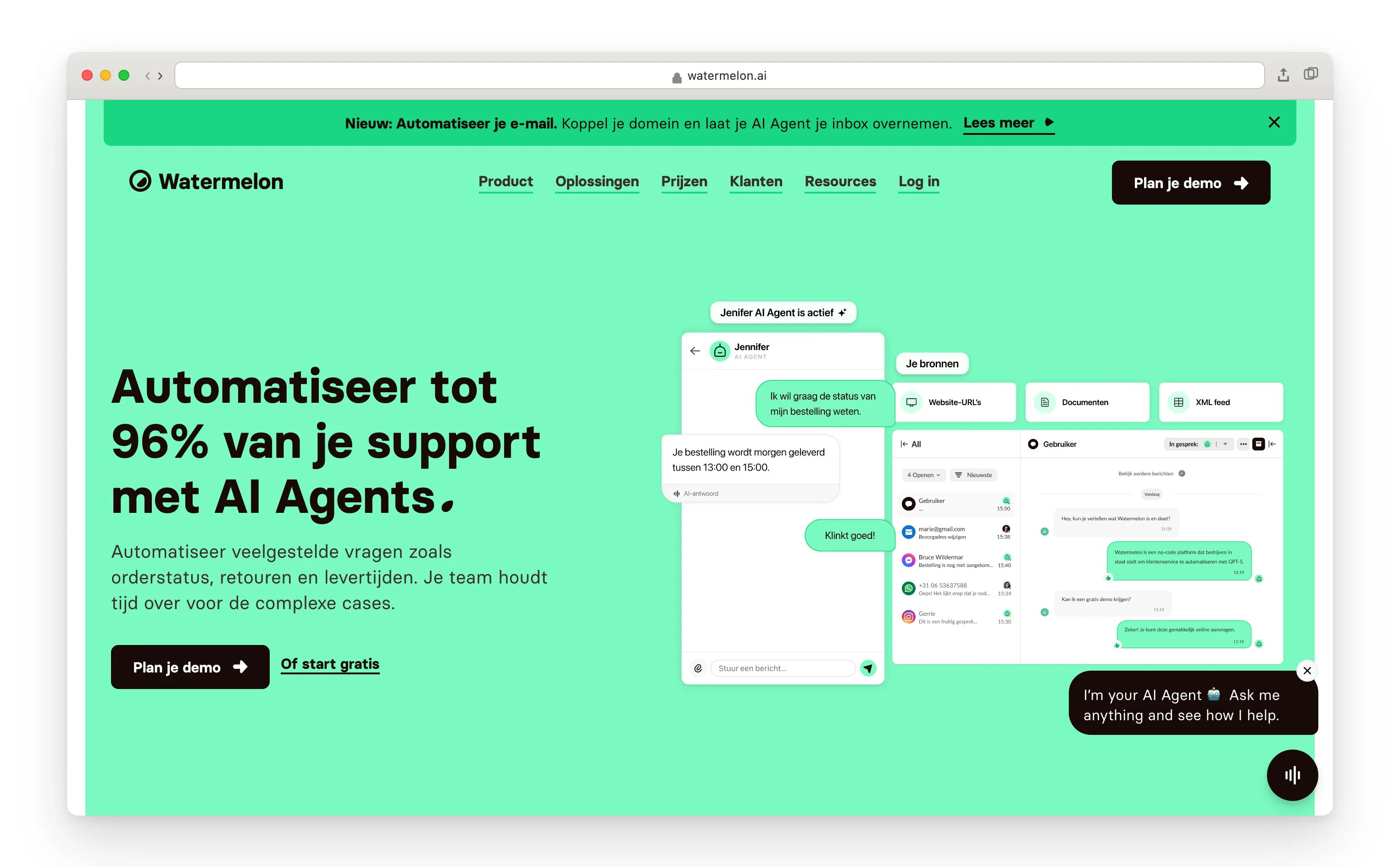
Watermelon is a friendly no-code, agent-first player and the closest like-for-like to Minimal, with native connections to Shopify, Picqer, Monta, Sendcloud and Returnless. The agent answers, takes actions and escalates where needed. Pricing is public, by conversation volume, from €99 a month (vendor-stated).
Pros
- No-code and agent-first, with public pricing from €99 a month.
- Native connections (Shopify, Picqer, Monta, Sendcloud, Returnless); the agent answers, acts and escalates.
Cons
- On the hard mid-segment it escalates to a human sooner.
- Integration depth stops short of Minimal’s, so it suits a simpler ticket mix.
5. Neople: best if you want to test and approve before the AI goes live
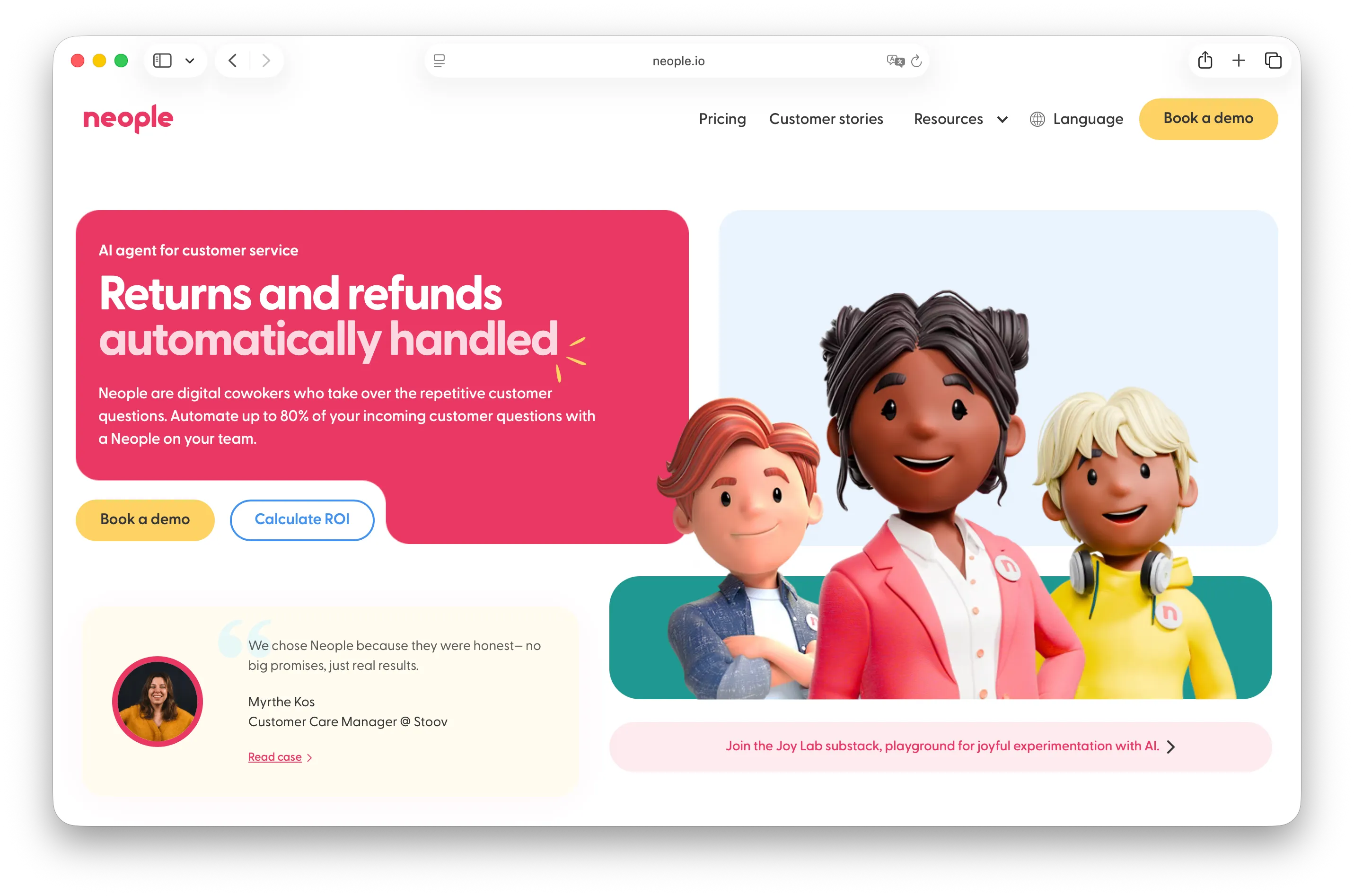
Neople is a Dutch AI-agent startup with a human-in-the-loop approach: nothing goes live before you have tested and approved it, which suits teams that want control before autonomy. Its integration list is broad (Shopify, Picqer, Monta, PostNL, Returnless and helpdesks), so common e-commerce stacks are well covered, and if Neople is the tool you are weighing our Neople alternatives guide compares the field.
Pros
- Human-in-the-loop: nothing goes live before you have tested and approved it.
- Broad integration list covering common e-commerce stacks (Shopify, Picqer, Monta, PostNL, Returnless).
Cons
- It now reaches into hospitality and HR, so it specialises less in any one segment, and setup is a guided programme rather than pure self-service.
- Pricing is public and tiered per billable ticket (from €489/mo for up to 1,000 tickets), so you can model the cost up front.
6. Siena: best if you are a premium DTC brand wanting brand-grade CX
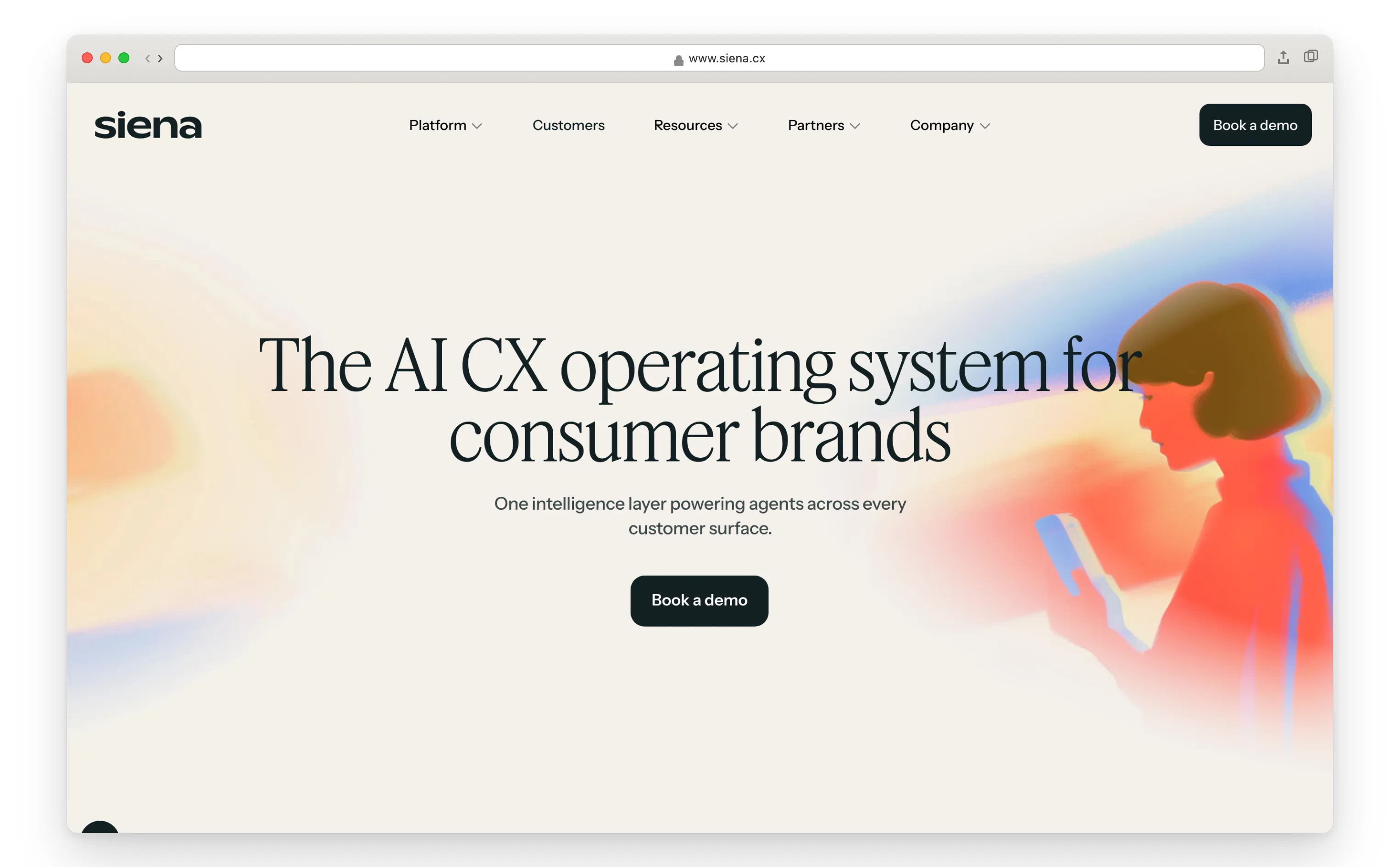
Siena positions itself as the AI CX operating system for consumer brands and runs agents that act, issuing refunds, generating labels and sending replacements in a single flow. It states brands automate “up to 80% of customer interactions” (vendor-stated) and backs that with 15 named case studies publishing per-customer rates, from 80% at True Sea Moss down to 49% at Verb.
Pros
- Acts in a single flow: refunds, labels and replacements, brand-grade CX for premium DTC.
- 15 named case studies publishing per-customer rates (49-80%).
Cons
- Pricing is quote-based, less transparent than Minimal’s public tiers.
- Its integrations page lists Shopify as the only commerce platform, so confirm anything beyond Shopify before committing.
7. Tidio: best if you are a small store starting with automation
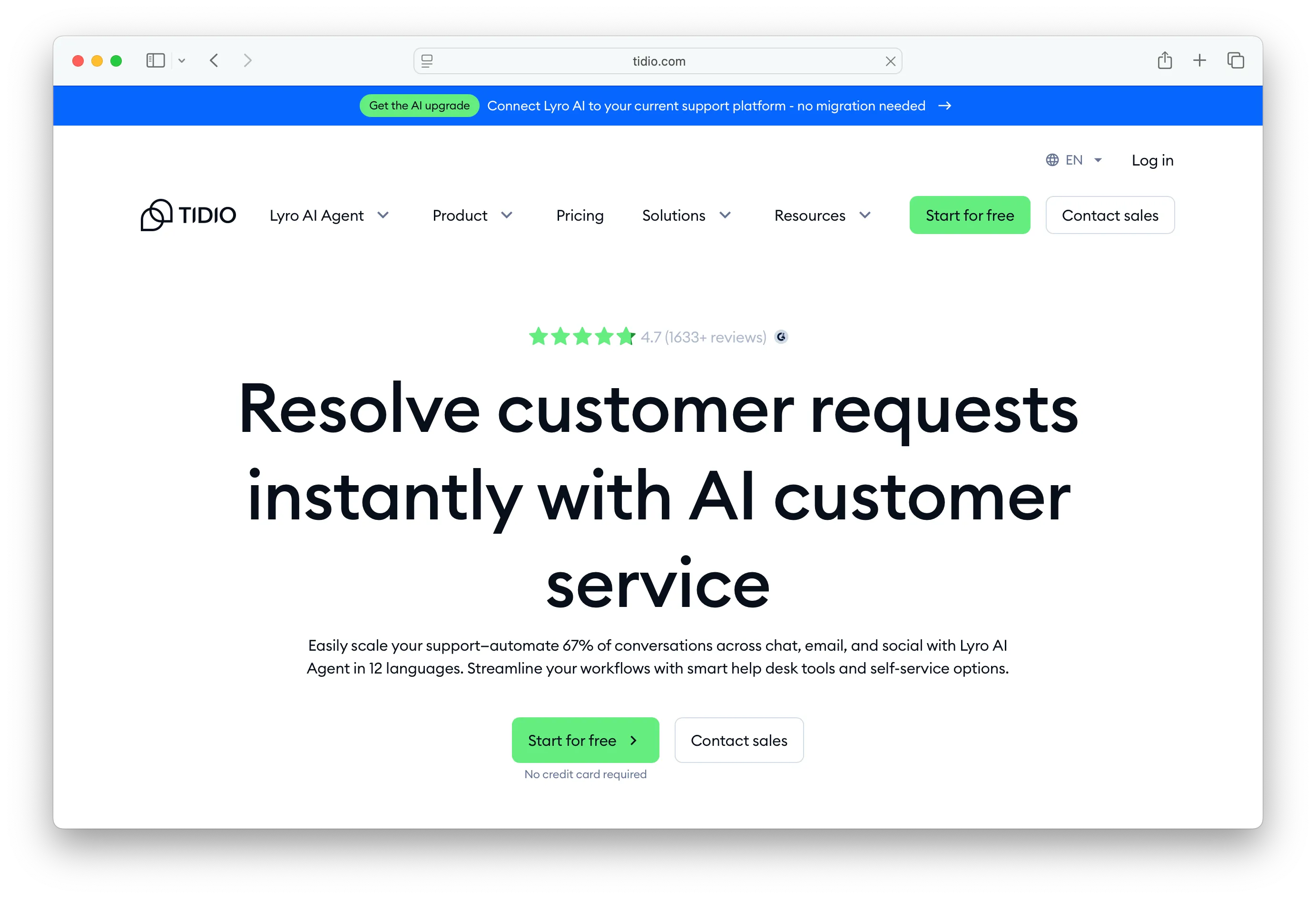
Tidio is the SMB option: its Lyro agent claims an up to 64% average resolution rate (vendor-stated), backed by a money-back guarantee if Lyro stays below 50%, a form of substantiation with actual money behind it. Pricing is public: flat helpdesk tiers plus a per-conversation Lyro add-on of roughly $0.50 marketed, nearer $0.58 as an effective minimum (third-party estimate).
Pros
- Public pricing, with a money-back guarantee if Lyro stays below 50%, substantiation with money behind it.
- A low-commitment SMB entry point into automation.
Cons
- Strongest on FAQs; its commerce actions are newer and connector-dependent.
- Test the autonomous order work Minimal does in a pilot before relying on it.
Comparison table: Minimal vs the alternatives
The table sorts the field by what actually decides it after Minimal: how fast it sets up, whether it resolves the hard middle or escalates it, how it substantiates its rate, and how it prices. Every figure is vendor-stated unless marked otherwise, and your real rate depends on your catalogue, policies and integration depth.
| Tool | Ideal for | Setup | Hard middle (partial refunds, complex returns) | Substantiation | Pricing model |
|---|---|---|---|---|---|
| Minimal (baseline) | A straightforward ticket mix, fast start | Easy, ~1 hour (vendor-stated) | Escalates to a human sooner | Named customers; 81-93% (vendor-published) | Tiered, public, €489-7,200/mo |
| Engaige | The hard middle resolved, on a scaling DTC stack | Easy, self-service, live in days | Resolves end to end | MR MARVIS 60%+, Otrium 60%, HelloPrint 80% (named, openable) | Flat to a ticket volume |
| Yuma | Shopify stores wanting published proof | Onboarding, quote-led | Resolves on Shopify; confirm elsewhere | Per-customer rates published, incl. unflattering (40-89%) | Quote-based |
| Intercom Fin | A public per-resolution price on your helpdesk | Connector-based | Depends on the connectors you wire | Independent 60-day test ~38% average | $0.99 per resolution, 50/month minimum |
| Watermelon | A simpler ticket mix, fast public-priced start | No-code, public-priced | Escalates sooner | Agent acts and escalates | Per conversation, public from €99/mo |
| Neople | Teams wanting control before autonomy | Guided, test-and-approve | Human-in-the-loop before autonomy | Test-and-approve onboarding | Per resolution, not public |
| Siena | Premium DTC wanting brand-grade CX | Onboarding, quote-led | Resolves in one flow (Shopify) | 15 named case studies, 49-80% | Quote-based |
| Tidio (Lyro) | Small stores starting with automation | Self-serve, public | Strongest on FAQs; commerce actions newer | Money-back guarantee below 50% | Flat tiers + ~$0.50 per conversation |
Frequently asked questions about Minimal alternatives
The questions e-commerce teams ask us most often when they are weighing a move away from Minimal.
Can Minimal automate order-related support?
Yes. Minimal’s agents act autonomously: order cancellations in Shopify, shipment blocking in Monta, invoice creation in Magento, subscription upgrades in Firmhouse and return forms through Returnista, and it states up to 90% of tickets automated (vendor-stated). Teams usually look at alternatives over resolution depth on the hard middle or proof at scale, not missing automation.
Why do teams switch away from Minimal?
One trigger, really: the hard middle. Minimal is easy to set up but lighter on partial refunds and complex returns, so it escalates those to a human sooner. As volume grows, that hands the hardest tickets back to your support team, exactly the ones you hoped to automate, so teams that drown there look for an agent that resolves the hard middle rather than escalating it.
What is the best Minimal alternative?
It depends on your trigger, and they are all AI agents like Minimal. For the same layered architecture with named, openable outcomes and deeper resolution, Engaige fits best; Yuma adds published per-customer rates on Shopify. Watermelon is the no-code option and Neople the human-in-the-loop one. For premium DTC brands, Siena; for small stores, Tidio.
Does Engaige need vendor involvement to make changes?
No. Engaige is configured and changed through Engaige AI in plain language: you describe a policy, it goes live straight away, and you update it yourself whenever it changes, with no vendor ticket and no waiting on a call. Hands-on onboarding is available if you want it, but day-to-day control sits with your team.
Can I keep my current helpdesk and just change the AI layer?
Yes. That is Minimal’s own architecture, and Engaige, Yuma, Intercom Fin, Watermelon and Neople all work the same way, layering an agent that acts on top of an existing helpdesk. That route keeps your inbox, macros and history intact and avoids a migration project entirely. If you would rather replace the helpdesk too, see our Gorgias alternatives guide.
Does switching from Minimal to Engaige cause downtime?
No. You can run both in parallel during the transition: keep Minimal handling tickets while you configure Engaige through Engaige AI and test it against your real tickets. Once it resolves the way you want, you switch over gradually, with no gap in coverage.