Dixa is an agentic customer service platform built for e-commerce, and its Mim agent genuinely acts: it resolves refunds, order tracking and cancellations on its own. So if you are searching for an alternative, it is probably not because Dixa lacks automation. It is usually the per-conversation bill, the platform commitment, or the pricing tier.
This guide compares the best Dixa alternatives on those axes: how predictably each one prices as volume grows, whether it layers onto the stack you already run, and how deeply it acts on live store data. Facts and figures are based on public information and our own research as of June 2026.
It is the brand-specific spin-off of our ranked guide to the AI chatbots for e-commerce, which scores the wider field on six weighted criteria. This page zooms in on the decision you face when Dixa specifically is the tool you are weighing.
Why do teams look for Dixa alternatives in 2026?
Three triggers come up consistently: per-conversation billing, because the Mim agent is priced per conversation whether or not it resolves; platform lock-in, because Mim works inside the Dixa platform, so adopting it is a full migration; and pricing, because per-agent seats and per-conversation AI stack as you grow. Capability is rarely the genuine complaint.
Teams weighing Dixa are often already running it alongside other tools and looking for something that unifies their channels. One described the hunt on r/customerexperience:
December 2025 Reddit Our team is currently in sprout, alongside of our marketing team, while are other channels are using dixa. Are there any tools that house all customer care channels… · r/customerexperience View on RedditThe per-conversation problem. Dixa’s own pricing page is unusually candid: the Mim fee is roughly $0.40 per conversation and “tied to conversation volume, not to how well AI performs”. So a conversation is billed whether or not it resolves the ticket, on top of per-agent seats. The bill grows with volume rather than with results, which is the incentive that sends teams looking for flat or outcome-based pricing instead.
The lock-in problem. Mim is a feature of the Dixa platform, so adopting it means moving your contact centre onto Dixa. If you later want a different agent, or a different inbox, you are migrating channels, history and integrations together. Tools that layer onto whatever helpdesk you run avoid that trap entirely.
The pricing problem. Dixa’s seats run from €89 to €179 per agent a month, and the Mim fee sits on top per conversation. As volume grows, the seat cost and the per-conversation AI cost climb together, which is the stacking a flat, volume-based price avoids.
What does Dixa still do well?
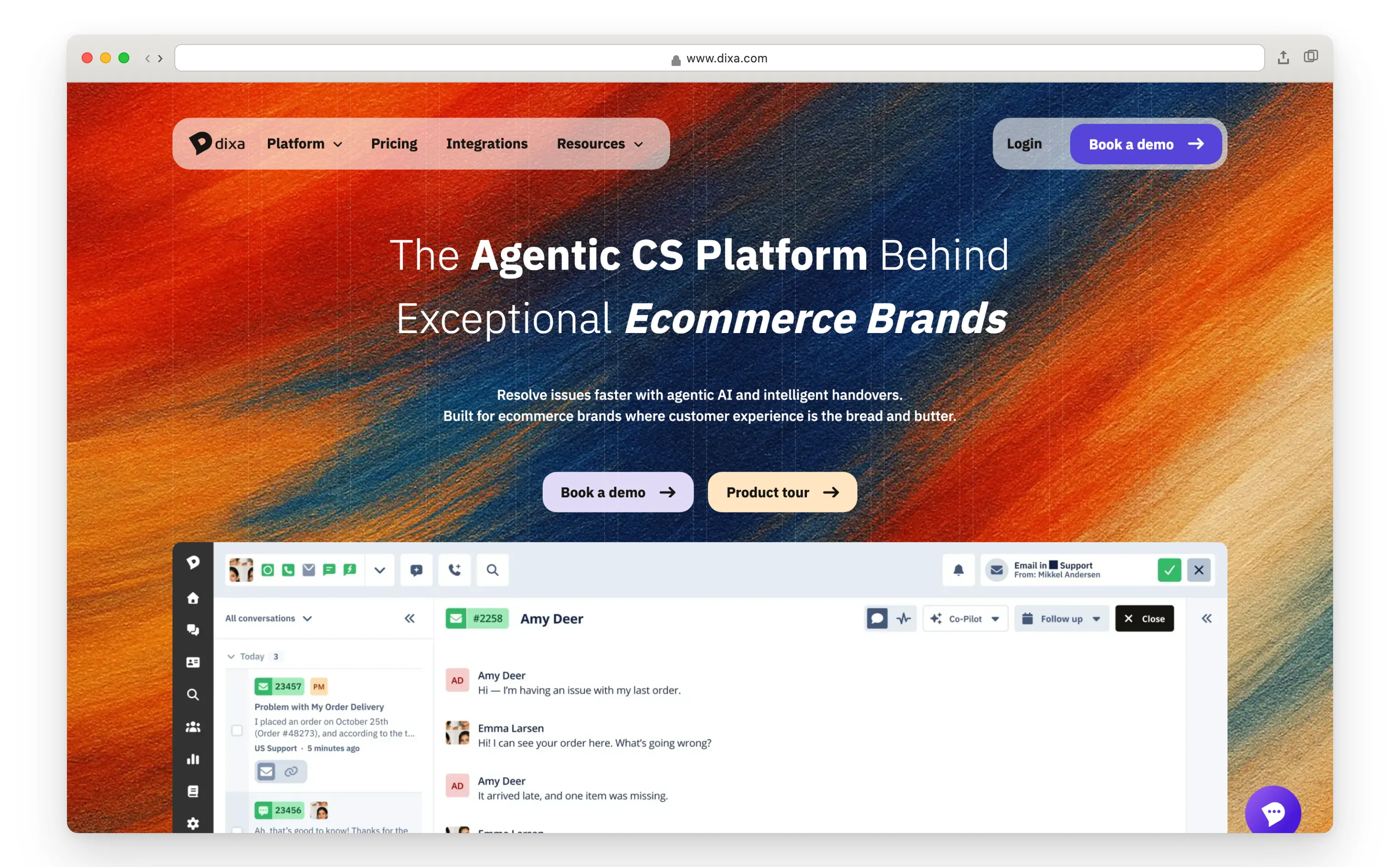
Plenty. It is a genuinely agentic, e-commerce-native platform: Mim resolves refunds, order tracking, cancellations and order changes autonomously across chat, email and WhatsApp in 30+ languages (vendor-stated), handing complex cases to humans with full context. An AI Co-Pilot drafts replies and surfaces knowledge for agents. It serves named brands including Oliver Bonas, Rapha and Charles Tyrwhitt. If you want a full platform and the per-conversation model suits your volume, staying put is a legitimate decision.
The catch: the headline rate is vendor-stated. Dixa markets “up to 80% of inquiries resolved without human intervention”, but that figure arrives without a per-merchant breakdown. Use the same test on every tool below, ours included: which named customer produced the number, over what period, and what counts as “resolved”? A rate with none of those attached is marketing, not a benchmark.
How should you evaluate a Dixa alternative?
Five checks separate a genuine upgrade from a sideways move. The first two address why you are leaving (resolution and cost), the next two address whether the move is practical (stack fit and platform depth), and the last one protects you from buying the same headline-versus-reality gap under a different logo.
| # | Check | The question to ask |
|---|---|---|
| 1 | Resolution, not deflection | Does it complete the refund, return or order edit in your store, or draft a reply for an agent to send? |
| 2 | Pricing predictability | What is the total cost per resolved ticket at twice today’s volume, and does the AI bill per outcome or per conversation? |
| 3 | Stack fit | Does it layer onto the helpdesk you already run, or does switching mean a full platform migration? |
| 4 | Platform depth | Can it act on live store data (Shopify, WooCommerce, Magento), not just read it? |
| 5 | Claim substantiation | Does the vendor publish named per-customer rates, including unflattering ones, or one headline figure? |
A practical shortcut for check one: feed every candidate your three ugliest recent tickets, the WISMO case with a stuck parcel, the part-refund, the damaged item with a replacement. Whether it completes those, rather than deflecting them, predicts your real resolution rate better than any demo.
What are the best Dixa alternatives?
The best Dixa alternatives in 2026 are Engaige (acts on live store data end to end, flat pricing, no migration) and Yuma or Intercom Fin if you want to keep your helpdesk; Gorgias, Richpanel, Zendesk or eDesk if you want a different platform; and Tidio for smaller stores.
Which one fits depends on the trigger that sent you here. If it is the per-conversation bill, add a flat-priced agent that acts on the helpdesk you already run. If you want a different platform, the e-commerce helpdesks below are the field. If the helpdesk itself is the constraint and you are comparing replacements broadly, our Zendesk alternatives and Gorgias alternatives guides cover that.
Agents that automate end to end without a migration
Engaige (that’s us)
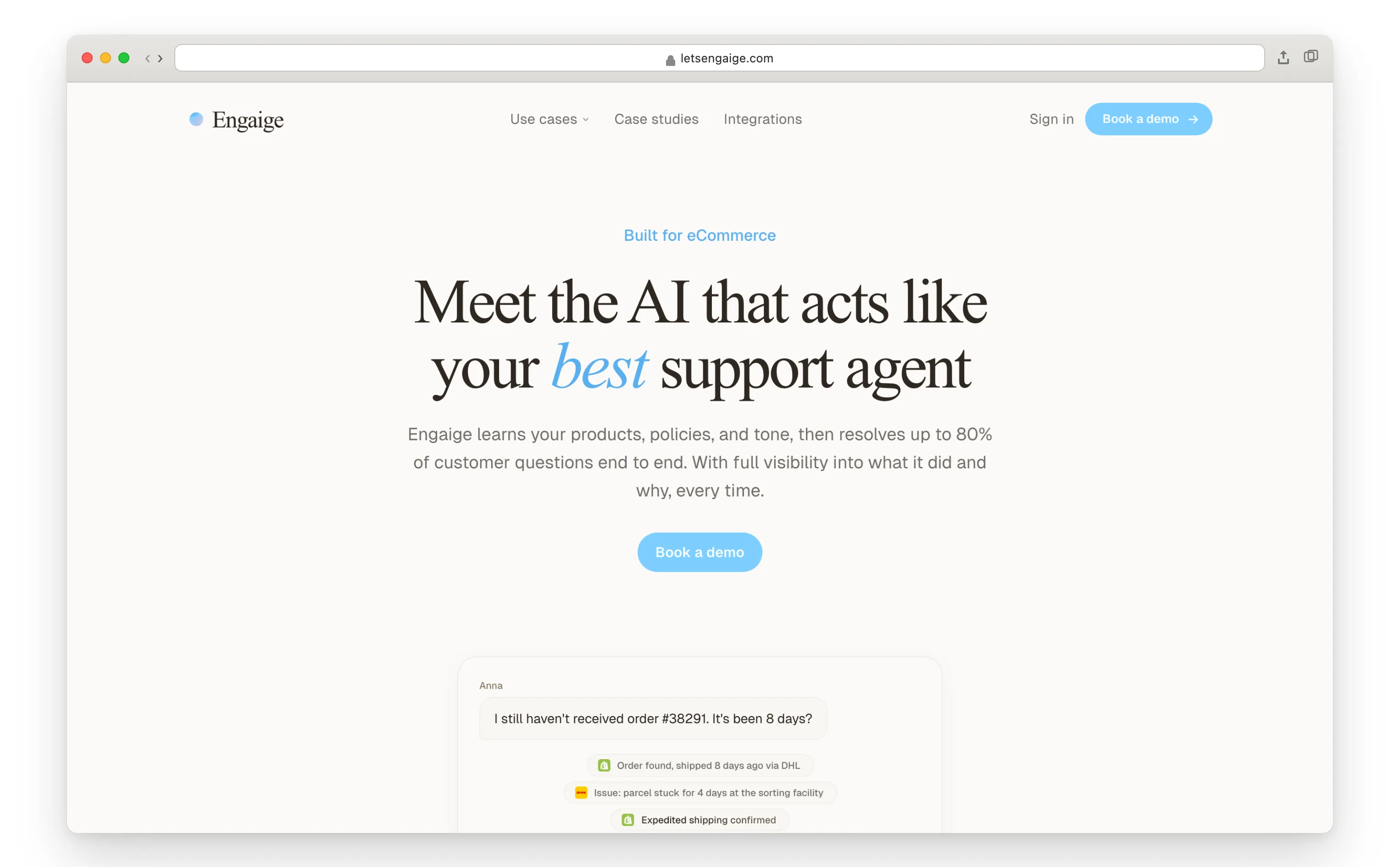
Engaige is a hybrid AI agent built for e-commerce that resolves tickets end to end (WISMO, returns, refunds, subscription and warranty changes) on top of the helpdesk you already run, with no platform migration. It reads live order, catalogue and policy data before replying rather than inferring, and its pricing is flat to a ticket volume rather than billed per conversation.
Engaige AI is what makes that practical, and it is the real differentiator: Engaige is a continuously improving agent, not a setup wizard. You go live in Agent Assist within hours, where Engaige AI compares what your team actually sends with what it suggested, learns from the gap, and proposes improvements you approve in plain language, so resolution compounds instead of plateauing.
Once a ticket type has learned enough, often within about a week, you switch it to autonomous, where it keeps learning from live outcomes and the cases it hands back to a human. Every answer and action shows its reasoning and the source behind it. No platform migration, and no per-conversation meter.
Verified outcomes: Otrium resolves 60% of 120,000 annual tickets end to end, with no human touch, and HelloPrint automated 80% of support at steady state, cut first response times by 90% and went from 100 agents to 28. Setup is fast: you validate the agent against real tickets and go live in Agent Assist within hours.
Pros
- Resolves the hard middle end to end (multi-step refunds, conditional returns, WISMO-with-a-complication), not just FAQs.
- Reads live order, catalogue and policy data rather than inferring, so it does not guess.
- Engaige AI learns in both modes, from your team’s replies in Agent Assist and from live outcomes once autonomous, so resolution compounds instead of plateauing.
- Layers on the helpdesk you already run, live in days with no migration.
- Flat, volume-based pricing and named, openable case studies (Otrium 60%, HelloPrint 80%).
Cons
- E-commerce-specialised by design, not a generic horizontal tool.
Engaige offered control, flexibility, and the ability to really incorporate AI in a more human way.

Engaige proved to be invaluable. Their hands-on support during the implementation phase resulted in significant improvements to our automated resolution rate and CSAT.

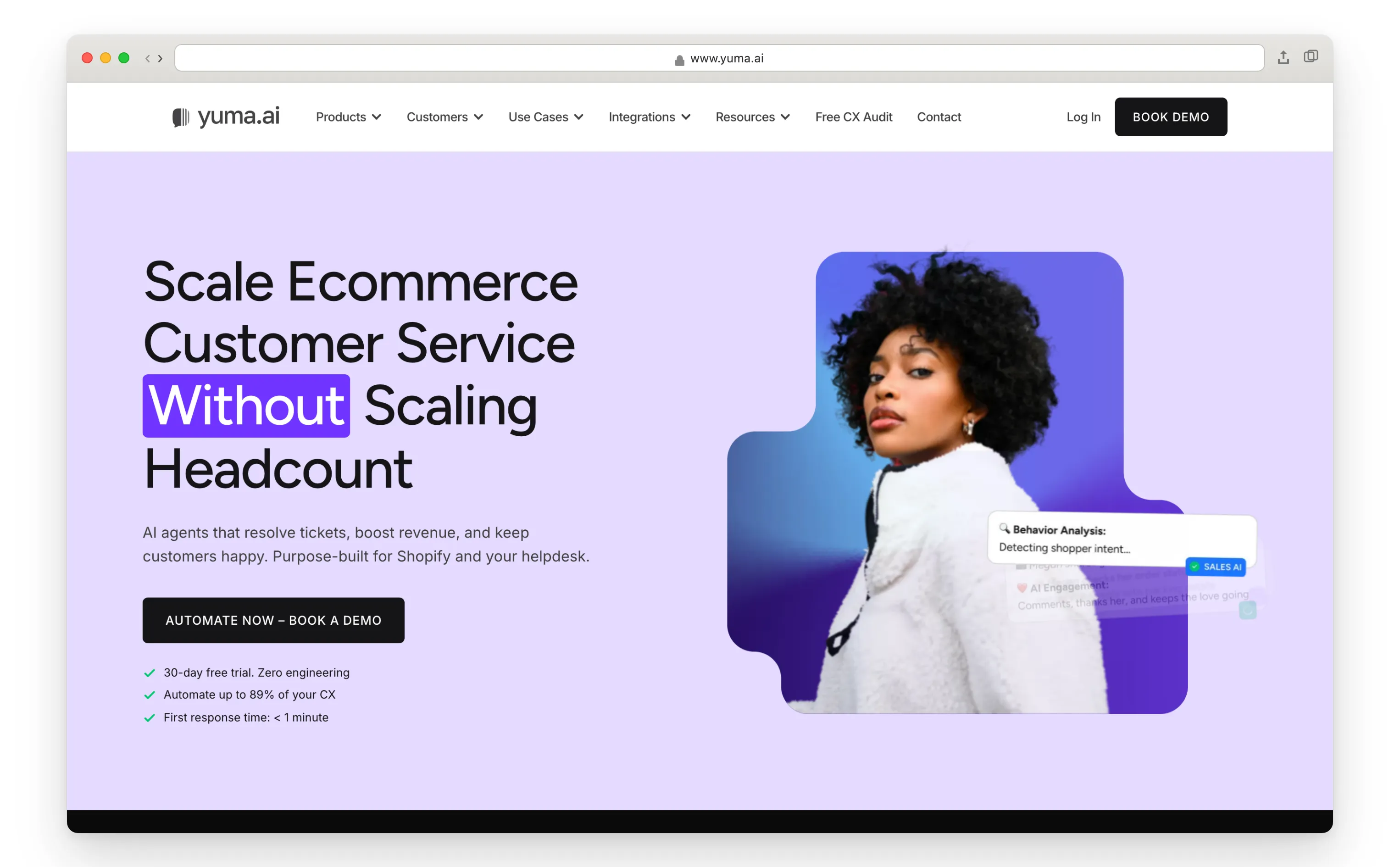
Yuma is purpose-built for Shopify and sits inside the helpdesk you already use (Zendesk, Gorgias, Kustomer, Gladly and more), taking real actions: refunds, label creation, subscription edits. So instead of migrating to a new platform, you keep your inbox and swap only the AI layer. It states top deployments reach 89% (Yuma, vendor-stated) and publishes per-customer rates, including unflattering ones (40 to 89%), the substantiation bar this guide asks for.
Pros
- Acts inside the helpdesk you already use, no platform migration.
- Publishes per-customer rates including unflattering ones (40-89%).
Cons
- Pricing is quote-based, not transparent.
- Purpose-built for Shopify, so confirm depth on other platforms.
Fin is Intercom’s AI agent, and unusually for a suite vendor it deploys on helpdesks that are not Intercom’s own. Pricing is a flat $0.99 per resolution with a 50-resolution monthly minimum, so unlike Dixa’s per-conversation model you pay only when it resolves. The catch: it is horizontal rather than commerce-specialised, so store actions depend on the connectors you wire up.
Pros
- Pays per outcome, not per conversation, so unresolved chats are not billed.
- Deploys on helpdesks beyond Intercom’s own.
Cons
- Its 67% benchmark sits against the ~38% average an independent test found.
- Horizontal rather than commerce-specialised.
Platform replacements with autonomous AI
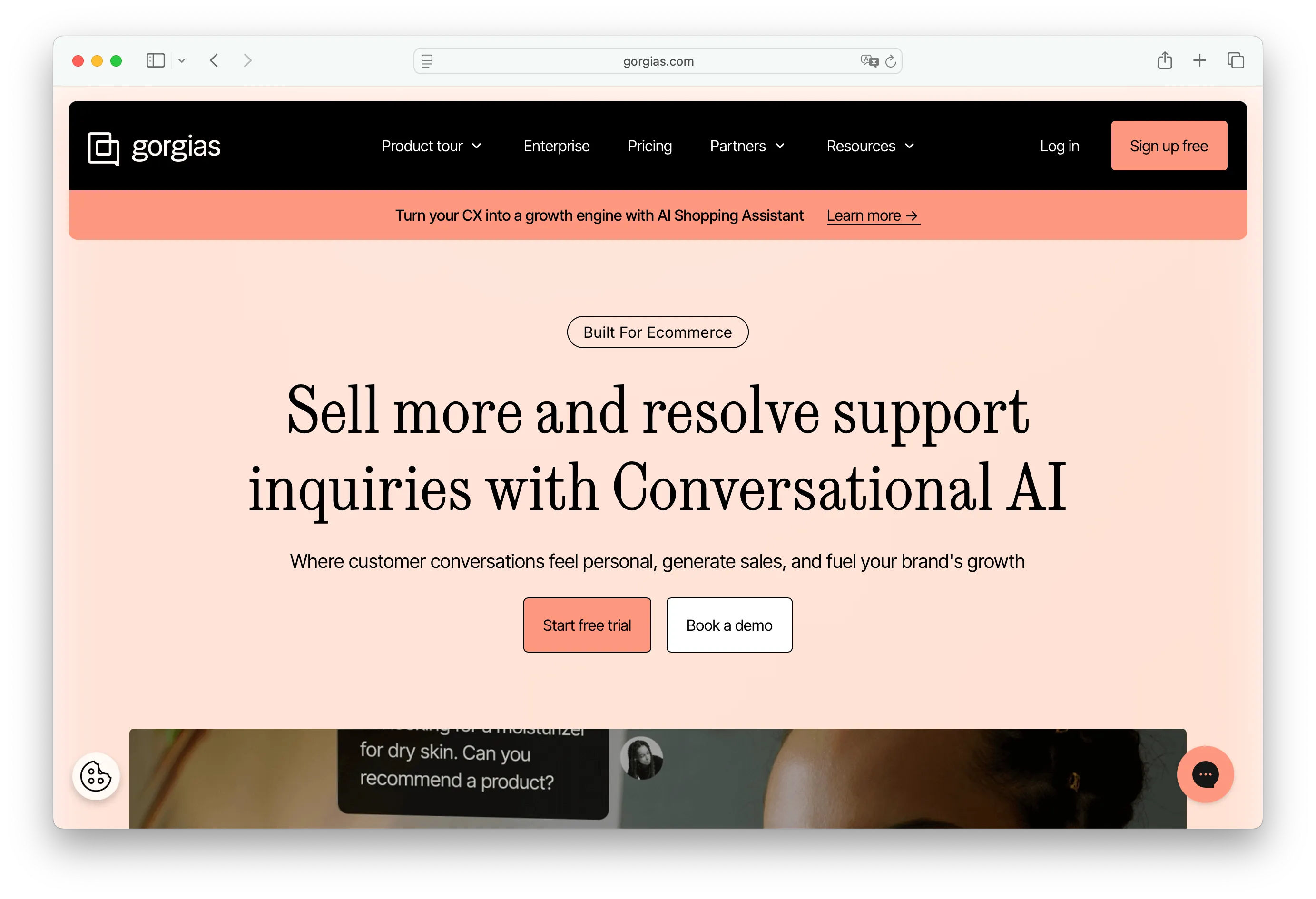
Gorgias is the Shopify-native helpdesk, a common destination for teams who want store depth over a full contact-centre platform. Its AI Agent issues refunds, edits subscriptions and updates shipping inside your store, marketed at “60% of inquiries resolved instantly” (vendor-stated). The catch: it prices the AI Agent at roughly $0.90 to $1.00 per resolution on top of a ticket-volume helpdesk plan (no per-seat fee), so you swap per-conversation billing for per-resolution billing.
Pros
- Shopify-native, with an AI Agent that issues refunds, edits subscriptions and updates shipping.
- Strong fit when store depth matters more than omnichannel breadth.
Cons
- Per-resolution pricing on top of a ticket-volume helpdesk plan.
- Deepest on Shopify; other platforms run shallower.
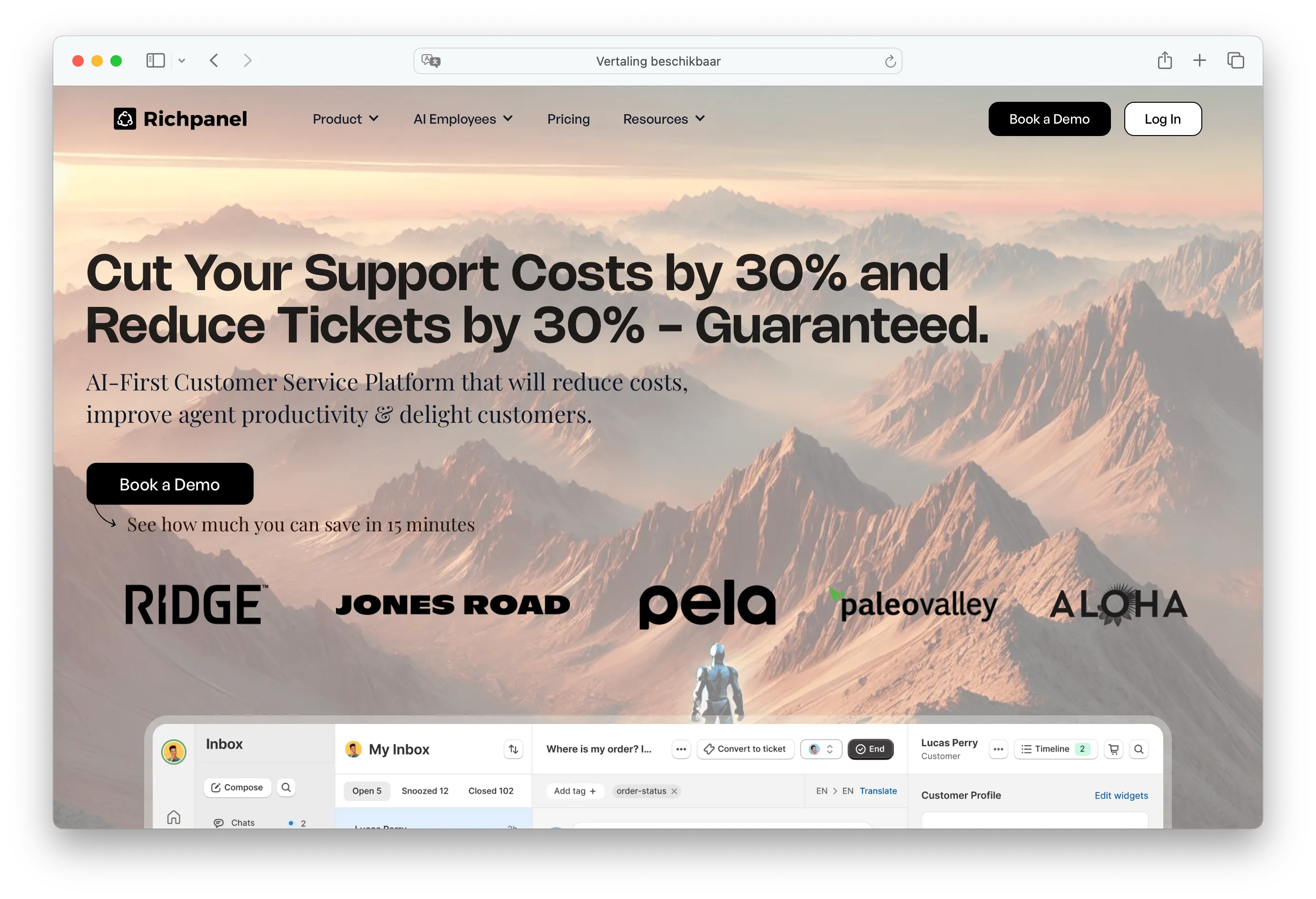
Richpanel is an e-commerce helpdesk whose AI agent works autonomously: it resolves refunds, order tracking, subscriptions and cancellations on its own, with an approvals workflow for sensitive actions. Like Dixa it is commerce-native, so order actions are built in. The catch: the deeper value needs full Richpanel adoption, so you are trading one platform for another rather than avoiding the migration.
Pros
- Commerce-native autonomous AI with an approvals workflow.
- Vendor-stated 70-80% at maturity, with named brands.
Cons
- The deeper value needs full platform adoption.
- Deepest integrations are Shopify-side.
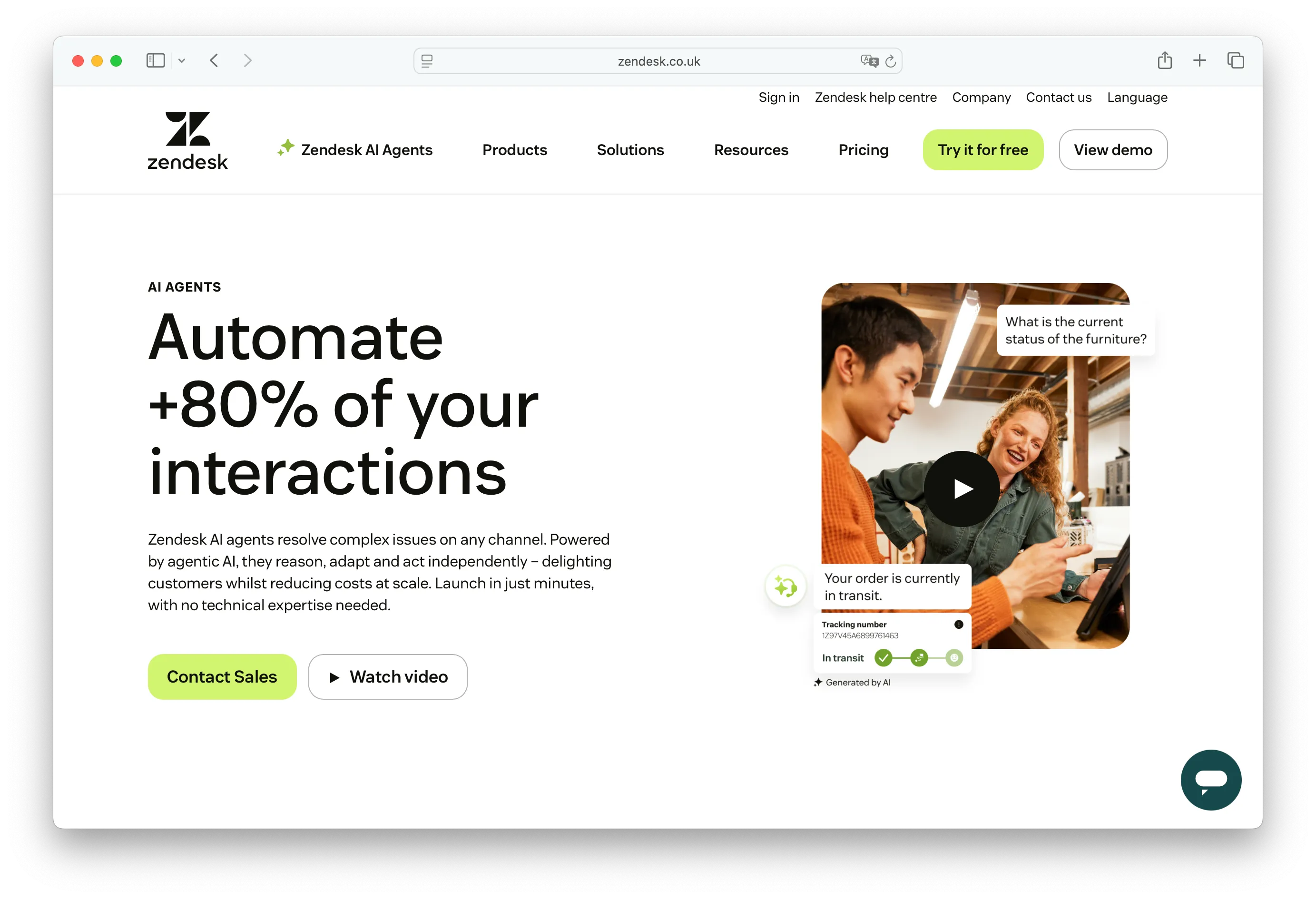
Zendesk is the enterprise platform option, repositioned in 2026 as a “Resolution Platform” with AI agents it states “routinely resolve over 80% of interactions” (vendor-stated) and 1,500+ integrations. The catch: the billing stack is steep, with per-seat fees plus a fee per verified resolution, so confirm how it behaves at your volume before treating it as the cheaper option.
Pros
- Enterprise-grade routing, 1,500+ integrations, strong QA tooling.
- Vendor-stated over 80% resolution.
Cons
- Steep billing stack: seats plus per-resolution fees.
- Deep commerce actions need custom build.
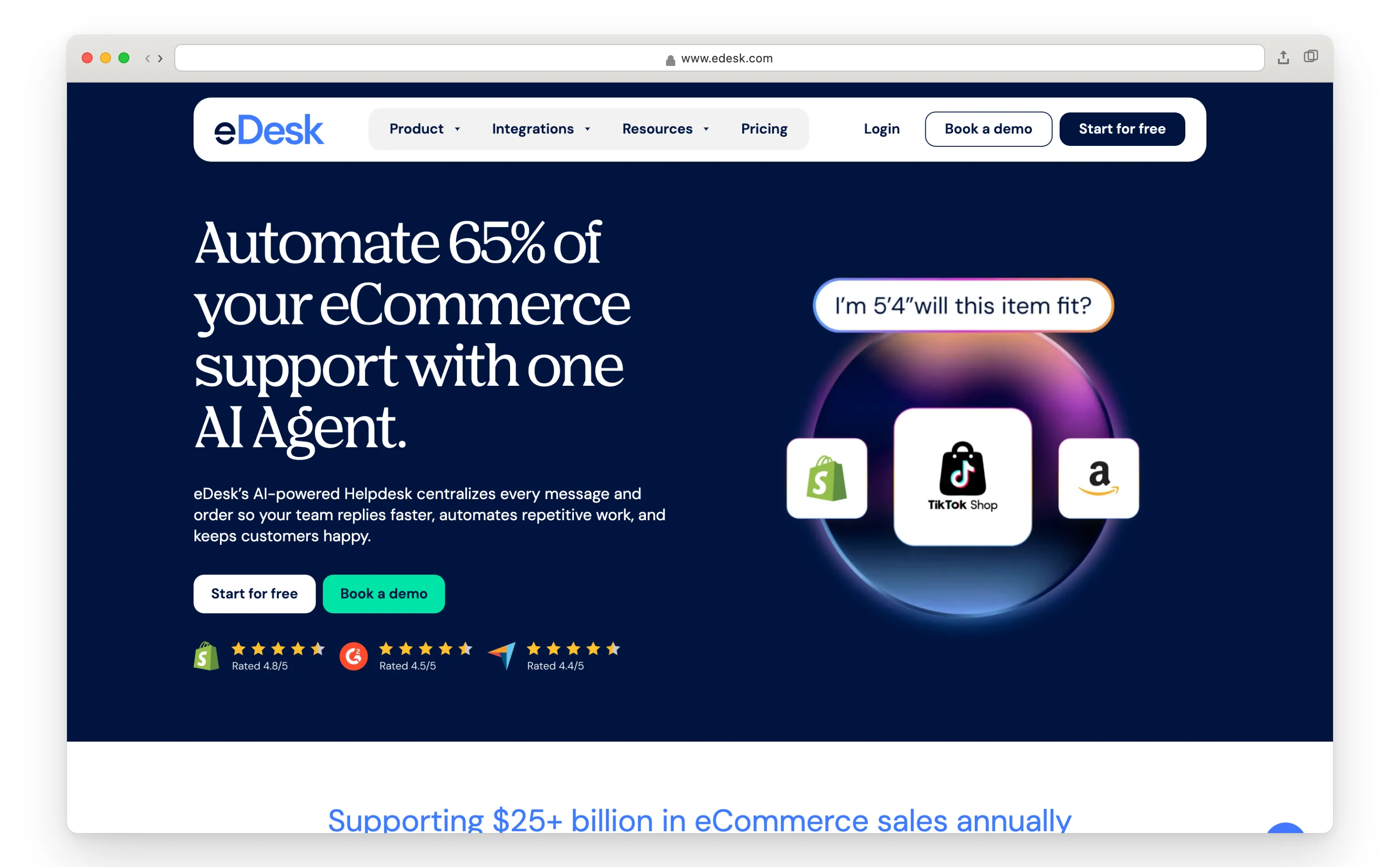
eDesk is an e-commerce and marketplace helpdesk whose AI aims to automate up to 65% of support (vendor-stated). Its edge is marketplace breadth: Amazon, eBay, Walmart and TikTok Shop alongside the major storefronts, which makes it the natural shortlist entry for marketplace-heavy sellers. The catch: the automation leans more on rules and FAQs than autonomous reasoning.
Pros
- Marketplace breadth alongside the major storefronts.
- Vendor-stated up to 65% automation.
Cons
- Automation leans on rules and FAQs, so the hardest cases still route to your team.
Lighter routes for smaller stores
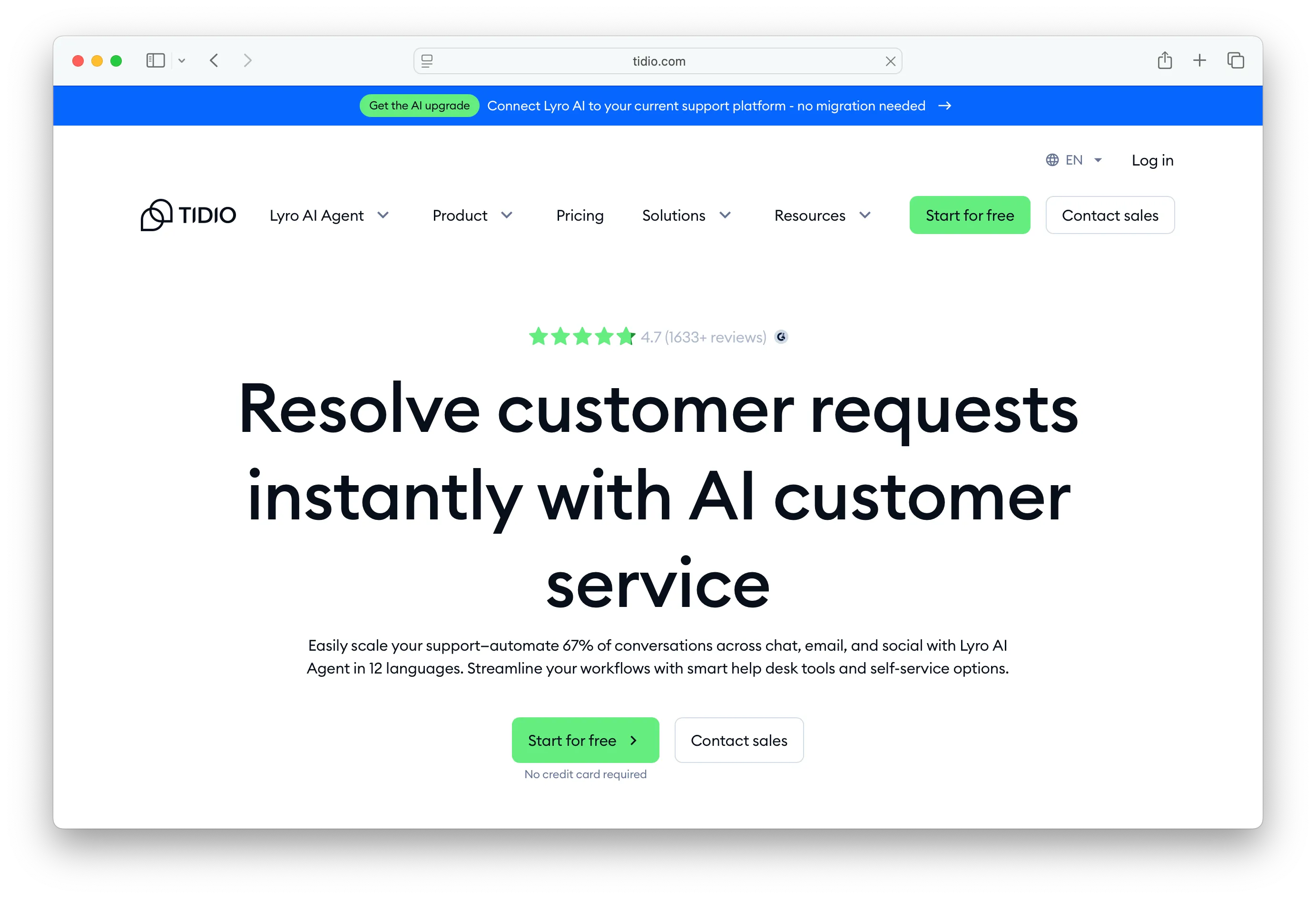
Tidio is the SMB option: its Lyro agent claims an up to 64% average resolution rate (vendor-stated), backed by a money-back guarantee if Lyro stays below 50%. Pricing is flat helpdesk tiers plus a per-conversation Lyro add-on of roughly $0.50, lighter than a full platform commitment. The catch: it is strongest on FAQs, and its commerce actions are newer and connector-dependent.
Pros
- SMB-friendly, with a money-back guarantee if Lyro stays below 50%.
- Flat tiers, no platform migration.
Cons
- Strongest on FAQs, with connector-dependent commerce actions.
How do the alternatives compare at a glance?
The table sorts the field by the question that matters most after Dixa: does the tool act or assist, and does its AI bill per conversation, per resolution or flat? Resolution figures are vendor-stated unless marked otherwise, and the headline-versus-reality caveat applies to every figure below.
| Tool | How it fits your stack | Acts or assists | Headline rate | AI pricing model |
|---|---|---|---|---|
| Dixa (baseline) | Your current platform | Acts (Mim) | up to 80% (vendor-stated) | Seats €89-179 + ~$0.40 per conversation |
| Engaige | Layers on your helpdesk | Acts | Otrium 60%, HelloPrint 80% (verified case studies) | Flat to a ticket volume |
| Yuma | Layers on your helpdesk | Acts | 89% top deployments (vendor-stated) | Quote-based |
| Intercom Fin | Layers on, or runs on Intercom | Acts | 67% benchmark (vendor-stated); independent test ~38% | $0.99 per resolution, 50/month minimum |
| Gorgias | Replaces the platform | Acts | up to 60% instant (vendor-stated) | Ticket-volume plan + ~$0.90-1.00 per AI resolution |
| Richpanel | Replaces the platform | Acts (with approvals) | 70-80% at maturity (vendor-stated) | Not covered in our research |
| Zendesk | Replaces the platform | Acts | Over 80% (vendor-stated) | Seats + per verified resolution |
| eDesk | Replaces the platform | Mixed, rules-leaning | Up to 65% (vendor-stated) | Not covered in our research |
| Tidio (Lyro) | Layers on (SMB) | Mixed, FAQ-strongest | up to 64% average (vendor-stated) | Flat tiers + ~$0.50 per Lyro conversation |
What does a Dixa alternative cost?
One of three models. Flat-rate pricing ties a monthly fee to a ticket volume (Engaige, Tidio’s core tiers), so the bill is predictable as orders grow. Per-resolution pricing charges only when the AI closes a ticket (Intercom Fin at $0.99, Gorgias at roughly $1). Per-conversation pricing charges for every interaction whether or not it resolves (Dixa’s Mim at roughly $0.40), which is the model most worth scrutinising. Yuma is quote-based.
Dixa pricing is the reference point, and the per-conversation maths is what catches teams out, by the vendor’s own admission that the bill is “tied to conversation volume, not to how well AI performs”. As an illustration: at 10,000 conversations a month, a $0.40 fee adds $4,000 before a single seat is paid, and a conversation that does not resolve still counts.
The honest comparison is total cost per resolved ticket: platform fee plus AI fee, divided by tickets actually closed without a human. Run that number at today’s volume and at twice today’s volume; per-conversation and flat models switch places in surprisingly few months of growth.
Which Dixa alternative fits your store?
There is no universal winner, only a fit per situation. If you like Dixa’s depth but not the per-conversation AI bill, layer a flat-priced agent on top of the helpdesk you already run. If you want a different platform, the e-commerce helpdesks are the field. The shortlist below maps the common situations to the tools that fit them.
| Your situation | The deciding factor | Shortlist |
|---|---|---|
| Happy with the inbox, unhappy with the AI bill | A flat-priced agent that acts via your existing helpdesk | Engaige, Yuma |
| Heavy pre-purchase and product questions | Live catalogue and order data, not inference | Engaige, Richpanel |
| Want Shopify-native store depth | Native order actions over platform breadth | Gorgias, Engaige |
| Marketplace-heavy seller (Amazon, eBay, TikTok Shop) | Channel breadth alongside the storefront | eDesk, Zendesk |
| Enterprise volume, omnichannel including voice | Governance, routing, QA tooling | Zendesk, Richpanel |
| Small store, simple ticket mix | Fast setup, low flat cost | Tidio, Engaige |
Whichever route you take, pilot with your real ticket mix and measure end-to-end resolution, not deflection. The tool that completes your ugliest refund case at a predictable cost per ticket is the right alternative, whatever the headline rates say.
Frequently asked questions
The questions e-commerce teams ask us most often when they are weighing a move away from Dixa.
Can Dixa automate customer support?
Yes. Dixa’s Mim agent resolves refunds, order tracking, cancellations and order changes autonomously, marketed at up to 80% without human intervention (vendor-stated). Mim bills per conversation whether or not it resolves, so teams usually switch over the per-conversation bill, the platform commitment or pricing, not missing automation.
Is there a better alternative to Dixa?
It depends on your trigger. If you want pricing predictability while keeping your helpdesk, Engaige resolves tickets end to end on flat pricing, reads live store data rather than inferring, and publishes verified 60-80% client outcomes. If you want a different platform, an e-commerce helpdesk fits better. No tool wins every situation, so match the choice to your constraint and weigh the full field above.
Can I keep my helpdesk and still automate more?
Yes. Engaige adds an agent that resolves tickets end to end on top of the helpdesk you already run, reading live order, catalogue and policy data rather than inferring, with flat pricing and verified 60-80% client outcomes. That avoids the platform migration that adopting Dixa’s Mim requires, with no per-conversation billing.
What does a Dixa alternative cost?
Either a flat fee tied to a ticket volume, which stays predictable as you grow, or usage pricing that bills per resolution (only when the ticket closes) or per conversation (whether or not it closes). Always compare on cost per resolved ticket at twice today’s volume.